| OCR Text |
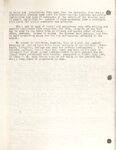
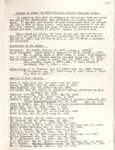
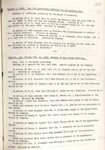
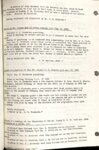
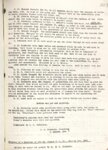
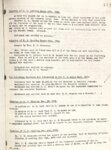
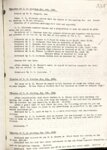
Show and hard sisted; and the removal sometimes caused great suffering, death, thus removed. The of Indiens masses of experiences the of the on part ap I think may illustrate the matter:--Cherokees The Cherokees were a large tribe, with perhaps some 17,000 members; and .though they had previou sly he ld much more, just before their deportation· they held some 7,000,000 acres in t the new lands west of the I·iississippi, eastern Tennessee, and western North Car Le highlands of northern Georgia, the Revolutionary \'lar, they had sided with the British, be .ma. te - During English had ejected "borderers" who attempted encroachment on lerokee lands; and after the Battle of Yorktown in 1781, which ended the volutionary Tv/ar against Britain, the Cherokees kept on fighting until 1794. guaranteed them possession treaty r.de at that time with the United States .. their lands. In the matter of education, they had evidently imitated the whites; Sequoia, in many ways second to none 1 excellent character, had invented an alphatet, lt European which we ourselves adopted; free schools and free press. They were aceful and industriois; and professed Christianity generally; and had objected It little to white men marrying teir rls. In their government, it is said they had the legislative, judicial, and execu iuse the . Lve branches. Despite a.ll this, V1e Cherokees were Indians; and borderers persisted in en sections of oachment upon their rights---time after time, had they abandoned to tre held the treaty Still the to whites. lands faithfully y 1eir treaty-held was their the be hope. it only [ course, said; may treaty. Ja.ckson, a ramous Indian fighter, especially with the Creeks, r "border-er", became President of the United States. Of course, the at e of the Cherokees, as well as other tribes east of the l<1ississippi, was pracHe' He promptly got through Congress the "Lndi.aa Removal Actn, l cal.Ly sealed. re of course, p1ac('d in his own hands as chief executive, the matter of lich, west of the great river. Gold found in Cherokee counthe. the Indians.to )ving matter for the Indians ry about the same time aggravated the About 1,$,30.;. art.er repeated appeal s to Jackson, t1e Cherokee Chieftain, John )SS, appeaMd t o the U. S. Supreme Court; but t!1at judicial branch of our govern ent· claimed it had no jurisdiction in the matter. Georgia had taken over the herokee lands; and had disallowed testifng in the courts by an Indian against white man; and had declared it illegal f'or- any 'mite man to live for long in herokee country, wihout special permission. In 1828, ad himself A.ndrew a • . . . Some two years later, three white missionaries refused to take the oath of Lregi.ance to the State of Georgia while living in Cherokee lands. They were a wagon. rrested, clained together, and compelled to walk 21 miles to jail behind Methodist missionaries, objecting to such treatment for their "brethr-en", wer-e \fuen the matter, for which Georgia had ere chained and jailed withthe others. t.he hard labor in entenced them to 4 years penitentiary, was taken to the Supreme C!ecision of uno juriddicti(.mn, former the reversed that ourt, body practically had nations tribes or that "Indian always been considered as distinct y declaring That a their original natural rights". nd independent wo communities, reta.ining eaker- nat.Lon, associating itself Vi. th a stronger for protection does not thereby urrerder- it independence. The rights of the Cherokee nation---a distinct comnun-. was not subject to t.he laws of Georgia, ty with accurately described enter it without Cherokee consent, or in accordance with or could boundaries, Georgians or Acts of Congress. Jackson's retort was, "Now reaties John Harshall has rendered his decision, let him nforce it". \"lithout executive cooperation, affairs went on as before---white own land. en might prospect for gold anywhere; the Indians not even on teir ommissioners, he signing ishin hich was the by sent sme rights the resident, influenced, perhaps practically mforced, 400 of the flherokees' 17,000 people, of a treaty relin by of the Indians to their placed to the credit of the 7,000,900 Cherokees; and acres land for $4,500,000. later the expenses of re- |