| OCR Text |
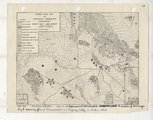
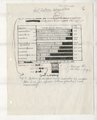
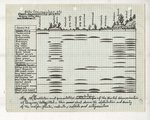
Show Elsewhere, big sage grows well on stabilized sand dunes of the foothills and on dunes 10 to 12 miles westward near the barren salt flats, but it/‘hoever icrafile dominant". M' Black sage, Artemisia tridentata ssp. ggya (A. Kels.) H. & C., grows mainly in small patches on the foothills in shallow clay loam soils or in gravelly or rocky soils. Good stands are located on the ‘ southwest foothills of Cedar Mountains near Wig Mountain and on the eastern slopes of Little Granite Mountainflxfi Vhas.g:=habty reduced it to to livestock and heavy grazing a considerable extent. It is very palatable Wild horses and antelope hésSESEEE observed feeding in these areas. Winter fat (white sage), Eurotia lanata (Pursh.) Moq., is also found in small patches scattered throughout the study area notably on the gentle east slope of Simpson BuflEs where it extends downward toward. the shadscale flats,and_in pure stands on the flats near the south end of the Cedar Mountains.It extends upwards into the biggsagé areas where it becomes Spotty or scattered. In contrast to the smaller, regularly spaced plants occurring in pure stands/gt %% where the salt content is higher, plants growing in the foothills and mountains are to £3 times ae-largevi This is due mainly to much reduced salts, looser soils and more moisture. The scattered distribution at higher elevations is the result of competetion of other plants. White sage is especially palatable to sheep and W was much more abundant in western Utah. Heavy grazing following the settle- ment of the state has greatly reduced it over wide areas. The increase in its size and vigor ifi the foothills of this area'since grazing was restricted in 1951, indicates its capacity to maintain itself as a dominant type. In some areas it is regaining its former vigor and extending its range in the shallow loams of the foothills and is |