| OCR Text |
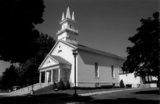
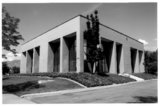
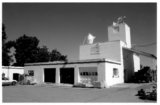
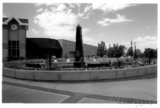
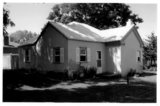
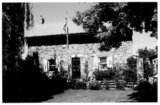
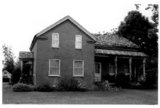
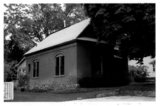
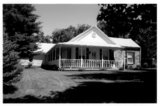
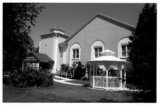
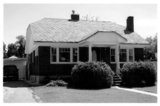
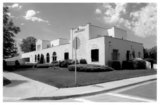
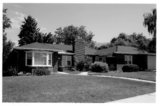
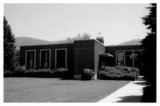
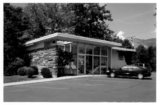
Show OMB No. 1024-0018, NFS Form United States Department of the Interior National Park Service National Register of Historic Places Continuation Sheet Section No. 8 Page 7 Bountiful Historic District, Bountiful, Davis County, UT communities. The Moss Apartments helped fill a need for housing,for young couples and singles during the depression years and is still occupied today. Despite the depression years, Bountiful's Main Street appears to have experienced a small building during this period. This type of 1930s-bopm is unusual for towns of Bountiful's size, and is probably due the strong economic ties between Bountiful and Salt Lake in the 1930s. The Bountiful Theater and Union Mortuary were built during this period [Photographs 9 & 57]. Not surprisingly, the 1930 Sanborn map shows a high number of auto-related businesses on or near Main Street. The city moved its offices into a new city hall on Main Street. In 1932, the city acquired the privately-owned, Bountiful Light and Power Company. It also took over the operation of the cemetery from the LDS Church in 1939. In 1938, the American Legion built a meeting hall in honor of George R. Day, the only Bountiful man to be killed during World War I [Photographs 8]. Due to a steadily rising population, the Bountiful Third Ward was organized on April 10, 1938, and subsequently built a meetinghouse at the corner of 400 North and 400 East [Photograph 59]. In 1940, Bountiful Mayor Lloyd Riley instigated a numbering system for houses. The city had finally outgrown its rural roots. In addition to its proximity to Salt Lake, World War II defense plants in northern Davis County and Weber County helped attract new residents with convenient employment. With waning rail service, paved streets and stop signs (first installed in 1928), the community was primed to become one of the Wasatch Front's most popular automobile suburb. Post-War Expansion Period, 1946-1955 Post-war expansion in Bountiful can be more accurately described as a post-war explosion. For returning GIs ready to begin, families, Bountiful was the ideal location, close to employment center and enough available land for large-lot subdivision development. The population of the city grew from 3,557 in 1940, to 6,004 in 1950,'to 17,039 in 1960. In his history of Bountiful, Leslie Foy titled one chapter "The Challenges of Rapid Growth." In it he states, "Entire subdivisions grew up almost over night." Thousands of homes appeared on the land north, east and south of the town site on land which had been previously occupied by orchards and fields. In the early 1950s, the first zoning ordinances were passed. The city worked on numerous water and sewage projects. In 1954, the power plant was modernized and the first city manager was appointed. Remarkably the historic character remained intact under the onslaught of suburban development. The Sanborn map, covers only a portion of the historic district, but indicates that very few older homes were torn down for new residential development. Post-war cottages and early ranch houses simply completed the infill of lots in the historic city center [Photographs 61-64]. Developers were able to build modest housing tracts (three to five houses) on the subdivided blocks of the town site. In particular, the east half of the district, where there was more vacant land, became very suburban in character, albeit with older stone and brick dwellings on most of the corner lots. Bountiful's commercial district experienced a second boom during this period. There are numerous example of late 1950s and early 1960s commercial buildings [Photographs 65, 66 & 68]. The Bountiful Community Church at 100 N. 400 East, built in 1954 and expanded in 1961, is a notable institutional building of the period [Photograph 67]. |