| OCR Text |
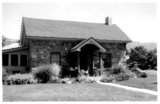
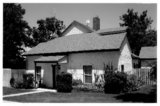
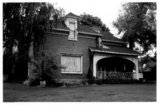
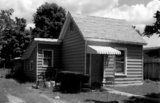
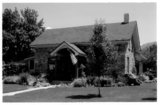
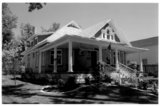
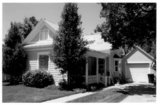
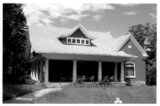
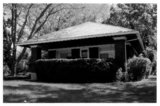
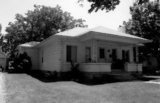
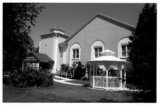
Show OMB No. 1024-0018, NPS Form United States Department of the Interior National Park Service National Register of Historic Places Continuation Sheet Section No. 8 Page 5 Bountiful Historic District, Bountiful, Davis County, UT The second was the arrival of the Bamberger Railroad. Simon Barnberger, a businessman who later became governor of Utah, established the railroad as a way to link the numerous farm communities between Salt Lake and Ogden, while promoting his Lake Park resort near Farmington (today's Lagoon Amusement Park). The railroad was nicknamed the "Dummy" because the steam engines were encased in wood to look like the cars they pulled. The station was located on 200 West and 200 South (demolished). The Dummy was an important factor in the community's economic growth because it had both freight and passenger service. It allowed Bountiful farmers and merchants to more easily ship commodities and export produce. For ten cents, Bountiful residents could ride into Salt Lake City for work, school, or an outing, allowing the newly formed city to function as a streetcar suburb. The steam railway was electrified in 1910, by which time it was known as the Bamberger Electric Railroad. One of the most popular services, it ran a regular schedule until 1952 when service ended. Along with the Bamberger, Bountiful had streetcar service provided by the Utah Power and ( Light Company. The streetcar ran along Orchard Drive and down the center of Main Street until service was discontinued in 1926. With only a few exceptions, all of Bountiful's major public amenities were established during this period, with much of the improvement concentrated in the town site and adjacent neighborhoods. It was an era of firsts: electric power in 1896, sidewalks in 1897, a public watering, trough in 1898, public water system and plumbing began in 1906, and streetlights installed in 1908. The Bountiful Light and Power Company started in 1907. The city also instituted>a library in 1900, a volunteer fire department in 1911, a park system (1918) and a city dump (1922). In 1908, the Bell Telephone Company established the Bountiful Exchange. The sidewalks were laid with cement beginning in 1909. The beginning of the automobile culture was marked by a gasoline, stand (1914), the first street paving (1918), and bus service, which began in 1920. Business flourished in Bountiful during this period and many of the buildings remain. Two examples still in use by their original occupants are the expansion of the Bountiful Lumber & Supply Company (190 S. Main, built in 1919) [Photograph 51], the Davis County Clipper newspaper building (built in 1906, 1960s facade) and Carr's Printing (circa 1920, altered). The city also had two banks, the Bountiful State Bank (1906) and the Union Bank (circa 1910). There were three competing furniture stores, two of which also provided mortician services. The furniture stores were consolidated into one company in 1923. There were also four mercantile or general stores, including an early J.C. Penney's dry goods store. Main Street also included the more urban enterprises: a dentist, a theater, a florist, a drugstore, a confectionary, and a pool hall. By the end of the period, the town also boasted six separate automobile-related businesses. The population of Bountiful doubled in this period. The LDS Church divided the East Bountiful Ward into two new wards on February 14, 1909. The Bountiful First and Second Wards continued to meet in the tabernacle until the Second Ward Meetinghouse was completed in 1914 [Photograph 51]. Many second-generation residents of Bountiful prospered and built large homes [Photographs 16, 36, 43, 45 & 47]. Others, including former Bountiful mayor Charles R. Mabey, who later served as Utah's governor, had more modest homes [Photograph 44]. The Victorian cottage, and later, the bungalow were the most popular house types of this period [Photographs 46 & 48] for Bountiful's emerging middle class. The Stoker School located just south of |