| OCR Text |
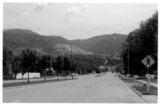
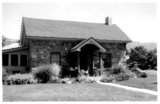
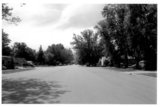
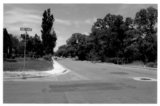
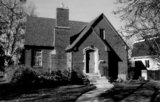
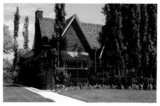
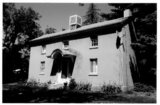
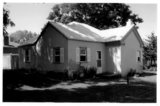
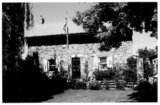
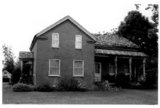
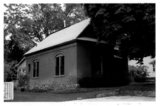
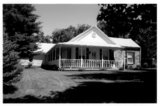
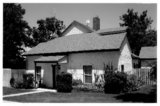
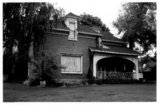
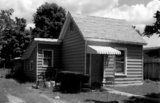
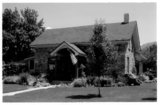
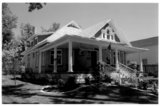
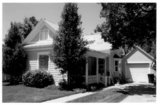
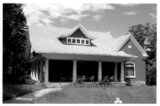
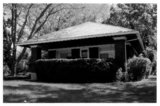
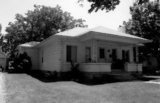
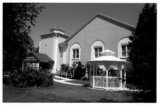
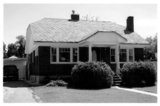
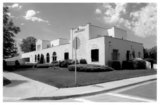
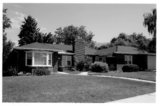
Show United States Department of the Interior National Park Service OMB No. 1024-0018, NPS Form National Register of Historic Places Continuation Sheet Section No. 7 Page 7 Bountiful, Bountiful, Davis County, UT Incorporation and City Improvement Period, 1892-1925 The period that followed the city's incorporation represents the transition from rural to urban development. The City of Bountiful was incorporated in 1892. In the years that followed, the city's early amenities were concentrated on the Plat A town site and the adjacent neighborhoods. These amenities included electric power (1896), electric streetcar (1900), water system (1906-1907), streetlights (1908), sidewalks (1909-1914), paved streets (1918), and a bus line (1920). 5 The population of the city doubled in the period. This period represents a large number of contributing resources at approximately twenty-four percent. This period includes late Victorian-era residences (thirteen percent) and numerous (twelve percent) bungalows. Brick was the primary building material. Stone used for foundation work, until concrete became available around 1915. Most of the earlier residences are Victorian-style cottages, however there are exceptions. For example, the classically-styled stone house at 208 N. 200 East, was built by its owner, James H. Burriingham, in 1894, at a time when stone masonry (except for foundation work) arid classical symmetry had disappeared from most Utah towns [Photographs 40 & 2A]. In fact stone remained an important part of Bountiful's aesthetic through the entire twentieth century. It was used and continues to be used in landscape work, and as a veneer for remodels and additions. One example is the home of Jarnes Green, a brick maker and brick mason, at 196 N. 200 East. The current owners recently added a stone-veneer addition to the Victorian Eclectic house [Photograph 41]. James Green built several homes in the area. Some of the bricks he used were stamped with the name "Green" for his company. The distinctive double-arch brick window hoods, which are found on homes throughout Bountiful, may also be a sign of his handiwork or his influence. Another Victorian cottage is the district with this design is found at 293 N. 100 West [Photograph 42]. Thirteen percent of the district's residences are Victorian in type and style. The asymmetry and multi-textural ornamentation of the Victorian Eclectic style was very popular in Utah during this period. Most of Bountiful's Victorian-era architecture is sedate, but there are a few more fanciful examples, such as the house at 371 N. 200 West, a Queen Anne-style house with a square tower [Photograph 43]. In the late nineteenth and early twentieth century, the Victorian cross wing type evolved into the more complicated central-block-withprojecting-bays house type. Two good examples of this evolution are the neighboring brick homes at 73 W. 100 North, the Day-Mabey house, and 94 N. 100 West, the Mark and Sarah Holbrook house. The Day-Mabey home was built around 1903 with a rear addition built by the Mabey family in the 1910s. The house is a modest example of the central-block type and features a dogtooth brickwork and shingled gable trim [Photograph 44]. The Holbrook House, built circa 1915, has a rock-face, concrete-block foundation, stucco in the gable trim and a neo-classical porch [Photographs 45 & 3 A]. Although brick was the primary material of this period, there are a few frame examples, including the Victorian cottage at 141 E. Center Street [Photograph 46]. Remarkably, it still features its original drop-novelty siding, while most other examples have been covered in aluminum or vinyl. The decade of the 1910s was a period of architectural transition in Bountiful. The bungalow style was beginning to be popular and several Victorian-era homes were updated. The most notable example is the Smedley House at 305 N. Main, an 1893 Victorian cross wing completely rebuilt into a bungaloid mansion in 5 Historic sidewalks on 100 West still the 1922 imprint from the Riley & Gordon Construction Company of Salt Lake City. |