| OCR Text |
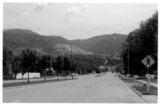
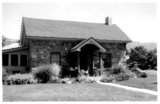
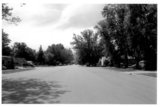
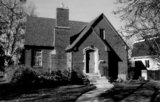
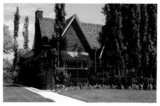
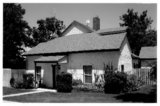
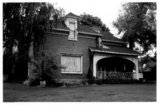
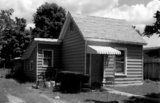
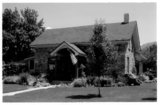
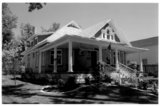
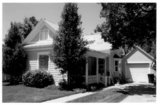
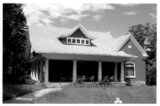
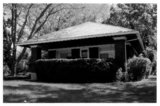
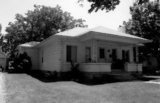
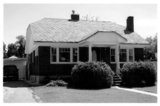
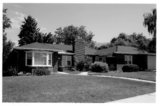
Show 0MB No. 1024-0018, NFS Form United States Department of the Interior National Park Service National Register of Historic Places Continuation Sheet Section No. 8 Page 6 Bountiful Historic District, Bountiful, Davis County, UT the tabernacle and completed in 1905, was the most prominent building constructed during this period [Photograph 20]. Census records for this period show that the popular mostly consisted of Utah natives with only a small immigrant population. The number of common surnames suggests that a large portion of Bountiful residents were descendants of the first settlers. Farming was still the most common occupation, but there was a wide range of specialized workers in retail, industry, and civil service. Economic diversity was particularly apparent within the historic district. Families were much smaller than in previous periods, averaging three to five children per household. The family garden and orchard were still an important part of the landscape, but most of the agricultural outbuildings within the district disappeared during this period and were replaced by garages and tool sheds. The automobile was an important and growing part of Bountiful's culture as it made the transition from semi-rural streetcar community to the early epicenter of the coming suburban boom in south Davis County. Community Development and the Rise of the Automobile Period, 1926-1945 The late 1920s to early 1940s was an interesting period in Bountiful's development. Leslie Foy described the effect Bountiful's depression years in this way: "For the farm families of Bountiful, the depression was not characterized as much by a lack of food as it was a lack of cash to pay taxes, mortgages, or buy shoes. Person income was low."8 He also noted that many families banded together to save farms and homes. The community participated in a number of WPA programs, mostly water-related projects. The 1930 census indicates, while farm occupations were still prevalent, many Bountiful residents were laborers or had odd jobs than in the previous enumerations. The ethnic make-up and family size of the community did not noticeably change. The value of the homes in the historic district ranged from $1,000 to $10,000 with a fairly high percentage of home ownership. Rental rates were about $5 to $30 per month. About eighty-five percent of Bountiful residents had radios. This period marked the peak of agricultural activity in Bountiful. The Chamber of Commerce instituted "Cantaloupe Days" to promote and celebrate one of the community's most prolific crops. Unlike many of Utah's small towns, which had little building activity during the 1930s, the statistical count of architectural resources of the historic district indicate that construction activity remained steady. The number of period cottages built during this period rivals the number of bungalows in the previous period, a statistical anomaly compared to similarly sized Utah towns [Photographs 52 & 53]. By the early 1940s, the streets of the historic district were paved, had curb and gutter, and were lined with mature trees. Particularly in the west half of district, the semi-rural lots had been divided and subdivided with hundreds of new houses, including an unusually high number of pre-World War II-era cottages [Photographs 54-55]. In 1931, the period-revival Moss Apartment building was constructed at the corner of 200 North and Main Street [Photograph 56]. Hundreds of these walk-up apartment blocks were built in downtown Salt Lake City, but are rare in smaller 8 Ibid, 231. |