| OCR Text |
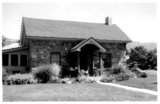
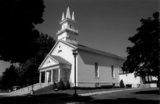
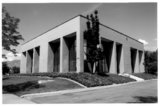
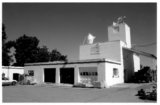
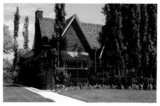
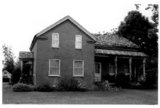
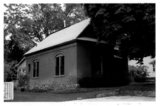
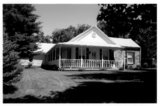
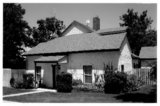
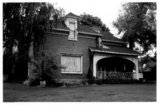
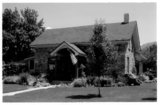
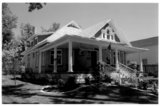
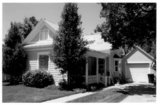
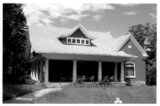
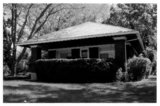
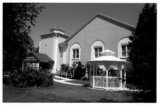
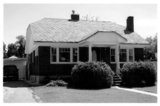
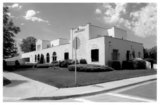
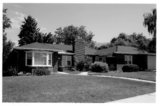
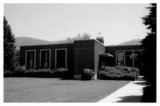
Show OMB No. 1024-0018, NFS Form United States Department of the Interior National Park Service National Register of Historic Places Continuation Sheet Section No. 7 Page 8 Bountiful, Bountiful, Davis County, UT 1915 [Photograph 47]. Six percent of contributing buildings in the district have been categorized as bungalow in type with additional seven percent exhibiting characteristics of the bungalow style. The majority were built after 1915 when the bungalow had replaced the Victorian cottage as Utah's most popular house type. The residence at 35 W. 100 South is a typical example with modest Prairie School influence [Photograph 48]. It features the low-sheltering roof, large porch and informal floor plan that typify the bungalow. A more unusual example is the concrete rock bungalow at 138 N. 100 East [Photograph 49]. This house also includes one of several rock-faced concrete-block garages in the district, however most of the contributing outbuildings from this period are frame and brick garages [Photographs 46]. The largest house is the circa 1915 foursquare at 92 W. Center Street [Photograph 16] This period includes the apex of historic development on Main Street, and despite recent demolitions, several brick commercial blocks remain to represent the period. One example is the Bountiful Lumber & Supply Company, a corner block located at 190 S. Main Street, built in 1919 (expanded to the north in the 1930s) [Photograph 50]. This brick commercial building has continued in the same usage and features three historic lumber sheds in the rear. The Stoker School, a three-story brick edifice constructed in 1904, is the most important institutional buildings from this period [Photograph 20]. The Bountiful Second Ward Meetinghouse at 197 E. 500 South was constructed by the LDS Church during this period, but the 1912-1914 building was expanded and remodeled in 1950 [Photograph 51]. Community Development and the Rise of the Automobile Period, 1926-1945 Because of the large number of contributing resources, approximately twenty-nine percent, this relatively short period has a distinct historical context. Despite the depression years, Bountiful's Main Street appears to have experienced a building boom period during the 1930s. This is unusual for towns of Bountiful's size in Utah, and is probably due the strong economic ties between Bountiful and Salt Lake in the 1930s. The architecture of this period represents a transition in the economic and social history of the community based on the proliferation of the automobile, marked by the suspension of electric streetcar service in 1925 and the installation of the first stop signs in 1928. Many commercial buildings change from pedestrian-oriented to automobile-oriented, and garages multiplied while agricultural outbuildings disappeared. Within the district, residences from this period appear as infill between the pioneer and Victorian-era homes. Like the bungalows of the previous era, the residences of this period were built mostly by individuals and not as tract housing, so the architecture varies considerably. The period cottage is the most popular house type in the late 1920s and 1930s, and the number of examples in Bountiful rivals the number of bungalows in the previous period, which is unusual in Utah. By the mid-1920s, a new house type emerged as a hybrid of the bungalow and the period cottage that features a square footprint, smaller porch, and stylistic elements of the Colonial Revival or Neo-classical. Bountiful has several good examples including the house at 185 W. 100 North, built circa 1926 [Photographs 52]. In the late 1920s and early 1930s, true period cottages began to appear in the district. Most were the work of individual owners and buildings, and a high number have distinctive decorative brickwork and English Tudor details. The house at 390 S. 100 East, built in 1931, is constructed of brick with cast concrete details [Photographs 53]. Bountiful's historic district includes several large frame examples of the period cottage, a relatively rare phenomenon in |