| OCR Text |
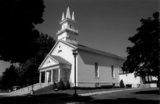
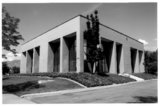
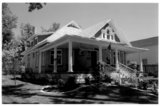
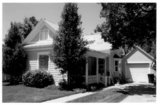
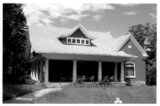
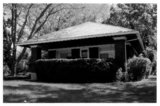
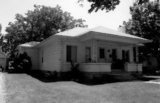
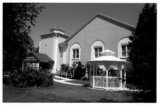
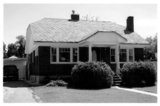
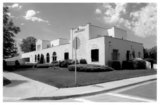
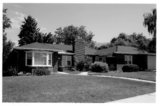
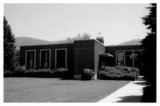
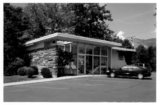
Show United States Department of the Interior National Park Service OMB No. 1024-0018, NPS Form National Register of Historic Places Continuation Sheet Section No. 7 Page 10 Bountiful, Bountiful, Davis County, UT street of the historic district. The early ranch-style house at 480 S. 100 West is typical [Photograph 63]. In a sign of neighborhood stability, particularly at the east edge of the survey area, showcase ranch houses were built by prosperous residents on the corner lots formerly vacant or occupied by nineteenth-century farmhouses. The unusual house at 115 E. 200 South is an example of the more elaborate ranch-style houses [Photograph 64]. This house, built in 1952, features a U-shaped front courtyard and an attached garage. Bountiful's commercial district experienced a second boom during this period with both new infill construction and fa9ade remodeling on Main Street. Bountiful's historic district has numerous example of late 1950s and early 1960s commercial buildings. The simple modern brick building for the Bountiful Music Company at 365 N. Main Street dates from this period [Photograph 65]. The former Bountiful City Post Office (built in 1954) is located at 55 E. 300 South just off Main Street, and is a free-standing, post-war, modern-style commercial block with a completely glass-front [Photograph 66]. The post office features flagstone for the bulkhead, an architectural element found on a number of commercial buildings of the period. This period also includes the remodeling of the Victorian-era Bountiful Second Ward Meetinghouse (noted above) [Photograph 51] into a Colonial Revival-style building. The most important new institutional building of the period was the Bountiful Community Church at 100 N. 400 East, built in 1954 and expanded in 1961 [Photograph 67]. Late Twentieth Century Development Period, 1956-2005 The construction of the freeway system in the late 1950s changed the relationship of Bountiful to neighboring communities, but it was not until the 1980s, that downtown city center has been over-shadowed by commercial development near the freeway. Especially during the 1960s, the historic district continued to be a stable anchor of the community with sustained growth. There are numerous buildings from the early 1960s that will soon be eligible for the National Register, most are small commercial buildings or low-density multi-family units that currently do not detract from the historic character of the historic district. The modern-style office building at 406 N. Main Street is an outstanding example, again using stone as a strong element [Photograph 68]. It is only recently that over-scale development has threatened the character of the historic district. |