| OCR Text |
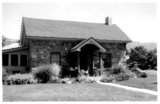
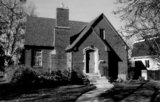
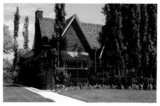
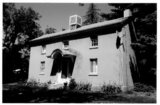
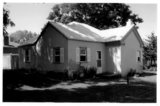
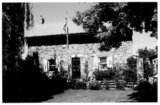
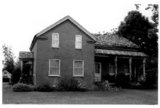
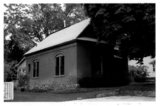
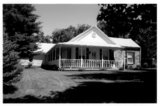
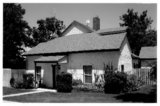
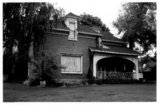
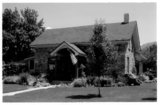
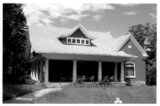
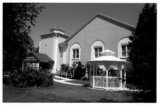
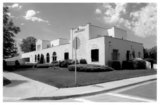
Show OMB No. 1024-0018, NFS Form United States Department of the Interior National Park Service National Register of Historic Places Continuation Sheet Section No. 8 Page 4 Bountiful Historic District, Bountiful, Davis County, UT Woods Cross Canning and Pickling Company was started in 1891, and although not within the city limits, it was an important employer for many years. The most important architectural contribution of this period to the historic district is the number of stately residences built, mostly on prominent corner lots, throughout the town site. Joseph Holbrook built a stone house on a parcel of land he acquired in 1872 as the first recorded land transaction recognized by the , government [Photograph 28]. Prior to this time, land was distributed through the LDS Church hierarchy. David Stoker, son of John Stoker, built a fine brick home for his wife, Regina Hogan in 1871 [Photograph 29]. Brick mason, James Green, built a number of residences in Bountiful, including the home he built for his daughter in 1887. Emily Green's home was a showcase for her father's talents as a mason and carpenter. The home is listed on the National Register and the property includes an unusual brick smokehouse [Photographs 30-31]. By the end of this period, Bountiful's population was over two thousand. The 1880 census enumeration gives a glimpse of the demographics. The older population consisted mostly of immigrants from England and the eastern portions of the United States; however the majority of children were born in Utah. The population was white with the exception of Ruth Davids and her children. Ruth was a full-blood Piede Indian. Bountiful resident, Anson Call traded a sack of flour for Ruth when she was a small child in Utah in 1853. Call adopted her and she was raised as a daughter. She married James Henry Davids, an Easterner who came to Utah as a soldier and later worked for the Call family. They lived in Bountiful where James farmed and Ruth became a mid-wife. James and Ruth Davids left Bountiful with several other families to colonize southern Idaho in the early 1880s. The average family size was about six children. There are several female heads of households, mostly widows or wives of the town's polygamists. Though the practice was not wide spread, a number of prominent Bountiful citizens were polygamists until 1890 when church-sanctioned polygamy was discontinued. The majority of workers were farmers or farm laborers. At least two men were described in the 1880 census as "market growers." The large lots found within the historic district allowed for an agrarian overlay that allowed for small gardens, orchards, and even livestock on the family's plot of land. This was an important part of the community economy, but many also worked at specialized occupations. James Weight was a carpenter and his wife, Dinah was a milliner. Many of the young women were employed. Phoebe Wood and Ellen Muir were dressmakers, while Ann Layton was a telegraph operator. A dozen men were making bricks or in the building trades. Several members of the Thurgood family ran a store. Alfred Putnam made a living as a musician. Incorporation and City Improvement Period, 1892-1925 The year 1892 was marked by two important events in Bountiful. The first was of the incorporation of the City of Bountiful, on December 28, 1892. The first city council meeting was held at the home of Charles Pearson on that day. Three years later, mainly because of disputes over water rights, the communities of West Bountiful and Wood Cross broke away from Bountiful. |