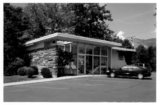
| OCR Text |
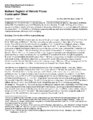
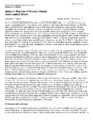
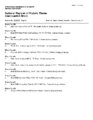
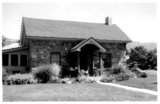
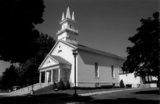
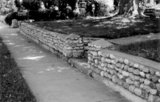
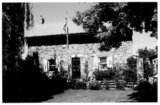
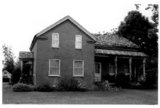
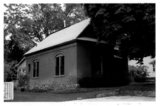
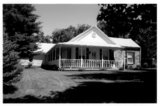
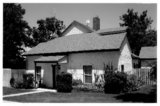
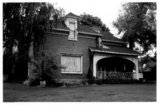
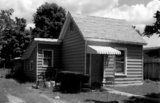
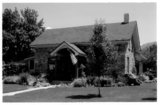
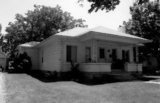
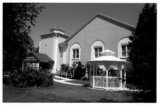
Show OMB No. 1024-0018, NPS Form United States Department of the Interior National Park Service National Register of Historic Places Continuation Sheet Section No. 8 Page 2 Bountiful Historic District, Bountiful, Davis County, UT three years, and was instrumental in uniting the scattered community of farmsteads under a common name. Bountiful was the name of an ancient city described in the Book of Mormon. Prior to this time the families were scattered throughout the area currently known as Bountiful, Centerville and Woods Cross. In the 1850s, the community became more organized. Road districts were established in 1853, and a post office designated in 1854. That was the same year as the first town site survey. The boundaries of the first town site, known as Plat A, encompassed the area designated for the Bountiful Fort. Based on early models of Mormon town planning, it was believed that the community's social, cultural and educational development would be better served by concentrating the residences within the town site with farming in the outlying acreage. The fortified town would also provide protection from the perceived threat of Native Americans, who had previously used the land for hunting and camping. The fort wall was designed as a dirt embankment along the Plat A boundary streets: 200 West, 400 North, 400 East and 500 South. The mud wall, as it was called, was only partially completed and eventually demolished by 1900. The settlers were advised to move into the fortified city and lots were sold for $5.00 to $25.00 per lot. John Stoker was one of the first residents to move his family to the fort. Of the 150 families living in Bountiful in 1855, only 36 had built homes inside the fort. The settlement was tied to Salt Lake City and the greater community through dirt roads, the Pony Express (1860) and the Desert Telegraph (1867). The dedication of the Bountiful Tabernacle on March 13, 1863, was an impressive two-day event, which brought many visitors to the community. The Bountiful Tabernacle, built of adobe brick on a stone foundation and designed by Bountiful resident Abraham Farnham, is one of the largest surviving adobe buildings in Utah. The National Register-listed buildings is also one of the oldest LDS Church meetinghouses in continual use. [Photograph 10]. The tabernacle replaced an early log building (corner of 400 North and 200 West, demolished) and an adobe schoolhouse (same area, demolished), which had been used for church and community meetings. Hannah Holbrook is credited as the first school teacher in Bountiful. Within a few years, the settlers were able to move from their rough hewn log cabins into more substantial homes made from adobe and stone. In 1850, Sessions built a two-story adobe house in 1850 on the main Territorial Road from Salt Lake to the northern settlements (200 West). Until its demolition around 1900, the house was the home to several families of Sessions and also served the community as an inn, Pony Express stop and post office. The adobe bricks were made from clay in area near today's 500 North and 100 West. John Crosby, a farmer, and his wife Mary Jane Johnson, had a two-story adobe home on 100 West [Photographs 23 & 1A]. Stone masonry was also favored by early Bountiful settlers. Jeremiah Willey began constructed a stone house in 1868, the year he died. It was completed by his sons, and is occupied by a descendant today [Photograph 25]. The stone barn, located on 200 West, was part of the Daniel and Cordelia Carter farmstead, and is the oldest stone building in Bountiful [Photograph 26]. Brick-making began in Bountiful during this period. Henry Rampton, the town's most prominent blacksmith and a polygamist, had two of the earliest brick homes built for his wives, Frances Dinwoodey and Ada McDuff [Photograph 34]. Water for irrigation came from the canyons to the east. Barton (later Holbrook) Creek ran diagonally south to north through the platted town. Mill Creek ran just to the south of the town site. Stone and North Canyon Creeks brought water to the lands north and south of the town respectively. Heber C. Kimball built the first |