| Title |
Harry A. Moyer, Park City, Utah: an interview by Benjamin Bahlmann. Saving the legacy tap no. 613 |
| Alternative Title |
Harry A. Moyer, Saving the legacy: an oral history of Utah's World War II veterans, ACCN 2070, American West Center, University of Utah |
| Creator |
Moyer, Harry A., 1920- |
| Contributor |
Bahlmann, Benjamin; University of Utah. American West Center |
| Publisher |
Digitized by J. Willard Marriott Library, University of Utah |
| Date |
2002-11-22 |
| Date Digital |
2015-09-16 |
| Access Rights |
I acknowledge and agree that all information I obtain as a result of accessing any oral history provided by the University of Utah's Marriott Library shall be used only for historical or scholarly or academic research purposes, and not for commercial purposes. I understand that any other use of the materials is not authorized by the University of Utah and may exceed the scope of permission granted to the University of Utah by the interviewer or interviewee. I may request permission for other uses, in writing to Special Collections at the Marriott Library, which the University of Utah may choose grant, in its sole discretion. I agree to defend, indemnify and hold the University of Utah and its Marriott Library harmless for and against any actions or claims that relate to my improper use of materials provided by the University of Utah. |
| Spatial Coverage |
Africa; Sicily; China |
| Subject |
Moyer, Harry A., 1920- --Interviews; World War, 1939-1945--Personal narratives, American; Veterans--Utah--Biography; World War, 1939-1945--Aerial operations, American; World War, 1939-1945--Campaigns--Africa, North--Personal narratives, American; World War, 1939-1945--Campaigns--Europe, Southern |
| Description |
Transcript (115 pages) of an interview by Benjamin Bahlmann with Harry A. Moyer on November 22, 2002. This is from tape number 613 in the "Saving the Legacy Oral History Project |
| Collection Number and Name |
Accn2070, Saving the Legacy oral history project, 2001-2010 |
| Abstract |
Moyer (b. 1920) was in the aviation cadet program at the University of Akron at the time of Pearl Harbor. He was called to active duty in January 1942. He discusses his flight training at length. Other topics covered include joining the 33rd Fighter Group, Africa and Sicily, aerial combat, his views on General Montgomery, contact with Sicilian civilians, the merits of various aircraft, Anzio, being stationed in China, marriage, and duty as a flight instructor. 115 pages. |
| Type |
Text |
| Genre |
oral histories (literary works) |
| Format |
application/pdf |
| Extent |
115 pages |
| Language |
eng |
| Rights |
 |
| Scanning Technician |
Mazi Rakhsha |
| Conversion Specifications |
Original scanned with Kirtas 2400 and saved as 400 ppi uncompressed TIFF. PDF generated by Adobe Acrobat Pro X for CONTENTdm display |
| ARK |
ark:/87278/s6t45sb7 |
| Topic |
Personal narratives--American; Veterans; World War (1939-1945) |
| Setname |
uum_slohp |
| ID |
1020962 |
| Reference URL |
https://collections.lib.utah.edu/ark:/87278/s6t45sb7 |
| Title |
Page 86 |
| Format |
application/pdf |
| Setname |
uum_slohp |
| ID |
1020931 |
| OCR Text |
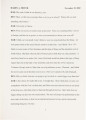
Show HARRY A. MOYER ovember 22 2002 never did. The black 99th squadrons claim that also. We flew with the 99th fighter squadron (at that time, was the all black Tuskegee guys), and they were based on the same field that we were in Sicily. BEN: Oh really? Was there interaction at all? HAR: We had one mission with them. They're on one side of the field, and we're on the other. And we took off. BEN: They were flying 51's though, right? HAR: No, they were flying P-40's. They didn't get 51's until they were in Italy. You know, you're always proud the way you fly (how you group up, how you fly tight formation and everything, how you join up). Well, we're already in formation and these guys are coming up and they're just all over the place, and one of them ran into another one and went in. And we never did like to fly with them. BEN: After that, huh? HAR: And I'm sure that they were good, because they had the same training that we did. And they certainly proved themselves later on, but we weren't too impressed with the initial exposure- and that was the only one that we had with those guys! BEN: So, you never crossed over to the other side of the field, never had any physical interaction? HAR: No, we didn't. Not because- I mean, we just didn't do it. We just didn't do it. We were all on one side and ... BEN: How was it at the time? You're in the second world war, racial lines are still pretty 85 |
| Reference URL |
https://collections.lib.utah.edu/ark:/87278/s6t45sb7/1020931 |