| Title |
Harry A. Moyer, Park City, Utah: an interview by Benjamin Bahlmann. Saving the legacy tap no. 613 |
| Alternative Title |
Harry A. Moyer, Saving the legacy: an oral history of Utah's World War II veterans, ACCN 2070, American West Center, University of Utah |
| Creator |
Moyer, Harry A., 1920- |
| Contributor |
Bahlmann, Benjamin; University of Utah. American West Center |
| Publisher |
Digitized by J. Willard Marriott Library, University of Utah |
| Date |
2002-11-22 |
| Date Digital |
2015-09-16 |
| Access Rights |
I acknowledge and agree that all information I obtain as a result of accessing any oral history provided by the University of Utah's Marriott Library shall be used only for historical or scholarly or academic research purposes, and not for commercial purposes. I understand that any other use of the materials is not authorized by the University of Utah and may exceed the scope of permission granted to the University of Utah by the interviewer or interviewee. I may request permission for other uses, in writing to Special Collections at the Marriott Library, which the University of Utah may choose grant, in its sole discretion. I agree to defend, indemnify and hold the University of Utah and its Marriott Library harmless for and against any actions or claims that relate to my improper use of materials provided by the University of Utah. |
| Spatial Coverage |
Africa; Sicily; China |
| Subject |
Moyer, Harry A., 1920- --Interviews; World War, 1939-1945--Personal narratives, American; Veterans--Utah--Biography; World War, 1939-1945--Aerial operations, American; World War, 1939-1945--Campaigns--Africa, North--Personal narratives, American; World War, 1939-1945--Campaigns--Europe, Southern |
| Description |
Transcript (115 pages) of an interview by Benjamin Bahlmann with Harry A. Moyer on November 22, 2002. This is from tape number 613 in the "Saving the Legacy Oral History Project |
| Collection Number and Name |
Accn2070, Saving the Legacy oral history project, 2001-2010 |
| Abstract |
Moyer (b. 1920) was in the aviation cadet program at the University of Akron at the time of Pearl Harbor. He was called to active duty in January 1942. He discusses his flight training at length. Other topics covered include joining the 33rd Fighter Group, Africa and Sicily, aerial combat, his views on General Montgomery, contact with Sicilian civilians, the merits of various aircraft, Anzio, being stationed in China, marriage, and duty as a flight instructor. 115 pages. |
| Type |
Text |
| Genre |
oral histories (literary works) |
| Format |
application/pdf |
| Extent |
115 pages |
| Language |
eng |
| Rights |
 |
| Scanning Technician |
Mazi Rakhsha |
| Conversion Specifications |
Original scanned with Kirtas 2400 and saved as 400 ppi uncompressed TIFF. PDF generated by Adobe Acrobat Pro X for CONTENTdm display |
| ARK |
ark:/87278/s6t45sb7 |
| Topic |
Personal narratives--American; Veterans; World War (1939-1945) |
| Setname |
uum_slohp |
| ID |
1020962 |
| Reference URL |
https://collections.lib.utah.edu/ark:/87278/s6t45sb7 |
| Title |
Page 6 |
| Format |
application/pdf |
| Setname |
uum_slohp |
| ID |
1020851 |
| OCR Text |
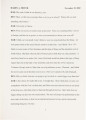
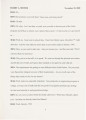
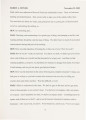
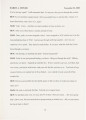
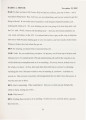
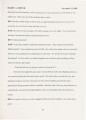
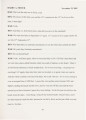
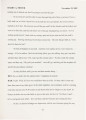
Show HARRY A. MOYER ovember 22, 2002 HAR: Oh, yeah, I think it was hinted at, sure. BEN: Okay, so that was your plans then, to try to go to school? Where did you start attending school then? HAR: University of Akron. BEN: Were you aware of world events at this time? Were you watching Hitler's moves in Europe, and his rise to power, or were you concerned just about your own self? HAR: I think, as I can recall, I don't think we were too concerned about the thing - we were pretty much in the social school ourselves at that time. And I think '38 or '39 I think we were aware ofNazi Germany and that type of thing, and the operation over in North Africa. But then when the fall of Poland came I think that was a big situation - it must have been for us, quite a bit, 'cause I had made model air planes, that type of thing. I guess that was in the back of my mind then, and then when the AVG (American Volunteer Group) went to China, that was a big influence on me- Chenault - and I think the movie came out at that time God is my Co-Pilot so I wanted to fly with Chenault. BEN: Did you think America was going to get involved in a much bigger way than that? HAR: I don't know if I really did or not. I thought that, I don't think that we were very sympathetic with the Nazi's at that time, and China was not a known factor in our minds at that time too, other than what we had seen through the movies. But I think that our biggest thing was just our own social school. The war in Europe was predominant in the news reels at the time, so that was an educational process for me, and an emotionally motivating thing too, I'm sure. 5 |
| Reference URL |
https://collections.lib.utah.edu/ark:/87278/s6t45sb7/1020851 |