| Title |
Jack Goodman, Interviews with Jews in Utah, Accn 998 |
| Alternative Title |
Accn 998, Interviews with Jews in Utah, Jack Goodman |
| Description |
Transcript (71 pages) of interview by Leslie Kelen with Jack Goodman on November 16, 1987 for the Interviews with Jews in Utah Oral History Project. |
| Creator |
Goodman, Jack, 1913-2003 |
| Contributor |
Kelen, Leslie G., 1949-; Oral History Institute |
| Publisher |
Digitized by J. Willard Marriott Library, University of Utah |
| Date |
1987-11-16 |
| Date Digital |
2015-07-06 |
| Access Rights |
I acknowledge and agree that all information I obtain as a result of accessing any oral history provided by the University of Utah's Marriott Library shall be used only for historical or scholarly or academic research purposes, and not for commercial purposes. I understand that any other use of the materials is not authorized by the University of Utah and may exceed the scope of permission granted to the University of Utah by the interviewer or interviewee. I may request permission for other uses, in writing to Special Collections at the Marriott Library, which the University of Utah may choose grant, in its sole discretion. I agree to defend, indemnify and hold the University of Utah and its Marriott Library harmless for and against any actions or claims that relate to my improper use of materials provided by the University of Utah. |
| Spatial Coverage |
Salt Lake City, Salt Lake County, Utah, United States, http://sws.geonames.org/5780993 ; New York City, New York, United States, http://sws.geonames.org/5128581 |
| Subject |
Jews, American--Utah--Interviews; Goodman, Jack, 1913-2003--Interviews; Radio broadcasting--United States |
| Abstract |
Jack Goodman (b. 1913) talks about growing up, his schooling, and his career in journalism. He recalls working for the New York Post and the New York City Radio Station during World War II, and coming to Salt Lake City, Utah, to work for KALL Radio after the war. He talks about politics in Utah, the civil rights and socialist movements, and his move from newspaper and radio to television. 71 pages. |
| Type |
Text |
| Genre |
oral histories (literary works) |
| Format |
application/pdf |
| Extent |
71 pages |
| Language |
eng |
| Rights |
 |
| Is Part of |
Interviews with Jews in Utah collection, 1982-1988, http://archiveswest.orbiscascade.org/ark:/80444/xv70657/ |
| Scanning Technician |
Niko Amaya; Halima Noor |
| Conversion Specifications |
Original scanned with Kirtas 2400 and saved as 400 ppi uncompressed TIFF. PDF generated by Adobe Acrobat Pro X for CONTENTdm display |
| ARK |
ark:/87278/s6mg9j73 |
| Topic |
Jews, American; Radio broadcasting |
| Setname |
uum_iju |
| ID |
905554 |
| Reference URL |
https://collections.lib.utah.edu/ark:/87278/s6mg9j73 |
| Title |
Page 72 |
| Format |
application/pdf |
| Setname |
uum_iju |
| ID |
905553 |
| OCR Text |
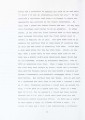
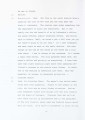
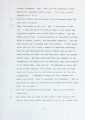
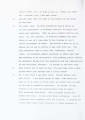
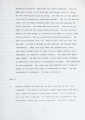
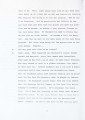
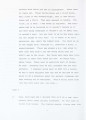
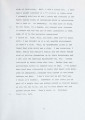
Show side of television. Well, I did a little bit. I once had a slight interest in a TV station in Idaho which I promptly sold out of but I never was involved in the money making sides of journalism which is advertising. Let's face it. Or ownership. Or that sort of thing. L: Do you think, to a degree, you connect your interest in people and the way you've been interested in them, some of it to the socialist connection? J: I think so. Yeah, well, you know, when you--to begin with, I was brought up in a not wealthy environment. It wasn't a slum. Well, my grandmother lived in the lower East side which was a slum. I saw ourselves, I mean, family and family's family and the whole Jewish kind of pulling themselves up by their bootstraps and I get into the American mainstream etc, etc. Always intrigued by books along that line. Rather than say, picturesque novels or romance this or that. I've always been much more interested in books that dealt with problems of immigrants, problems with blacks in the South. Indians out West. I don't know who we got that way. I think it's endemic. Somewhere in your roots you're part of a people that was pushed around in Czarist Russia so you try not to be, you try to help people who are pushed around here. That's about it. Finished. L: Thank you, Jack. 71 |
| Reference URL |
https://collections.lib.utah.edu/ark:/87278/s6mg9j73/905553 |