| Title |
Jack Goodman, Interviews with Jews in Utah, Accn 998 |
| Alternative Title |
Accn 998, Interviews with Jews in Utah, Jack Goodman |
| Description |
Transcript (71 pages) of interview by Leslie Kelen with Jack Goodman on November 16, 1987 for the Interviews with Jews in Utah Oral History Project. |
| Creator |
Goodman, Jack, 1913-2003 |
| Contributor |
Kelen, Leslie G., 1949-; Oral History Institute |
| Publisher |
Digitized by J. Willard Marriott Library, University of Utah |
| Date |
1987-11-16 |
| Date Digital |
2015-07-06 |
| Access Rights |
I acknowledge and agree that all information I obtain as a result of accessing any oral history provided by the University of Utah's Marriott Library shall be used only for historical or scholarly or academic research purposes, and not for commercial purposes. I understand that any other use of the materials is not authorized by the University of Utah and may exceed the scope of permission granted to the University of Utah by the interviewer or interviewee. I may request permission for other uses, in writing to Special Collections at the Marriott Library, which the University of Utah may choose grant, in its sole discretion. I agree to defend, indemnify and hold the University of Utah and its Marriott Library harmless for and against any actions or claims that relate to my improper use of materials provided by the University of Utah. |
| Spatial Coverage |
Salt Lake City, Salt Lake County, Utah, United States, http://sws.geonames.org/5780993 ; New York City, New York, United States, http://sws.geonames.org/5128581 |
| Subject |
Jews, American--Utah--Interviews; Goodman, Jack, 1913-2003--Interviews; Radio broadcasting--United States |
| Abstract |
Jack Goodman (b. 1913) talks about growing up, his schooling, and his career in journalism. He recalls working for the New York Post and the New York City Radio Station during World War II, and coming to Salt Lake City, Utah, to work for KALL Radio after the war. He talks about politics in Utah, the civil rights and socialist movements, and his move from newspaper and radio to television. 71 pages. |
| Type |
Text |
| Genre |
oral histories (literary works) |
| Format |
application/pdf |
| Extent |
71 pages |
| Language |
eng |
| Rights |
 |
| Is Part of |
Interviews with Jews in Utah collection, 1982-1988, http://archiveswest.orbiscascade.org/ark:/80444/xv70657/ |
| Scanning Technician |
Niko Amaya; Halima Noor |
| Conversion Specifications |
Original scanned with Kirtas 2400 and saved as 400 ppi uncompressed TIFF. PDF generated by Adobe Acrobat Pro X for CONTENTdm display |
| ARK |
ark:/87278/s6mg9j73 |
| Topic |
Jews, American; Radio broadcasting |
| Setname |
uum_iju |
| ID |
905554 |
| Reference URL |
https://collections.lib.utah.edu/ark:/87278/s6mg9j73 |
| Title |
Page 45 |
| Format |
application/pdf |
| Setname |
uum_iju |
| ID |
905526 |
| OCR Text |
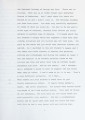
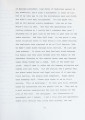
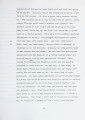
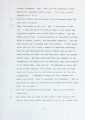
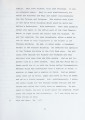
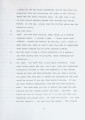
Show as the company spokesman, which was maybe not quite commonplace. Now, you had another factor here too. George Hatch who by then in charge of the stations. Hatch was then and is now a liberal Democrat. I don't doubt but what we gave Adlai Stevenson at least as good a break as we gave Eisenhower during the campaign. We maybe when Henry Wallace was running for president on a third party ticket we, I remember Wallace carne to town, we interviewed Wallace, which maybe the other stations did or did not do. L: What do you think, you know, in those days, in terms of a perspective you had, how well do you fit into the atmosphere of Salt Lake itself. Which is more conservative. How would you describe your role somehow. J: Oh, I always thought of myself as this more cultured, more sophisticated, more liberal guy from New York than most of the people I worked. I would try to educate them as it were. They may or may not have tried to educate me. Most of the people in a newspaper at any rate are caught up in the hour to hour stuff that's happening at the police station, happening at City Hall and not given, and me too, not really given to thinking in philosophical terms about if this group comes into office it's going to have thus and so effect on society. I had, I guess I was much more aware of those things maybe than my coworkers. But you didn't push in a newspaper at least, a radio station. You tak€ some pride in trying to be balanced but philosophically I was always well considered the company liberal. Or the |
| Reference URL |
https://collections.lib.utah.edu/ark:/87278/s6mg9j73/905526 |