| Title |
Jack Goodman, Interviews with Jews in Utah, Accn 998 |
| Alternative Title |
Accn 998, Interviews with Jews in Utah, Jack Goodman |
| Description |
Transcript (71 pages) of interview by Leslie Kelen with Jack Goodman on November 16, 1987 for the Interviews with Jews in Utah Oral History Project. |
| Creator |
Goodman, Jack, 1913-2003 |
| Contributor |
Kelen, Leslie G., 1949-; Oral History Institute |
| Publisher |
Digitized by J. Willard Marriott Library, University of Utah |
| Date |
1987-11-16 |
| Date Digital |
2015-07-06 |
| Access Rights |
I acknowledge and agree that all information I obtain as a result of accessing any oral history provided by the University of Utah's Marriott Library shall be used only for historical or scholarly or academic research purposes, and not for commercial purposes. I understand that any other use of the materials is not authorized by the University of Utah and may exceed the scope of permission granted to the University of Utah by the interviewer or interviewee. I may request permission for other uses, in writing to Special Collections at the Marriott Library, which the University of Utah may choose grant, in its sole discretion. I agree to defend, indemnify and hold the University of Utah and its Marriott Library harmless for and against any actions or claims that relate to my improper use of materials provided by the University of Utah. |
| Spatial Coverage |
Salt Lake City, Salt Lake County, Utah, United States, http://sws.geonames.org/5780993 ; New York City, New York, United States, http://sws.geonames.org/5128581 |
| Subject |
Jews, American--Utah--Interviews; Goodman, Jack, 1913-2003--Interviews; Radio broadcasting--United States |
| Abstract |
Jack Goodman (b. 1913) talks about growing up, his schooling, and his career in journalism. He recalls working for the New York Post and the New York City Radio Station during World War II, and coming to Salt Lake City, Utah, to work for KALL Radio after the war. He talks about politics in Utah, the civil rights and socialist movements, and his move from newspaper and radio to television. 71 pages. |
| Type |
Text |
| Genre |
oral histories (literary works) |
| Format |
application/pdf |
| Extent |
71 pages |
| Language |
eng |
| Rights |
 |
| Is Part of |
Interviews with Jews in Utah collection, 1982-1988, http://archiveswest.orbiscascade.org/ark:/80444/xv70657/ |
| Scanning Technician |
Niko Amaya; Halima Noor |
| Conversion Specifications |
Original scanned with Kirtas 2400 and saved as 400 ppi uncompressed TIFF. PDF generated by Adobe Acrobat Pro X for CONTENTdm display |
| ARK |
ark:/87278/s6mg9j73 |
| Topic |
Jews, American; Radio broadcasting |
| Setname |
uum_iju |
| ID |
905554 |
| Reference URL |
https://collections.lib.utah.edu/ark:/87278/s6mg9j73 |
| Title |
Page 46 |
| Format |
application/pdf |
| Setname |
uum_iju |
| ID |
905527 |
| OCR Text |
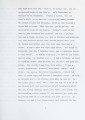
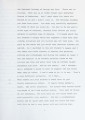
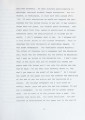
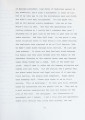
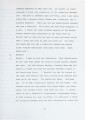
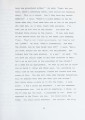
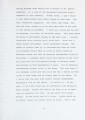
Show company Democrat or what have you. Of course, as times changed, I think the complexion of the community changed too. You got to remember that not--well, when I got here, there was a Senator Albert Thomas was a Democrat, was a liberal Democrat. There was one guy named Walter Granger who was a Democrat. This state was much more balanced in a way. I think the right wingish aspects of the Mormon Church became more pronounced as the years went on. Either that or they did not have as much political clout when I first got here as they did later on. You know, two years ago you had a completely Republican pretty right wingish Washington contingent from Utah. Garn, Hatch and ... L: Hansen? J: Hansen. I mean we had four Democrats. Four Republicans. By the time that maybe the sixties rolled around, Thomas was gone. You had Senator Bennett, Senator Moss was not exactly a freak but Moss was elected through a split in the Republican Party. J. Bracken Lee ran for senate at the same time Watkins was still trying to be senator and that split the party. The Republican Party. And Moss won. So we had a Democratic Senator for two terms. The Kennedy years you had people like Wayne Owens, y-ou know, young, the college crowd liked them etc, etc. A little later he had a Democratic Congressman, Congressman McKay. In part because his name was McKay, but basically I think the situation became more and more conservative, more and 45 |
| Reference URL |
https://collections.lib.utah.edu/ark:/87278/s6mg9j73/905527 |