| Title |
Jack Goodman, Interviews with Jews in Utah, Accn 998 |
| Alternative Title |
Accn 998, Interviews with Jews in Utah, Jack Goodman |
| Description |
Transcript (71 pages) of interview by Leslie Kelen with Jack Goodman on November 16, 1987 for the Interviews with Jews in Utah Oral History Project. |
| Creator |
Goodman, Jack, 1913-2003 |
| Contributor |
Kelen, Leslie G., 1949-; Oral History Institute |
| Publisher |
Digitized by J. Willard Marriott Library, University of Utah |
| Date |
1987-11-16 |
| Date Digital |
2015-07-06 |
| Access Rights |
I acknowledge and agree that all information I obtain as a result of accessing any oral history provided by the University of Utah's Marriott Library shall be used only for historical or scholarly or academic research purposes, and not for commercial purposes. I understand that any other use of the materials is not authorized by the University of Utah and may exceed the scope of permission granted to the University of Utah by the interviewer or interviewee. I may request permission for other uses, in writing to Special Collections at the Marriott Library, which the University of Utah may choose grant, in its sole discretion. I agree to defend, indemnify and hold the University of Utah and its Marriott Library harmless for and against any actions or claims that relate to my improper use of materials provided by the University of Utah. |
| Spatial Coverage |
Salt Lake City, Salt Lake County, Utah, United States, http://sws.geonames.org/5780993 ; New York City, New York, United States, http://sws.geonames.org/5128581 |
| Subject |
Jews, American--Utah--Interviews; Goodman, Jack, 1913-2003--Interviews; Radio broadcasting--United States |
| Abstract |
Jack Goodman (b. 1913) talks about growing up, his schooling, and his career in journalism. He recalls working for the New York Post and the New York City Radio Station during World War II, and coming to Salt Lake City, Utah, to work for KALL Radio after the war. He talks about politics in Utah, the civil rights and socialist movements, and his move from newspaper and radio to television. 71 pages. |
| Type |
Text |
| Genre |
oral histories (literary works) |
| Format |
application/pdf |
| Extent |
71 pages |
| Language |
eng |
| Rights |
 |
| Is Part of |
Interviews with Jews in Utah collection, 1982-1988, http://archiveswest.orbiscascade.org/ark:/80444/xv70657/ |
| Scanning Technician |
Niko Amaya; Halima Noor |
| Conversion Specifications |
Original scanned with Kirtas 2400 and saved as 400 ppi uncompressed TIFF. PDF generated by Adobe Acrobat Pro X for CONTENTdm display |
| ARK |
ark:/87278/s6mg9j73 |
| Topic |
Jews, American; Radio broadcasting |
| Setname |
uum_iju |
| ID |
905554 |
| Reference URL |
https://collections.lib.utah.edu/ark:/87278/s6mg9j73 |
| Title |
Page 60 |
| Format |
application/pdf |
| Setname |
uum_iju |
| ID |
905541 |
| OCR Text |
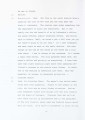
Show L: J: was a Briska or something organization. There was a club, as it were, a social semi-social and semi-insurance oriented thing. You had to belong to something like the Arbeiter Ring and/or the Briska thing. You paid a few dollars a year and it was a burial society. You therefore had enough money, I mean you paid into this thing, maybe it was a couple of dimes a month so that you had a burial plot in a Jewish cemetery in Brooklyn or in Queens. The Arbeiter Ring, well, the Briska, it was the Briska branch of the Arbeiter Ring. It's corning back to me now. It was like everybody from their local area in Russia-Poland was considered a Briska. A person from Brest-litovsk. The Arbeiter Ring was apparently .. By the way, you spell? B-r-e-s-t - L-i-t-o-v-s-k. Now, that's famous in history in a way. That's the place where Germany and the Karensky government signed the treaty that took Russia out of World War I. When Germany defeated Russia and the Czar was gone or maybe he was still down in the cellar before they shot him, Brest-Litovsk was the place where the treaty was signed. It's known in the history books as the Treaty of Brest-Litovsk. At any rate, the Arbeiter Ring apparently was a socialist oriented--that meant union irented organization that was both social and a burial society and an insurance society. Socialist in that--the membership was made up, let's say, of fu~riers, hatters, cigar workers union people. Father |
| Reference URL |
https://collections.lib.utah.edu/ark:/87278/s6mg9j73/905541 |