| OCR Text |
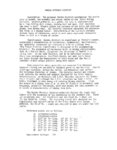
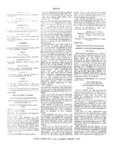
Show 4 SALT lAKE VAllEY CHAPTER The Sa It lake Va II ey Chapter opened its 1976-77 season on October 21 with a beautiful big bash at la Morena, the restaurant at Guadalupe Center. Three long tablesful of members enjoyed Mexican and Anglo songs belted out by twin sisters and their mentorguitarist-- II Clellto Lindo" and such rousing songs. After dinner Ilene Kingsbury conducted the annual elections very rapidly, the group accepting the committeeselected slate by acclamation: president, Jan Padfield; vice-president, Martha Stewart; secretary, Clarence Hyde; treasurer, Golden Buckmi I ler. Then came the piece de resistance of the evening; two young dancers from Bal let Folklorlco spun onto the dance floor and proceeded to enchant everyone Including restaurant customers. The exquisite dol I-girl (a granddaughter of the Fitzgerald's) and the boy, a handsome, nimble-footed Chicano, both splendidly costumed, fandan'goe(l through a program of spirited traditional dances. Just before they went Into their final number, the Mexican Hat Dance, John Fitzgerald prompted: IIAren't you supposed to put your hat on the f loar?" The boy wi nked "Not yet," and they sprang into action, illustrating with great elan that you have to build, ~ to putting your hat on the f loar. Jan Padfield closed with a warm invitation to the November 18th meeting. The meeting of the 18th was an excitIng one, well attended. Forty chairs were set out In the Grand Hall of the Historical Society Mansion; few rema I ned vacant. Dr. Edward H. Mayer, director of Chicano Studies at the University of Utah, and himself a charming Chicano, showed a 25-minute film he helped produce for the un i vers i ty. The fi 1m t s utah History Highlights called "la Raza en Utah-Ayer y Hoz (The Race In Utah-Yesterday and Today) It was funded by the Utah Endowment for the Humanities expressly to be shown at discussion groups and seminars throuQhout Utah. In it there are IntervIews 'with Chicano students, teachers, housewives, and sociologists, probing the historical reasons for anti-Chlcano discrimination in Utah and suggesting ways to combat this attitude which makes social and , economic life so hard for Chicanos. It describes SOCIO, acronym for Spanish-Speakirig Organizations for Community, Integrity, and Opportunity", a fast-growing force against the injustice that traditionally besets Chicanos. It emphasizes ' the strong movement towa rd encou ragl rig young Chicanos to get higher educations, the better to open doors to academic positions and achievement in the business world. It points out that the image of the Chicano as a lazy man under a sombrero has to be dissolved before he can realize dignity and equality and have pride In his native tongue and heritage. Then came the discussion, first cautious, then rapidly becoming heated. The whole problem was dramatized in a made nutshel I. Here was a group up of elderly conservative Anglos (mostly), of young Chicanos anxious to break out of their mold with an eagerness the elderly conservative Anglos cannot comprehend, and the Anglos eager to maintain the status quo with a firmness fortified by custom and usage. The air became electric, and Dr. Mayer Is to be commended for the gentle humor with which he Ied the discuss i on. Of course there were also questions and comments that showed sympathy, intelligence, and proper human perspective, aiso the awareness of how important it is to accept Chicanos Into the mainstream of life around here. We all had a chance to learn something at the November meeting. Hope we all did. Martha Stewa rt |