| OCR Text |
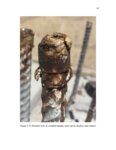
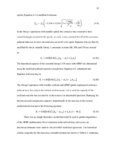
Show 91 6.2 Relative Corrosion Performance The corrosion resistance of the stainless and stainless clad specimens through the electrical measurements during the corrosion period was greater than the all-carbon steel control in most cases. This was to be expected, even without the passive layer protection seen in less hostile, nonaccelerated corrosion environments. It was also evident from the examination of the tested specimens that the corrosion of the stainless steel was more concentrated in smaller areas, while the carbon steel experienced corrosion more evenly spread over its surface area. This caused the stainless steel specimens to have a lower compressive capacity even at similar percentages of mass lost. When interpreted together, these observations provide a more complete picture of what the long term performance of a similar stainless steel and stainless clad reinforcing system might be in comparison to an all-carbon steel system. To make a proper comparison of corrosion resistance, the total combined corrosion energy, including the portion imparted to each specimen by the connected power supplies and the current generated by the reinforcement’s natural corrosion potential, is calculated in terms of kilowatt hours using the following equation: where . B B :# ) = B ∗. B ∗ +6.10, is the average voltage for the series during the testing period in kilovolts, is the average current in amps, and is the duration of the testing period in hours. Each specimens’ corrosion resistance in terms of mass lost per unit of applied energy for the lower half of each column can be expressed as: K L // = % NE11 OP1Q :# ) +6.11, |