| OCR Text |
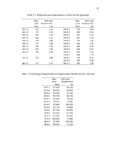
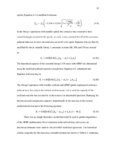
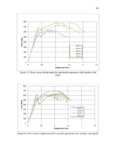
Show 34 is the theoretical mass loss in grams, where constant, = 2.0, the valency of the corrosion product, application in seconds, and of the alloy = 96487 amp-seconds or Faraday’s is total time of current is the average applied current in amps. The atomic mass , is assumed for the carbon steel to be the atomic mass of iron, 55.845, and the alloyed steel, per Trejo et al. (2009), is the weighted average atomic weight of the individual alloying components. Using this method, stainless steel, and = 56.352 for the 2304 duplex = 57.936 for the 316 stainless steel cladding for the clad bars. Ahmad (2009) determined that on average, the theoretical mass loss calculated in this manner overestimated actual mass loss by a factor of 1.2; this was taken into account in finding the mass loss expressed in Tables 3.1 and 3.2 as the adjusted theoretical mass loss. The constant current within the column specimens was achieved by configuring the power supply to automatically adjust the voltage applied. The total voltage in the circuit is the sum of the power supply voltage and an internal voltage generated by the corrosion cells within the samples. Using Ohms law: = where the voltage (3.2) is equal to the current multiplied by the resistance . Assuming a set current for each specimen and similar resistance for each specimen within the hardwired and electrolyte portions of the system, several observations can be made. First, it is important to note that while the current remains constant, a drop in voltage as contributed to the circuit from the power supply must either correspond to a drop in resistance in the rebar-electrolyte interface or the addition of electric potential to the series. Cracks forming within the concrete would lower the resistance as this would allow |