| OCR Text |
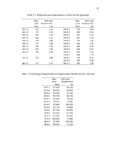
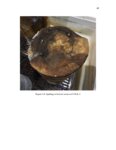
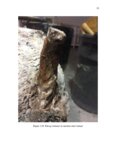
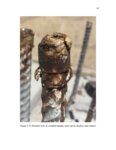
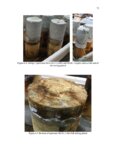
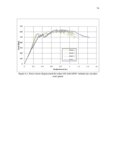
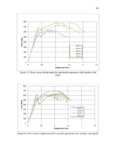
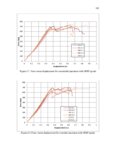
Show 37 force versus displacement curves for the NN series. The corroded samples achieved an average maximum load of 659 kips, with an average loss of strength was more than twice that of the BB series at 15%. The failure displacement of the corroded samples was 27% less than the control samples, showing a large reduction in ductility as well. NN-R-2 was particularly affected, which is reasonable given the greater degree of theoretical mass loss that it experienced. Figure 3.13 shows where NN-R-1 failed suddenly as the spiral reinforcement broke in multiple places where localized corrosion had occurred. This mode of failure was also present in NN-R-2. Specimens within the CN series performed similarly to the NN series, with the uncorroded CN-C-1 achieving a maximum load of 740 kips and a failure displacement of 1.68 in. CN-R-2 showed greater maximum load than CN-R-1, which is consistent with the theoretical mass loss, but they both exhibited a similar displacement at failure, although the more heavily corroded CN-R-2 failed suddenly while CN-R-1 failed gradually despite the spiral breaking. This is shown on Figure 3.14, which shows the force versus displacement behavior for the CN series. Table 3.4 compares the percentage axial compressive capacity of the corroded column specimens and the first point after peak stress where the stress drops to 85% of the maximum and compares them to the average of each of these values for the corresponding control column specimens. The drop in both capacity and displacement at 85% of the peak load varied greatly between the samples, but the values tended to correlate with each other. The main exception to this was BB-R-1, which managed to reach the same displacement at 85% of the peak load as the average of the control specimens, while only reaching 91.6% of the average axial compressive capacity of the |