| OCR Text |
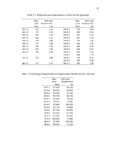
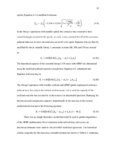
Show 87 the different materials: >? = 0.85@0.85 " !! A.B − .8F C + +6.6H, - ./ D while Equation 6.6d was used to predict the uncorroded capacity of the GN series by combining the contributions of the GFRP verticals and stainless steel spirals: >? = 0.85@0.85 " !! A.B − ./ C + 3 .8F D +6.65, The theoretical capacities for the uncorroded specimens are presented in Table 6.1, as well as their percentage difference from the experimental average. The experimental capacity exceeded the conservative analytical estimate in all specimens except for the two with GFRP verticals and stainless steels spirals and one of the allstainless steel specimens, which overpredicted the experimental performance by 5.1%, 0.7%, and 4.8%, respectively. The amount by which the analysis underpredicted experimental capacity varied from 8.8% to 17.4%, with the greatest disparity in the specimens with the all-carbon steel specimens, which averaged 15.8%. It is important to note here that the natural variation in construction and material factors produced up to 12.9% difference between analytical and experimental average for the uncorroded samples. For the corroded columns, the theoretical mass loss was used to determine what percentage of steel area was lost, and the confinement was calculated using the adjusted value. The new equation for confining pressure of the corroded metallic spirals thus becomes: " )! where ) = 2 - [./ ∗ +1 − 0" 1 ) ,] 23 +6.7, is the theoretical percent of mass lost as a result of corrosion. Using this adjusted confining pressure to determine the confined capacity of concrete with corroded |