| OCR Text |
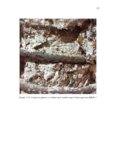
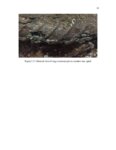
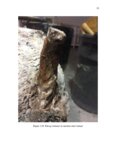
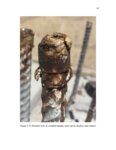
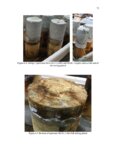
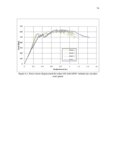
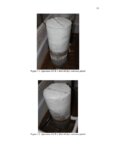
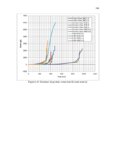
Show CHAPTER 4 GROUP 2 CORROSION TEST RESULTS 4.1 General Observations During Corrosion Period A lower level of current density was chosen for the low current density Group 2 samples, as a way to directly compare the corrosion potential of the stainless steel and stainless clad verticals at a lower acceleration rate. Additionally, the GN series, which contained GFRP verticals with stainless steel spirals, was corroded at the reduced acceleration level as a way to explore how the confinement capacity of the stainless steel spiral would be affected by a lower percentage mass loss. The lower current produced less cracking and concrete surface damage, as shown in Figure 4.1, which compares NNR-1 from Group 1 with GN-R-1 from Group 2 at the 11 day mark. The target current densities and power supply groups were shown previously in Table 3.1. Figure 4.2 shows the change in applied voltage to Group 2 over the course of the test. Power supplies for the GN series had an initial voltage of 4.3 volts while CG and NG had 3.2 volts. The voltage for the GN series rose initially, but it began to drop from an average of 4.5 to 3.0 volts around day 30, which was much later than any of the Group 1 specimens. This is consistent with the appearance of larger and wider cracks and the appearance of rust build-up at this time, as shown in Figure 4.3. In comparison, Figure 4.4 shows that even at the end of the test, the amount of cracking and |