| OCR Text |
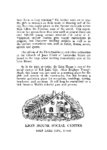
Show United '18tH Department of the Interior National Park Service National Register of Historic Places Continuation Sheet Section number ___8 _ - Page _.....:4,-- all the way to the bench above Great Salt Lake City in the summer of 1862. At one point, in fear that Connor would attempt to arrest Young, Mormon guards raised a flag atop Beehive House as a signal of impending danger. Wi thin the hour, a thousand armed Mormon guards surrounded the house and another thousand soon arrived. They erected scaffolding on the high wall surrounding the Young complex in order to fire down on Connor's troops and brought out a cannon. For several weeks armed Mormons guarded the Young residence. After 3 weeks Connor received word ge was promoted to the rank of brigadier general and relieved of his Utah duty. Again armed battle was barely averted. Nevertheless, Federal military pressure, economic and technological modernization, and westward expansion impinged relentlessly upon the Mormon enclave in Utah Territory. The combination of these factors threatened diSintegration of Mormon culture and its forced assimilation into the American mainstream. Migrants en route to the California gold fields in 1848 began the process of gentile influx into the Terri tory. The Pony Express and the Overland Telegraph, completed in October 1861, pulled Great Salt Lake City firmly into the nation's communication network. Colonization of all the principal valleys east of the Wasatch Mountains proceeded rapidly. In 1861 Nevada and Colorado Territories were created, carving off parts of Utah on both the west and the east. Nevada was quickly granted Statehood. In 1868 Wyoming received the last portion of Utah to be appropriated by other future States. The transcontinental railroad was completed at Promontory Summit on May 10, 1869, and Young organized a company that built a trunkline from Salt Lake City to Ogden a few months later. With Utah now a vital link in the national transportation network, Mormon geographical isolation finally was destroyed. Yet the Mormon community emerged from this era of modernization and growing demographic pluralism surprisingly intact. Young's railroad promotion signified the ability of the Mormon leader to accept aspects of modernization and Americanization necessary and beneficial to the Utah Territory. At the same time. new institutions he introduced in response to change were designed to maintain cultural distinctiveness and cohesion. A prominent example of adaptation to economic change was the organization in 1868 of Zion's CoOperative Mercantile Institution (ZCMI). Loyal Mormons were expected to trade through ZCMI. eschewing the gentile entrepreneurs who invaded the city in the wake of Connor's efforts to encourage mining by his troops. A "pillar of support" in the social sphere Young instituted "to preserve his independent commonwealth" was the Young Ladies' Retrenchment Society which he personally organized in the parlor of Lion House, in 1869, six months after the Union and Central Pacific rails met at Promontory Summit. Young stated to his wives and daughters the reason they were expected to lead the Retrenchment movement: All Israel are looking to my family and watching the example set by my wives and children. For this reason I |