| OCR Text |
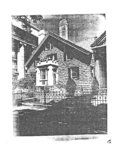
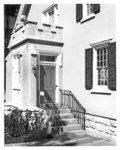
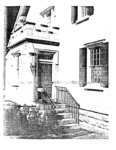
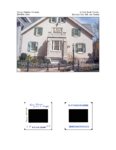
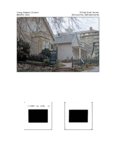
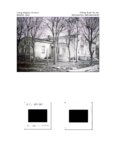
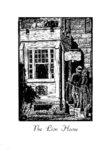
Show .............. United 8Wl.. Department of the Interior Natk>nal Park Service National Register of Historic Places Continuation Sheet Section number ----.7_ _ Page ---o3oL..-_ Architectural historians have generally described the design of the historic buildings in the Brigham Young Complex as derivative of the New England archi tecture to which both Truman O. Ange11. architect of the landmark buildings. and Brigham Young were accustomed. In fact the buildings more fairly represent the innovative application of both Classical and Gothic Revival stylistic principles in a local context. The symmetrical. geometric block design used in the Beehive House. for instance. may be understood in terms of the prevailing c~assicism that dominated the building trades during much of the 19th century. The Gothicism evident in the Lion House. however. is more innovative. and Angell's choice of this newer. picturesque style may have been prompted by his knowledge of the current stylebook literature or perhaps reveals the influence of his assistant Thomas Ward. a stonemason and draftsman who would have been familiar with the revival of Gothic concepts in his native England. 3 More curious is the presence of the full 2-story porch on the Beehive House. probably added in 1869. Such porches are not common in Utah and may reflect Young's interest in creating a ~istinctive and truly monumental appearance for the territory's chief residence. Sculptures from the animal and natural world. such as the lion created by Thomas Ward that graces the entrance portico on the Lion House and gives the house its name. also suggest the presence of the English Gothic Revival influence. As used in the Brigham Young houses, however. traditional symbols had non-traditional meanings. For example, the lion guarding the entrance to the Lion House, where Young's plural family resided. reveals Young's own image as family patriarch. According to LDS Church historian Paul Anderson, Brigham Young's friends referred to him as "Lion of the Lord." Similarly, the eagle that once adorned the Eagle Gate more likely signified loyalty to the Mormon order rather than. as traditionally. to the United States. The most unusual use of sculptural symbolism was the beehive atop She cupola on Beehive House, the symbol of Mormon diligence in communal labor. The buildings themselves conveyed special meaning to the newly founded Mormon communi ty . The exterior design of Lion House. for example. with its Gothic elements suggesting spirituality and 20 identical and symmetrical dormers signifying the plural family structure, was uniquely symbolic of the "distinc~ive pattern of Mormon family life" exemplified by the residents of the house. Governor and President's Offices The small, i-story Governor's Office was the first building of the Brigham Young Complex to be constructed. According to Truman Angell's journal, planning began in December 1851, when Brigham Young sent him specifications. Construction was under way by March 1852. It is a simple rectangular-plan building with a gable roof and modest classical detailing. The structure has a boxed cornice with returns, a broad soffit, a frieze, and has classical elements somewhat more elaborate than those of the adjacent President's Office. |