| OCR Text |
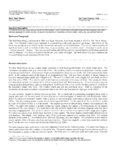
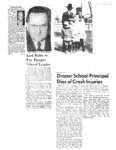
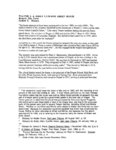
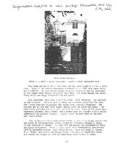
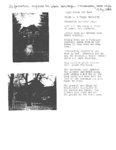
Show United States Department of the Interior National Park Service I National Register of Historic Places Registration Form NPS Form 10-900 (Expires 5/31/2012) OMB No. 1024-0018 Salt Lake County, Utah Beck, Reid, House county and State Name of Property Many people came to him for counsel and he had many friends . He loved children; in fact, he loved people of all ages. He knew the name and face of every child in his school and community ... He knew the problems of the farmer, the dairyman, the sheepman, and the poultryman because he had been all of them. He knew suffering and loss, for he suffered much and lost much both materially and personally. He always had "the common touch.,,16 After Reid's death, Wilda continued to live in Draper until she moved to nearby Murray, sometime before 1960. She lived for nearly three more decades, passing away on June 20, 1988, at the age of ninety-eight. For many years, Joy and Sheldon Baker rented the Draper home from Wilda Beck. Sheldon Lenoy Baker and Helen Joy Bement Baker were the parents of five children so it was unlikely that the home continued to be used as a boarding house during this time. In 1967, Wilda Beck transferred the deed to Joy and Sheldon Backer, who sold it the same year to Ralph Lester and Peggy Naomi Wadsworth. Ralph Wadsworth owned a construction company and completed much of the remodeling of the interior. The Wadsworths also had a large family and lived there until 1990 when they sold the home to Deveral and Doreen Decker. The Deckers remodeled the kitchen and made other improvements before selling to the current owners, Bill and Shannon Moedl in 1999, who lived there until recently when it was converted to a rental. Developmental history/additional historic context information (if appropriate) Draper MPS Contexts The city of Draper is located in the southeast section of the Salt Lake Valley lying against the hills that divide it from the Utah Valley. Originally scouted in 1847, the area was used to graze livestock because of its abundant water and grasses. The community of Draper was established in 1849 just two years after the arrival of members of the Church of Jesus Christ of Latter-day Saints (LDS or Mormon Church) in the Salt Lake valley. The Draper settlement was originally known as South Willow Creek, but sometimes called Sivogah, the native name for the area. Five families were the first settlers, but were soon joined by relatives and friends. The early settlers raised cattle to sell to emigrants on route to the California gold mines. Between 1855 and 1856, a fort was constructed and most of the settlers lived there. By the time the Utah Southern Railway reached the South Willow Creek area in 1871, the community was a thriving, though somewhat scattered collection of farmsteads with a population of around 480. In 1876, a town site was surveyed for the community, by then known as Draperville. The name was later shortened to Draper. During the nineteenth century, the community grew steadily with the economy primarily driven by farming (grains and fruits) and ranching (sheep and cattle). After the arrival of the Denver & Rio Grande Railway 1881 several industries were established near the rail corridor and a thriving mercantile industry was established near the town center. At the turn of the twentieth century, many of Draper's residents were involved in ranching sheep and cattle, achieving notable success. In the 1920s, several Draper business men established a thriving poultry industry in Draper, which became known as the "Egg Basket of America" by World War II. Although the poultry industry declined in the 1960s, the town retained its rural atmosphere until the late 1980s. During the last three decades, Draper has experienced a high level of residential development around the town and in the foothills. The main transportation corridors have seen a heavy commercial development in retail and restaurant establishments. 9. Major Bibliographical References 16 Ibid, 101-102. 10 |