| OCR Text |
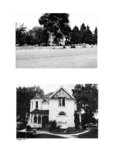
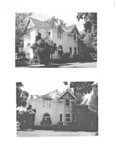
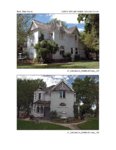
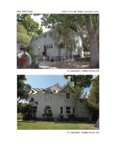
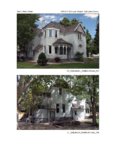
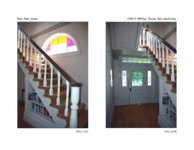
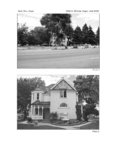
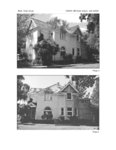
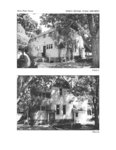
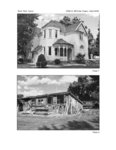
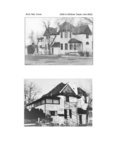
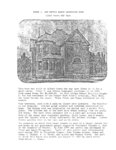
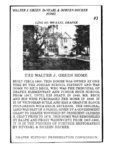
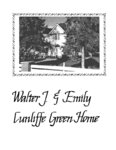
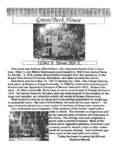
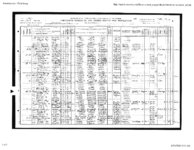
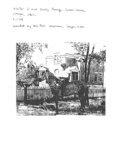
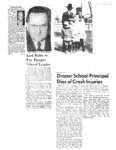
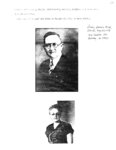
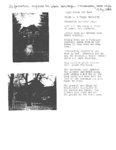
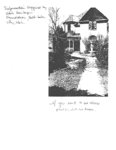
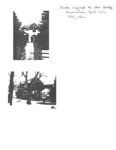
Show United States Department of the Interior National Park Service I National Register of Historic Places Registration Form NPS Form 10-900 (Expires 5/31/20 12 ) OMS No. 1024-0018 Beck, Reid, House Name of Property Salt Lake County, Utah County and State probably indicating the construction of the house. 9 James E. Paine (1854-1922) was born in Michigan and came to Utah in 1875. He owned a "wools, hides, and pelts" store and, as a wool merchant, may have known the Green family through their sheep ranching activities. Walter John Green (1866-1941) was born in Draper. He married Emily Cunliffe on September 6, 1897. Emily Hilton Cunliffe Green (1871-1944) was born in Radcliffe, England, and immigrated to Utah with her family in 1875. Walter and Emily had two children, Valeria Renon (born in 1898) and Walter Cunliffe (born in 1899). Their large elegant home on 900 East was constructed during Walter Green's career as a sheep rancher. The house is a central-block-with-projectingbays house built in the Victorian style with a variety of materials: granite from the Salt Lake Temple quarry, smooth-face brick, rock-faced brick, and decorative wood shingles. The house has many intact features such as the staircase and colored art glass. It was one of six similarly large homes built in Draper near the turn of the twentieth century by sheep and cattle ranchers. 10 The house may have been too expensive or too much for the Green family to keep up, for within a few years, in October 1902, they sold it to James E. Paine for $7,800. 11 James E. Paine continued to live in Salt Lake City, so the Greens may have stayed in the house until Paine sold the property to Peter C. Rasmussen in May 1904. By the 1910 census, Walter and Emily Green had moved next door to live with his twice-widowed father, William Green. After William Green's death in 1915, Walter and Emily Green moved to Salt Lake City where they lived until their deaths. Peter Christian Rasmussen (1857-1932) was born in Denmark. In 1880, he married Mette Marie Jensen (1864-1944) in Denmark and the couple immigrated to Utah a few years later. They lived in a log cabin in Draper before building a home at 12085 S. 800 East. Mette Rasmussen gave birth to eighteen children, of whom seven lived to maturity. The couple also adopted an orphan boy that Peter Ramussen brought back to Draper after serving a mission in Denmark. Peter Rasmussen operated a grocery store and meat market. He also raised cattle. In 1904, Peter C. Rasmussen bought the former Green home for $4,000. On the 1920 census, they are living there with five children, two daughters-in-law, and one grandchild. While living in the house, Peter C. Rasmussen served twice as bishop of the Draper LOS Ward, once as acting bishop between 1906 and 1908, and later between September 1914 and May 1918. The Rasmussen family often held special church services in their home for the Danish-speaking members of the church in Draper. The Rasmussen family moved to Midvale, Utah, in late 1917 or early 1918. They sold their Draper house to the Jordan School District on October 9, 1918. Peter and Mette Rasmussen lived in the Midvale until their deaths in 1932 and 1944 respectively. Education in Draper and the Reid Beck House Draper had a long tradition of educational excellence beginning with the remarkable career of Dr. John R. Park (18331900), who began his teaching career as a local teacher in Draper, in the 1860s. Dr. Park started the first rural high school in Utah in the Draper community, implemented many of the policies used by education in Utah today, and later became the president of the University of Utah. When the community built a new school in 1912, it was named for Dr. Park. During his twenty-six years as an educator in Draper, Reid Beck was frequently compared to Dr. Park. 12 The construction date of 1899 also appears on the tax assessor's records from 1937. The architect and builder are unknown, but craftsman known to be building large homes in the area at the time include John Boulter, Heber Garfield, Carl Hendricksen, Peter A. Nielsen, Joseph M. Smith , and George Whetman . 10 Four of the houses are two to 2%-story Victorian Eclectic, pattern-book, central-block houses similar to the Reid Beck House. One of the central-block examples, the Benjamin and Olivia Meek House, was listed on the National Register of Historic Places on November 29, 2001. The sixth house, the J. R. Allen House, is a foursquare designed by Richard Kletting , the architect of the Utah State Capitol, which was listed on the NRHP on August 28, 1980. Because of modifications made to the Reid Beck House between the 1920s and 1960s, the building has not been listed for architectural significance. 11 There is an oral tradition associated with the house that states it was built for a young man who was about to be married, but the young man didn 't marry and didn't live in the house. The house was most likely constructed soon after the marriage of Walter and Emily Green. The story might have been tied to James E. Paine who never married. 12 The Draper Park School at 12441 S. 900 East was listed on the National Register of Historic Places on May 1980 (NRIS # 80003913). 8 9 |