| OCR Text |
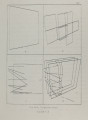
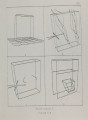
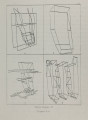
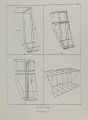
Show 2jcal forrraio tne accuracy of te ore reserve ca::12tio ca be irr;rove 5iqnfcatly. Hoever, even it a odelinq systerr this rocess 5 nether :rvial nor fast. reserves are calclated for an eic!vation or ring by cOffiputing an average of a lare nuber of $aFle points hicM are within the volume. The grade for each of the sarr;le points is in turn an average of ll of the assays hich are near the point and lie in Tese assays are eigtted by 1/02, were d is the distance frorr the sample point to the assay. To illustrate the derrands such a calculation puts on the modeling system, we ill consider the problerr of deterrrining whether the saple point is inside an arbitrary oljhEd:on (both excavations and rings can be represented t-::' such polyhedra). The II inside/outside" algorithm for a intersection of an 2rbtrary ray drawn fro the point ith each face cf the ;o2.y:-.eorcn. If the r.uber of itersections :5 ode, pcint rr.ust be inside. The intersecticn of the ray with the face again involes a 2D inside/outside test which reouires conting the intersections of a ray constructed frorr the intersection of the 3D ray and the plane cf the face with ech edge of the face. This in turn requires access to the edpolnts of each edge of the face. To calculate reserves for 100 rings using 1000 random points, assuing that rings the |