| OCR Text |
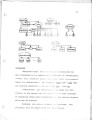
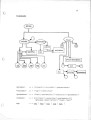
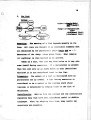
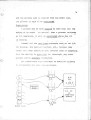
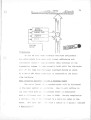
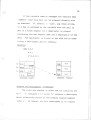
Show . »- --.. 96 transferred out. The answer ^s simple. If the "printer 2" Liot doos not contain an &, then the current process is passivated until the next txtie around the round-robin. By then the line may or may not have gone out and the algorithm is continued. Eventually the line will be printed and the current "printer 2" statement will be executed. Naturally, more than one line may be output m one statement-a vector of lines may be assigned. The above just says that an I/O statement to a unit must be physically realized before another to the same unit may be made. Input is similar. While assignments to the printer have been going on, the card reader had been active. An interrupt occurred saying that it had something to deliver. A data descrj pt'".r was found showing a read request (one is alv/ays there for pure input devices) and a card image was delivered to a newly created scratch segment. Sometime later a FLEX statement might be executed: new card - format I (cards); Formats in FLEX are simply functions or user-declared unary operators which take a string as an argument and deliver a string as a reult. The card image (being a temporary) is renamed as the first parameter of format 1 and is thereupon operated on. Pure input devices are immediately supplied with a new data descriptor input request. So the "cards" section is again set up to receive a card. |