| OCR Text |
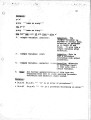
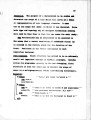
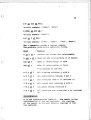
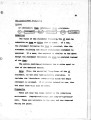
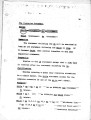
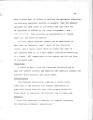
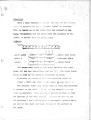
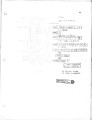
Show a-«-b+c*d max b-c*d? '"If d>b, then a+'b»1* In this manner the programmer may tailor th« bperatof structure of FLEX to suit his needs. This feature both eases the programming burden and causes the program ±0 be easier to read and be understood by others. FLEX may also be extended by either modifying itself via the compiler-compiler contained in the language or a wholly new language may be created using the same tools. The use of the operators corri. and scribe will be discussed in a later chapter, f. Comments Comments are handled very simply. Any tei^t inserted between, the symbols ,',-,,f will be ignored by FLEX. !Ühis allows comments to be inserted anywhere-even in the middle of an arithmetic expression. Examples: a-^b+c*dl ' 'this expression is simple111; a-t-b'' "this expression is simple'' l+c*d; This in^jcpfihaction has barely scratched the surface of the FLEX language» It was not intended as an exposition of FLEX, but only to give the average user (a FORTRANer) a feel for the more comprehensive discussions that follow. ■>*rM-*,KWl.*T**^WM^%&W^^JS£>Vt,iKil . |