| Title |
Dustin Sexton, Salt Lake City, Utah: an interview by John C. Worsencroft, September 12, 2009: Saving the Legacy tape no. IA-5 |
| Alternative Title |
Dustin Sexton, Saving the legacy: an oral history of Utah's World War II veterans, ACCN 2070, American West Center, University of Utah |
| Creator |
Sexton, Dustin |
| Contributor |
Worsencroft, John C., 1981-; University of Utah. American West Center |
| Publisher |
Digitized by J. Willard Marriott Library, University of Utah |
| Date |
2009-09-12; 2009-11-21 |
| Date Digital |
2015-12-16 |
| Access Rights |
I acknowledge and agree that all information I obtain as a result of accessing any oral history provided by the University of Utah's Marriott Library shall be used only for historical or scholarly or academic research purposes, and not for commercial purposes. I understand that any other use of the materials is not authorized by the University of Utah and may exceed the scope of permission granted to the University of Utah by the interviewer or interviewee. I may request permission for other uses, in writing to Special Collections at the Marriott Library, which the University of Utah may choose grant, in its sole discretion. I agree to defend, indemnify and hold the University of Utah and its Marriott Library harmless for and against any actions or claims that relate to my improper use of materials provided by the University of Utah. |
| Spatial Coverage |
Kuwait; Iraq; Georgia |
| Subject |
Sexton, Dustin--Interviews; Veterans--Utah--Biography; Iraq War, 2003-2011--Personal narratives, American |
| Description |
Transcript (xx pages) of an interview by John C. Worsencroft with Dustin Sexton on September 12, 2009. From tape number IA-5 in the "Saving the Legacy" Oral History Project |
| Collection Number and Name |
Accn2070, Saving the Legacy oral history project, 2001-2010 |
| Abstract |
Dusty was born in Orlando, Florida, but moved around the United States a lot growing up. His dad was an Episcopal priest. Dusty enlisted in the Marine Corps and went to boot camp in 1991 at MCRD San Diego. He talks about boot camp, deployments, and life in the Marines. Dusty has served multiple deployments to Iraq in numerous leadership positions. The interview is largely a chronological narrative of his nearly 20 years in the Marine Corps. Dusty currently lives in Kamas, UT. where he is a firefighter with Park City Fire Department. He also runs a business, Sexton Off-Road, which builds custom off-road vehicles. Interviewed by John C. Worsencroft. 142 pages. |
| Type |
Text |
| Genre |
oral histories (literary works) |
| Format |
application/pdf |
| Extent |
142 pages |
| Language |
eng |
| Rights |
 |
| Scanning Technician |
Mazi Rakhsha |
| Conversion Specifications |
Original scanned with Kirtas 2400 and saved as 400 ppi uncompressed TIFF. PDF generated by Adobe Acrobat Pro X for CONTENTdm display |
| ARK |
ark:/87278/s6nc839h |
| Topic |
Personal narratives--American; Veterans; Iraq War (2003-2011) |
| Setname |
uum_slohp |
| ID |
1027909 |
| Reference URL |
https://collections.lib.utah.edu/ark:/87278/s6nc839h |
| Title |
Page 56 |
| Format |
application/pdf |
| Setname |
uum_slohp |
| ID |
1027823 |
| OCR Text |
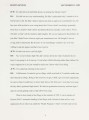
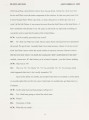
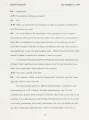
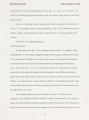
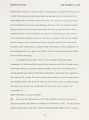
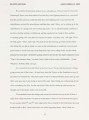
Show DU TIN EXTON PT B R 12 2009 I can't remember what he said, three or four weeks prior to th invasion. Now that Saddam wasn't in power he was trying to get away. I'm trying to think. He was r ally well spoken, English, real good guy, spoke really good English for what I expected and that was a surprise. So we left him alone. We'd been dragging these humanitarian rations for, shoot, I don't know, since the whole time we'd been dragging them, but we were told not to use them. Cultural awareness would have been better for us than giving us humanitarian rations, because we didn't understand that those people weren't starving. We thought, let's go give them this food. So we gave it to them and they didn't know what to do with it (laughs). I don't think they even ate it. I'm sure they probably tossed it in the river, who knows. We stopped right there after clearing those houses and the rest of the battalion moved in around us on the other side of that river. We sent in a battalion-sized defense and they decided we didn't need to move into Figar tonight because we might see combat or whatever, I don't know. But they decided we didn't need to move into Figar that night. They wanted to recon it out and prepare a proper attack. Okay, roger that. So we had a total cluster fuck trying to get the company online with the battalion, because the company had pushed forward across the river and the battalion wanted to be behind the river. The company commander didn't want to move back or I don't know what the hell. So staff Sergeant Collie had set the platoon up alongside this road and it wasn't an Lshaped ambush, it wasn't. . .I was like, "Staff Sergeant, I don't understand why we're here on the side of the road. This isn't the right place to be. If a frickin tracked vehicle comes rolling down that road they're going to wipe the whole platoon out." He's like, "Yeah, you're right. We need to push forward." So I went and coordinated with Echo Company 56 |
| Reference URL |
https://collections.lib.utah.edu/ark:/87278/s6nc839h/1027823 |