| Title |
Charles and Frieda Bytheway, Salt Lake City, Utah: an interview by Becky B. Lloyd, November 6, 2001: Saving the legacy tape no. 414 |
| Alternative Title |
Charles and Frieda Bytheway, Saving the legacy: an oral history of Utah's World War II veterans, ACCN 2070, American West Center, University of Utah |
| Creator |
Bytheway, Charles, 1926-2015 ; Bytheway, Frieda, 1924-2015 |
| Contributor |
Lloyd, Becky B.; University of Utah. American West Center |
| Publisher |
Digitized by J. Willard Marriott Library, University of Utah |
| Date |
2001-11-06 |
| Date Digital |
2015-09-16 |
| Access Rights |
I acknowledge and agree that all information I obtain as a result of accessing any oral history provided by the University of Utah's Marriott Library shall be used only for historical or scholarly or academic research purposes, and not for commercial purposes. I understand that any other use of the materials is not authorized by the University of Utah and may exceed the scope of permission granted to the University of Utah by the interviewer or interviewee. I may request permission for other uses, in writing to Special Collections at the Marriott Library, which the University of Utah may choose grant, in its sole discretion. I agree to defend, indemnify and hold the University of Utah and its Marriott Library harmless for and against any actions or claims that relate to my improper use of materials provided by the University of Utah. |
| Spatial Coverage |
Salt Lake City, Salt Lake County, Utah, United States |
| Subject |
Bytheway, Charles, 1926-2015--Interviews; Bytheway, Frieda, 1924-2015--Interviews; World War, 1939-1945--Personal narratives, American; World War, 1939-1945--Women--United States--Biography; World War, 1939-1945--War work--United States |
| Keywords |
Navy Air Corps; Training; Draft; Korea; Radio tube plant |
| Description |
Transcript (52 pages) of interview by Becky B. Lloyd with Charles and Frieda Bytheway on November 6, 2001. This is tape number 414 in the "Saving the Legacy" Oral History Project |
| Collection Number and Name |
Accn2070, Saving the Legacy oral history project, 2001-2010 |
| Abstract |
Charles (b. 1926) and Frieda (b. 1924) Bytheway recall growing up in Salt Lake City. Charles enlisted in the Navy Air Corps in 1944. 52 pages. |
| Type |
Text |
| Genre |
oral histories (literary works) |
| Format |
application/pdf |
| Extent |
52 pages |
| Language |
eng |
| Rights |
 |
| Scanning Technician |
Mazi Rakhsha |
| Conversion Specifications |
Original scanned with Kirtas 2400 and saved as 400 ppi uncompressed TIFF. PDF generated by Adobe Acrobat Pro X for CONTENTdm display |
| ARK |
ark:/87278/s62826tw |
| Topic |
Personal narratives--American; World War (1939-1945); Women in war; War work |
| Setname |
uum_slohp |
| ID |
1026779 |
| Reference URL |
https://collections.lib.utah.edu/ark:/87278/s62826tw |
| Title |
Page 51 |
| Format |
application/pdf |
| Setname |
uum_slohp |
| ID |
1026776 |
| OCR Text |
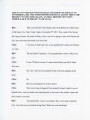
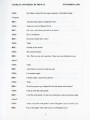
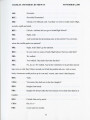
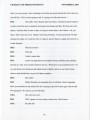
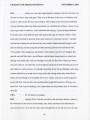
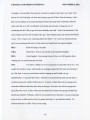
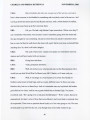
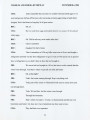
Show CHARLES AND FRIEDA BYTHEW A Y NOVEMBER 6, 2001 CHA: We hved In our hfetime, in thinking back, when I was a kid, you know, the phone would ring, ring a long and three shorts, and I remember 103M, which was our phone number I still remember our phone number And when "M" came, you know, when it rang "M" in Morse code, then we knew it was for us. And If you wanted to talk to your neighbor, sometimes you'd just pick up the phone and they were on the line already BEC: Oh (laughs). CHA: So you'd say, "Hey, while you're on the hne can you tell so-and-so " BEC: So you're really connected to your neighbors, In a real sense. CHA: You had several people on the same line. And I remember when we got our first radio and we were able to, as little kids, we had these earphones and we'd put them in our ear and we could hear people talking and said, "Man, isn't that something. You can hear people." And then we had a short wave, the radio had a short wave thing and so at night you could get stations In Austraha and some places like that. BEC: Oh, yeah? CHA: And that was so fascinating and we always had an ice box that we put our milk in. And the Ice man would come down the street with his wagon and a horse pulhng It and then he'd chop off a chunk of ice and bring It in and put it In our Icebox and then he also sold ice cream cones. And If we wanted an ice cream cone we'd go and we'd find a couple of eggs out In the haystack that the chickens had lmd and we'd take them and trade them for Ice cream cones. FRI: We did a lot of trading. 50 |
| Reference URL |
https://collections.lib.utah.edu/ark:/87278/s62826tw/1026776 |