| Title |
Charles and Frieda Bytheway, Salt Lake City, Utah: an interview by Becky B. Lloyd, November 6, 2001: Saving the legacy tape no. 414 |
| Alternative Title |
Charles and Frieda Bytheway, Saving the legacy: an oral history of Utah's World War II veterans, ACCN 2070, American West Center, University of Utah |
| Creator |
Bytheway, Charles, 1926-2015 ; Bytheway, Frieda, 1924-2015 |
| Contributor |
Lloyd, Becky B.; University of Utah. American West Center |
| Publisher |
Digitized by J. Willard Marriott Library, University of Utah |
| Date |
2001-11-06 |
| Date Digital |
2015-09-16 |
| Access Rights |
I acknowledge and agree that all information I obtain as a result of accessing any oral history provided by the University of Utah's Marriott Library shall be used only for historical or scholarly or academic research purposes, and not for commercial purposes. I understand that any other use of the materials is not authorized by the University of Utah and may exceed the scope of permission granted to the University of Utah by the interviewer or interviewee. I may request permission for other uses, in writing to Special Collections at the Marriott Library, which the University of Utah may choose grant, in its sole discretion. I agree to defend, indemnify and hold the University of Utah and its Marriott Library harmless for and against any actions or claims that relate to my improper use of materials provided by the University of Utah. |
| Spatial Coverage |
Salt Lake City, Salt Lake County, Utah, United States |
| Subject |
Bytheway, Charles, 1926-2015--Interviews; Bytheway, Frieda, 1924-2015--Interviews; World War, 1939-1945--Personal narratives, American; World War, 1939-1945--Women--United States--Biography; World War, 1939-1945--War work--United States |
| Keywords |
Navy Air Corps; Training; Draft; Korea; Radio tube plant |
| Description |
Transcript (52 pages) of interview by Becky B. Lloyd with Charles and Frieda Bytheway on November 6, 2001. This is tape number 414 in the "Saving the Legacy" Oral History Project |
| Collection Number and Name |
Accn2070, Saving the Legacy oral history project, 2001-2010 |
| Abstract |
Charles (b. 1926) and Frieda (b. 1924) Bytheway recall growing up in Salt Lake City. Charles enlisted in the Navy Air Corps in 1944. 52 pages. |
| Type |
Text |
| Genre |
oral histories (literary works) |
| Format |
application/pdf |
| Extent |
52 pages |
| Language |
eng |
| Rights |
 |
| Scanning Technician |
Mazi Rakhsha |
| Conversion Specifications |
Original scanned with Kirtas 2400 and saved as 400 ppi uncompressed TIFF. PDF generated by Adobe Acrobat Pro X for CONTENTdm display |
| ARK |
ark:/87278/s62826tw |
| Topic |
Personal narratives--American; World War (1939-1945); Women in war; War work |
| Setname |
uum_slohp |
| ID |
1026779 |
| Reference URL |
https://collections.lib.utah.edu/ark:/87278/s62826tw |
| Title |
Page 33 |
| Format |
application/pdf |
| Setname |
uum_slohp |
| ID |
1026758 |
| OCR Text |
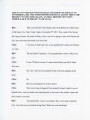
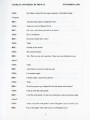
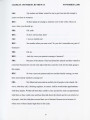
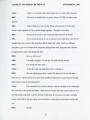
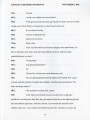
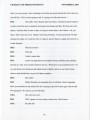
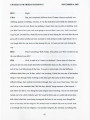
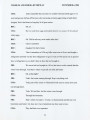
Show CHARLES AND FRIEDA BYTHEW A Y NOVEMBER 6, 2001 probably in '42, and Dorothy In '46 huh? I got married In '49 Well, I was the last one that got married in that bunch. BEC: FRI: BEC: FRI: You eventually went to work at the radio tube plant? We did. I went to work at Eitel-McCullough. Uh-huh. And how long did you work there? You know, I don't remember I've got my books. I worked, oh, several years. I went there from working at ZCMI. BEC: You say you went there from ZCMI?. FRI: Boy, let's see. Or did I go to ZCMI-Isn't this terrible when you get this old you can't remember BEC: Well, it's really not that important. But I did want to ask you about your work at the radio tube plant. Do you remember much of that? Do you remember working there and what it was like? FRI: Well, I do I did spot welding and I remember there were three shifts, every shift tned to outdo the other shift, trying to get more tubes done than the next one. And I know that I beat the other shift pretty dam good. BEC: Oh, did you? FRI: I did. BEC: Were there Incentives for you to do better than the other shifts or was it JUSt psychological? FRI: I think that they were because they would tell us how much the other shifts were doing. They must have been because, otherwise, why would we try so hard? But, anyway, it was spot welding and as the war sort of eased off then, of course, they 32 |
| Reference URL |
https://collections.lib.utah.edu/ark:/87278/s62826tw/1026758 |