| Title |
Robert E. Irion, Sandy, Utah: an interview by Benjamin Bahlmann, September 20, 2002: Saving the legacy tape no. 537, 538, and 539 |
| Alternative Title |
Robert E. Irion, Saving the legacy: an oral history of Utah's World War II veterans, ACCN 2070, American West Center, University of Utah |
| Creator |
Irion, Robert E., 1923-2007 |
| Contributor |
Bahlmann, Benjamin; University of Utah. American West Center |
| Publisher |
Digitized by J. Willard Marriott Library, University of Utah |
| Date |
2002-09-20 |
| Date Digital |
2015-09-16 |
| Access Rights |
I acknowledge and agree that all information I obtain as a result of accessing any oral history provided by the University of Utah's Marriott Library shall be used only for historical or scholarly or academic research purposes, and not for commercial purposes. I understand that any other use of the materials is not authorized by the University of Utah and may exceed the scope of permission granted to the University of Utah by the interviewer or interviewee. I may request permission for other uses, in writing to Special Collections at the Marriott Library, which the University of Utah may choose grant, in its sole discretion. I agree to defend, indemnify and hold the University of Utah and its Marriott Library harmless for and against any actions or claims that relate to my improper use of materials provided by the University of Utah. |
| Spatial Coverage |
Scotland; England; Germany; Czechoslovakia; Kansas, United States |
| Subject |
Irion, Robert E., 1923-2007--Interviews; World War, 1939-1945--Personal narratives, American; Veterans--Utah--Biography; World War, 1939-1945--Aerial operations, American; World War, 1939-1945--Campaigns--Europe, Northern--Personal narratives, American |
| Keywords |
Army Air Corps |
| Description |
Transcript (142 pages) of an interview by Benjamin Bahlmann with Robert E. Irion on September 20, 2002. This is from tape numbers 537, 538, and 539 in the "Saving the Legacy Oral History Project |
| Collection Number and Name |
Accn2070, Saving the Legacy oral history project, 2001-2010 |
| Abstract |
Irion (b. 1923) recalls his youth in Kansas and tells how he enlisted in the Army Air Corps in October 1942. He discusses his flight training in Arkansas, Alabama, and Florida. He served in the 505th and 339th Fighter Groups. 142 pages. |
| Type |
Text |
| Genre |
oral histories (literary works) |
| Format |
application/pdf |
| Extent |
142 pages |
| Language |
eng |
| Rights |
 |
| Scanning Technician |
Mazi Rakhsha |
| Conversion Specifications |
Original scanned with Kirtas 2400 and saved as 400 ppi uncompressed TIFF. PDF generated by Adobe Acrobat Pro X for CONTENTdm display |
| ARK |
ark:/87278/s6bs0rd1 |
| Topic |
Personal narratives--American; Veterans; World War (1939-1945); Military operations, Aerial--American |
| Setname |
uum_slohp |
| ID |
1025794 |
| Reference URL |
https://collections.lib.utah.edu/ark:/87278/s6bs0rd1 |
| Title |
Page 98 |
| Format |
application/pdf |
| Setname |
uum_slohp |
| ID |
1025747 |
| OCR Text |
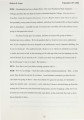
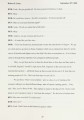
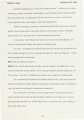
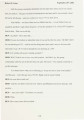
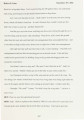
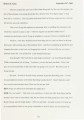
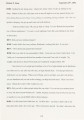
Show Rob rt . Irion ptember 20'h 2002 n t cat hing him! But he s making little turns. I honestly think this guy had s m kind of a homing device or radio range equipment or something. BEN: Just adjusting. ROB: Homing in, he was heading for home base, and he was making little turns corrections like the wind correction that you make, like fifteen degrees- you know, not big turns, but just little ones. And he did this about three times and each time he made a little one I got a little closer. Finally I'm- BEN: -Just flying, just level? ROB: Yeah he was just going level - and I don't think the guy ever saw me. And I'm about, still about one thousand yard behind him, and our guns are bore-sighted for about six hundred yards is what you figure. And I got nervous and I thought, "I'm going to fire some shots off and see if he sees the tracers and makes a move or if I hit him, do some damage, even though I'm extreme range." A thousand yards Yeah if you're lucky, you might hit somebody. I don't know whether I hit him, I'll never know, but I might have because he did slow down. But whether that first blast hit him or whether he just saw the tracers and decided to make a tum. He made a tum and then he went down toward the ground and this, you know, if he'd put his nose straight ahead and gone straight I'd never have caught him. But he did make a tum and started toward the ground. And then he pulled up and as he pulled up- well, of course, with the turns I'm getting closer and closer, I got up to maybe about three hundred yards on him when I 96 |
| Reference URL |
https://collections.lib.utah.edu/ark:/87278/s6bs0rd1/1025747 |