| Title |
Robert E. Irion, Sandy, Utah: an interview by Benjamin Bahlmann, September 20, 2002: Saving the legacy tape no. 537, 538, and 539 |
| Alternative Title |
Robert E. Irion, Saving the legacy: an oral history of Utah's World War II veterans, ACCN 2070, American West Center, University of Utah |
| Creator |
Irion, Robert E., 1923-2007 |
| Contributor |
Bahlmann, Benjamin; University of Utah. American West Center |
| Publisher |
Digitized by J. Willard Marriott Library, University of Utah |
| Date |
2002-09-20 |
| Date Digital |
2015-09-16 |
| Access Rights |
I acknowledge and agree that all information I obtain as a result of accessing any oral history provided by the University of Utah's Marriott Library shall be used only for historical or scholarly or academic research purposes, and not for commercial purposes. I understand that any other use of the materials is not authorized by the University of Utah and may exceed the scope of permission granted to the University of Utah by the interviewer or interviewee. I may request permission for other uses, in writing to Special Collections at the Marriott Library, which the University of Utah may choose grant, in its sole discretion. I agree to defend, indemnify and hold the University of Utah and its Marriott Library harmless for and against any actions or claims that relate to my improper use of materials provided by the University of Utah. |
| Spatial Coverage |
Scotland; England; Germany; Czechoslovakia; Kansas, United States |
| Subject |
Irion, Robert E., 1923-2007--Interviews; World War, 1939-1945--Personal narratives, American; Veterans--Utah--Biography; World War, 1939-1945--Aerial operations, American; World War, 1939-1945--Campaigns--Europe, Northern--Personal narratives, American |
| Keywords |
Army Air Corps |
| Description |
Transcript (142 pages) of an interview by Benjamin Bahlmann with Robert E. Irion on September 20, 2002. This is from tape numbers 537, 538, and 539 in the "Saving the Legacy Oral History Project |
| Collection Number and Name |
Accn2070, Saving the Legacy oral history project, 2001-2010 |
| Abstract |
Irion (b. 1923) recalls his youth in Kansas and tells how he enlisted in the Army Air Corps in October 1942. He discusses his flight training in Arkansas, Alabama, and Florida. He served in the 505th and 339th Fighter Groups. 142 pages. |
| Type |
Text |
| Genre |
oral histories (literary works) |
| Format |
application/pdf |
| Extent |
142 pages |
| Language |
eng |
| Rights |
 |
| Scanning Technician |
Mazi Rakhsha |
| Conversion Specifications |
Original scanned with Kirtas 2400 and saved as 400 ppi uncompressed TIFF. PDF generated by Adobe Acrobat Pro X for CONTENTdm display |
| ARK |
ark:/87278/s6bs0rd1 |
| Topic |
Personal narratives--American; Veterans; World War (1939-1945); Military operations, Aerial--American |
| Setname |
uum_slohp |
| ID |
1025794 |
| Reference URL |
https://collections.lib.utah.edu/ark:/87278/s6bs0rd1 |
| Title |
Page 77 |
| Format |
application/pdf |
| Setname |
uum_slohp |
| ID |
1025726 |
| OCR Text |
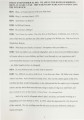
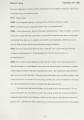
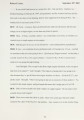
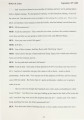
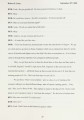
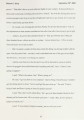
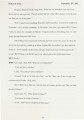
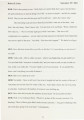
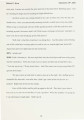
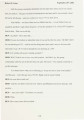
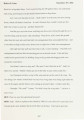
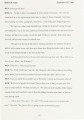
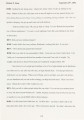
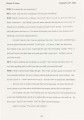
Show Robert E. Irion eptember 20th, 2002 didn't even know what ME 262's were at that time. We had seen some way high, like 15 000 feet above us on some missions. BEN: Had you been briefed on them? ROB: We knew that there were such things there. But this was in October and they'd only been sighted two or three times, random sightings, and generally at high altitude where you couldn't even really make out what they were. We knew they were jets being so high. Anyhow, we broke. I could see the smoke coming off these guns as he was firing. Bert Stiles was this number four guy on the right and they were shooting at him and they missed him and thank God. We went after them, chased after them - they just went into this long, shallow dive, thirty-five to forty degrees down, straight ahead. Never turned or anything. We couldn't catch them! And we couldn't understand it. We said, "What kind of an airplane was that?" If it's an ME-4 10 or 2 10 (which was a twin engine- I knew it was a twin engine, some type), but I didn't even make out that it didn't have props on it. All I could see were two engines and the wings here. And we get back to the intelligence officer and say, "What could this have been?" He didn't have a clue. He didn't even suggest it, talk about jets or anything. And we didn't know until a couple of weeks later that it had been jets that had gone after us and heard about some more activity and said, "Hey, wait a minute! That's the only thing that is that fast and could get away from us like that!" Because we didn't even get close to catching it. 75 |
| Reference URL |
https://collections.lib.utah.edu/ark:/87278/s6bs0rd1/1025726 |