| Title |
Robert E. Irion, Sandy, Utah: an interview by Benjamin Bahlmann, September 20, 2002: Saving the legacy tape no. 537, 538, and 539 |
| Alternative Title |
Robert E. Irion, Saving the legacy: an oral history of Utah's World War II veterans, ACCN 2070, American West Center, University of Utah |
| Creator |
Irion, Robert E., 1923-2007 |
| Contributor |
Bahlmann, Benjamin; University of Utah. American West Center |
| Publisher |
Digitized by J. Willard Marriott Library, University of Utah |
| Date |
2002-09-20 |
| Date Digital |
2015-09-16 |
| Access Rights |
I acknowledge and agree that all information I obtain as a result of accessing any oral history provided by the University of Utah's Marriott Library shall be used only for historical or scholarly or academic research purposes, and not for commercial purposes. I understand that any other use of the materials is not authorized by the University of Utah and may exceed the scope of permission granted to the University of Utah by the interviewer or interviewee. I may request permission for other uses, in writing to Special Collections at the Marriott Library, which the University of Utah may choose grant, in its sole discretion. I agree to defend, indemnify and hold the University of Utah and its Marriott Library harmless for and against any actions or claims that relate to my improper use of materials provided by the University of Utah. |
| Spatial Coverage |
Scotland; England; Germany; Czechoslovakia; Kansas, United States |
| Subject |
Irion, Robert E., 1923-2007--Interviews; World War, 1939-1945--Personal narratives, American; Veterans--Utah--Biography; World War, 1939-1945--Aerial operations, American; World War, 1939-1945--Campaigns--Europe, Northern--Personal narratives, American |
| Keywords |
Army Air Corps |
| Description |
Transcript (142 pages) of an interview by Benjamin Bahlmann with Robert E. Irion on September 20, 2002. This is from tape numbers 537, 538, and 539 in the "Saving the Legacy Oral History Project |
| Collection Number and Name |
Accn2070, Saving the Legacy oral history project, 2001-2010 |
| Abstract |
Irion (b. 1923) recalls his youth in Kansas and tells how he enlisted in the Army Air Corps in October 1942. He discusses his flight training in Arkansas, Alabama, and Florida. He served in the 505th and 339th Fighter Groups. 142 pages. |
| Type |
Text |
| Genre |
oral histories (literary works) |
| Format |
application/pdf |
| Extent |
142 pages |
| Language |
eng |
| Rights |
 |
| Scanning Technician |
Mazi Rakhsha |
| Conversion Specifications |
Original scanned with Kirtas 2400 and saved as 400 ppi uncompressed TIFF. PDF generated by Adobe Acrobat Pro X for CONTENTdm display |
| ARK |
ark:/87278/s6bs0rd1 |
| Topic |
Personal narratives--American; Veterans; World War (1939-1945); Military operations, Aerial--American |
| Setname |
uum_slohp |
| ID |
1025794 |
| Reference URL |
https://collections.lib.utah.edu/ark:/87278/s6bs0rd1 |
| Title |
Page 25 |
| Format |
application/pdf |
| Setname |
uum_slohp |
| ID |
1025674 |
| OCR Text |
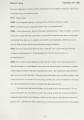
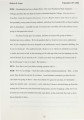
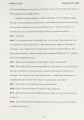
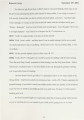
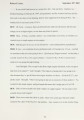
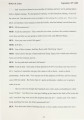
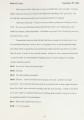
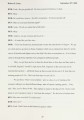
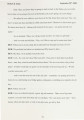
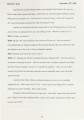
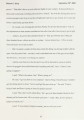
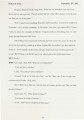
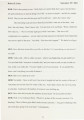
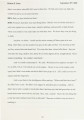
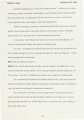
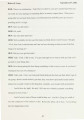
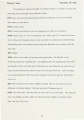
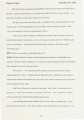
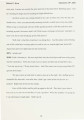
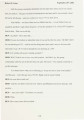
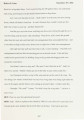
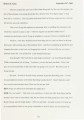
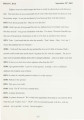
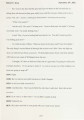
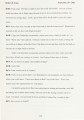
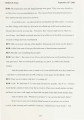
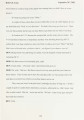
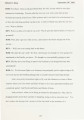
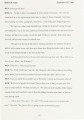
Show Robert E. Irion eptember 20'\ 2002 ROB: Arkadelphia had two colleges there. One was Henderson tate T ach r College, and then the one that we went to Ouachita Baptist College. 0-u-a-c-h-i-t-a. Ouachita. Near the Ouachita Mountains. It was a Baptist School that when we arrived had probably twenty male divinity students, and about two hundred fifty or three hundred girls in attendance - and that was all. Everyone else was either off in the military or not going to that particular school. So about twenty guys on campus, and then in comes this group of about a hundred and sixty soldiers. Well, the quarters that we lived in were a new auditorium they'd just completed, that was designed as an auditorium, not as a barracks building, but it was our barracks. The auditorium had a slope to it, so when you climbed in you bunk at night, and went to bed, in the morning you'd wake up with your feet hanging over the end of the. bed, if you moved at all. Usually your toes were pushing the bottom end of the bed because it was on a slope. But anyhow- BEN: Now this is not your basic training anymore, this is ... ROB: Now we're college- what they call a college training detachment. They- at that point, they divided us up into five classes. I was fortunate enough to get into the first class that was going to leave- there were thirty-two guys in our class, if I remember right, the number, and- we had to- well, what they'd done is divided them up from the testing they'd done on your educational background, and I'm bragging a little, but I was seventh out of the one hundred sixty that came there, in the order that they had us from the testing they'd done. 23 |
| Reference URL |
https://collections.lib.utah.edu/ark:/87278/s6bs0rd1/1025674 |