| Title |
W. Duane Parker, St. George, Utah: an interview by Winston Erickson, December 2, 2001: Saving the legacy tape no. 328 |
| Alternative Title |
W. Duane Parker, Saving the legacy: an oral history of Utah's World War II veterans, ACCN 2070, American West Center, University of Utah |
| Creator |
Parker, W. Duane, 1926- |
| Contributor |
Erickson, Winston P., 1943-; University of Utah. American West Center |
| Publisher |
Digitized by J. Willard Marriott Library, University of Utah |
| Date |
2001-12-02 |
| Date Digital |
2015-09-16 |
| Access Rights |
I acknowledge and agree that all information I obtain as a result of accessing any oral history provided by the University of Utah's Marriott Library shall be used only for historical or scholarly or academic research purposes, and not for commercial purposes. I understand that any other use of the materials is not authorized by the University of Utah and may exceed the scope of permission granted to the University of Utah by the interviewer or interviewee. I may request permission for other uses, in writing to Special Collections at the Marriott Library, which the University of Utah may choose grant, in its sole discretion. I agree to defend, indemnify and hold the University of Utah and its Marriott Library harmless for and against any actions or claims that relate to my improper use of materials provided by the University of Utah. |
| Spatial Coverage |
Italy; Cache County, Utah, United States |
| Subject |
Parker, W. Duane, 1926- --Interviews; World War, 1939-1945--Personal narratives, American; Veterans--Utah--Biography; World War, 1939-1945--Military operations, American; World War, 1939-1945--Campaigns--Europe, Southern--Personal narratives, American |
| Keywords |
10th Mountain Division; Riva Ridge |
| Description |
Transcript (44 pages) of an interview by Winston P. Erickson with W. Duane Parker on December 2, 2001. This is from tape number 328 in the "Saving the Legacy Oral History Project |
| Collection Number and Name |
Accn2070, Saving the Legacy oral history project, 2001-2010 |
| Abstract |
Parker (b. 1926) was inducted into the army right after graduation from high school in 1944. He reported to Fort Douglas, Utah, and then was transferred to Camp Walters and Camp Swift in Texas. He recalls his experiences in the 10th Mountain Division. 44 pages. |
| Type |
Text |
| Genre |
oral histories (literary works) |
| Format |
application/pdf |
| Extent |
44 pages |
| Language |
eng |
| Rights |
 |
| Scanning Technician |
Mazi Rakhsha |
| Conversion Specifications |
Original scanned with Kirtas 2400 and saved as 400 ppi uncompressed TIFF. PDF generated by Adobe Acrobat Pro X for CONTENTdm display |
| ARK |
ark:/87278/s6kw7h9n |
| Topic |
Personal narratives--American; Veterans; World War (1939-1945) |
| Setname |
uum_slohp |
| ID |
1025512 |
| Reference URL |
https://collections.lib.utah.edu/ark:/87278/s6kw7h9n |
| Title |
Page 32 |
| Format |
application/pdf |
| Setname |
uum_slohp |
| ID |
1025497 |
| OCR Text |
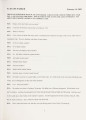
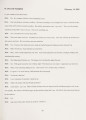
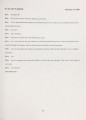
Show W. DUANE PARKER rua 14 2 02 WIN: So you had some of the protections that they had built? DUA: Well right out there there wasn' t a whole lot. There was an old dugout with kind of a shack built o er the top of it. But we had to try to build our own foxholes. WIN: So you 're in the battle there; and, I suppose, that the other part of your unit had gone up on the other end of the ridge? DUA: Yeah, they were clear over on the other end of the ridge. WIN: And what about the middle areas? DUA: Yes, other units of the division were positioned all along the ridge. WIN: Up in there? DUA: Yes. WIN: How long does this battle last at Riva Ridge? DUA: This battle lasted from the 19th through the 22nd of February. We started getting counterattacks that afternoon of the 19th of February. And the Germans took some high ground that was between our platoon, and Company B, who was on our left flank. This had the effect of isolating our platoon from the rest of our battalion. We were cut off for 2-1 /2 days. This put us in a bad situation. We were running out of rations, water, grenades, and ammunition. The first night my foxhole was facing the American side of the ridge. The second night was moved over to the German side of the ridge with Dale Archibald, and we dug our foxhole in front of a very large rock. And that was fortunate for us because I believe that rock saved our lives. That night we had heavy counterattacks, and the Lieutenant Loose called in artillery supporting fire. And they were shooting- the way we understood it was "high angular flre"-so that it would drop right down in front of us and onto the German troops who were attacking us. I don't know if somebody didn't put enough powder in one of the artillery shells, or not, but it hit right behind our hole. I tell you, I thought that was it. I felt like my whole insides were going to burst from the concussion of that shell. It was a terrible feeling. That was the closest that I 30 |
| Reference URL |
https://collections.lib.utah.edu/ark:/87278/s6kw7h9n/1025497 |