| OCR Text |
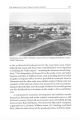
Show THE MAKING OF UTAH'S TWENTY-EIGHTH COUNTY 171 Duchesne circa 1920. (Uintah County Library-Regional History Center, Todd Collection) as the ecclesiastical headquarters for the reservation area. Smart believed that towns and those who controlled them were important to building the "Utah empire"-meaning the Mormon church kingdom. 58 The designation of Roosevelt as the stake center and other business activities of William Smart, such as locating the Dry Gulch Irrigation Company offices in town, provided an economic boon to Harmston and the other early town settlers, many of whom were not members of the Mormon church but seemed to be more accommodating to the faith than were the people of Myton. Roosevelt's growth was also facilitated by its location on the roads to Price and Heber City. A community's economic development and stability usually depends on diversity, and, as the county's communities grew, so did the local economy. Roosevelt soon became more diversified, having more services than did Myton. The Roosevelt Mercantile Company, organized by J.G. Holmes, William Smart, H.J. Harding, and Ward Pack, offered a wide variety of dry goods, groceries, and farm imple- 172 HISTORY OF DUCHESNE COUNTY ments. Beginning in 1907, Robert Marshall and Caleb Sprouse operated a meat market. Other commercial establishments included the J.M. Russell Investment Company, the Motter-Bracken Realty Company, Roosevelt Drug, the Birch Furniture Store, and the Roosevelt Brick Company. In 1907 Smart established the Uintah Telephone Company, which brought telephone service to the Uinta Basin.59 Smart added to his economic empire by acquiring several newspapers in the Uinta Basin, including the Vernal Express, the Duchesne Standard, and the Duchesne Messenger, among others. Another important factor that brought Roosevelt into early prominence over Myton, Cedarview, and Ioka, which all were aggressively seeking settlers and promoting themselves, was its accessibility to roads. Roosevelt businessmen took advantage of the town's location on the important road between Price, Heber City, and Vernal. They promoted a stage line stop in Roosevelt and offered a wide variety of services for stage-line passengers as well as freighters. Equally important to the growing importance and dominance of Roosevelt as the area's ecclesiastical and commercial center was the establishment there of an educational system. While other communities on the reservation worked to establish school districts and build schools, the citizens of Roosevelt possessed the resources to move quickly to establish their own school district and to build schools. In 1907 the Harmston family donated two acres of land for a school. The first class included about fifteen pupils of mixed ages. These early students brought whatever books were available at their homes to study from. Plans soon were made for a high school. State law required that each county establish a separate high school district. The high school building for Wasatch County was located in Heber City, an impossible distance to travel for high-school-age students on the reservation. Also, it was too expensive for families to board their children with families in Heber City. People of the reservation voted to create a second high school district in the eastern end of Wasatch County. In February 1914 the taxpayers of Wasatch High School District Number 2 voted to issue $39,000 worth of bonds to build a high school building in Roosevelt.60 The residents of Myton, Duchesne, and Boneta all wanted the THE MAKING OF UTAH'S TWENTY-EIGHTH COUNTY 173 Main Street Altonah circa 1915. Altonah became, for a short time, the largest community in the upper country. (Uintah County Library-Regional History Center, Neal Collection) new high school to be located in their communities. The larger population in and around Roosevelt and an offer made by William Smart to sell more t h a n twenty-one acres at seventy-five dollars per acre made Roosevelt the logical site, however. In the fall of 1914 the new high school building was started; it was dedicated on 17 February 1915. The building cost came to $36,817.61 The school had nearly fifty students initially, and Principal J.F. Hoyt expected the number to be 150 students within a few weeks as people sent their children to the school.62 The first fifteen graduates graduated in the spring of 1915. Later, after Duchesne County was established, t h e high school was renamed Duchesne High School Number One. The high school later was renamed Roosevelt High School, and it served the east end of the county until 1952 when the new Union High School was completed and dedicated. The funding, management, and location of the new Union High School were unusual. In the early 1950s the federal government was 174 HISTORY OF DUCHESNE COUNTY in the midst of changing its Indian programs, including the schooling of Indian children. Beginning in the 1920s Indian boarding schools were deemphasized and the Bureau of Indian Affairs placed emphasis on the states educating Indian children. The education of Indian children in day schools and in public schools was underscored by the legislation and policies of the New Deal of the 1930s. Following World War II Congress enacted a policy of "termination," which attempted to end all federal programs and responsibilities for Indian peoples and tribes. Although short-lived, the termination policy further encouraged the enrollment of Indian children in public schools and in high schools. The federal government wanted to integrate Indian students into local schools and society, and it encouraged states to take more responsibility for educating their Indian students. Following World War II, Roosevelt's population grew, placing stress on the existing high school building. (The population census indicated a shift of population within the county from 1930 to 1950. The more rural areas of the county lost population while Roosevelt grew steadily-from 1,051 in 1930 to 1,628 in 1950.)63 The Uintah County School District was also of a mind to improve Alteria High School, located in the west end of that county. A union of interests approved a joint project to build a high school to serve the various needs. The federal government made a special grant of $250,000 toward the building of a new high school, and the two county school districts agreed to appropriate $150,000 each.64 Union High School is located on the county line, with the main hallway positioned so that each county physically contains part of the school. At the present time in Roosevelt, in addition to Union High School, there is East Roosevelt Elementary, Roosevelt Middle School, and Roosevelt Junior High School. One important economic element that was missing in Roosevelt was a bank. William Smart joined with W.A. Miles and several other citizens of Roosevelt and, with additional financial backing from the Merchants Bank of Salt Lake City, incorporated the Roosevelt Banking Company in 1914. Miles was elected president of the new bank. Before organizing the Roosevelt Banking Company, Smart had founded the Heber City Bank and helped to establish the Uintah Stake Bank in Vernal.65 THE MAKING OF UTAH'S TWENTY-EIGHTH COUNTY 175 * Lake Fork (Upalco) flour mill, circa 1925. (Uintah County Library-Regional History Center, Todd Collection) The establishment of the Roosevelt Banking Company came on the heels of a financial crisis for many farmers in the county. In 1909, after a poor harvest the previous year, many farmers faced financial ruin and loss of their farms. Rock M. Pope, state legislator from Wasatch County, made an appeal for state relief for "the destitute settlers on the reservation."66 The legislature then appropriated $7,500 176 HISTORY OF DUCHESNE COUNTY for the relief of the homesteaders. Governor William Spry established a relief committee that consisted of R.S. Collett of Roosevelt, Reverend Hershey of Randlett, and George Cluff of Duchesne to distribute relief funds used to purchase feed for livestock and seed for the 1909 growing season. By 1920 the new Roosevelt Bank, like other small banks in the state, faced financial difficulties. World War I had stimulated the agricultural sector of the national economy, and this encouraged excessive capitalization and expansion by farmers. After the war, however, agricultural markets changed and many farmers who had gambled on a continued strong agricultural market found those markets no longer as strong and were caught with excessive loans. William Smart, as one of the bank's founders, attempted to secure additional financial support for the young financial institution. Concerning the bank's problems and those of its depositors, Smart wrote: I am compelled to leave my duties to answer the cry of my helpless people to help save them from financial drowning in the waters of this bank. Regardless of their mistakes, what can one do before the cries of a helpless and dependent child but make an effort to respond.67 The Roosevelt Bank weathered the financial crisis successfully and continued strong through the country's Great Depression of the 1930s. The other two area banks, Myton State Bank and the Bank of Duchesne, were unable to meet the financial crisis of the early 1920s, and both failed-the Bank of Duchesne closed its doors in March 1921; Myton State Bank followed in July 1922. The settlement of large numbers of Mormon church members on former reservation land promoted Wasatch LDS Stake officials in Heber City to organize the Theodore Branch of the church in Duchesne in November 1905. A year later, the Duchesne LDS Branch was formed into the Duchesne Ward, and in 1907 the Duchesne Ward was divided into the Roosevelt, Indian, and Hayden branches. Bishop Ephraim Lambert of the newly organized Duchesne Ward was given jurisdiction over the Roosevelt Branch. In August 1908 the THE MAKING OF UTAH'S TWENTY-EIGHTH COUNTY 177 Roosevelt Ward was formed from the Roosevelt Branch and Daniel Lambert was called to serve as bishop. In 1910 the reservation portion of the Wasatch LDS Stake became the Duchesne Stake.68 William Smart was called to serve as the first stake president of the Duchesne Stake. Smart served as stake president until 1920. In 1920 the Duchesne Stake was split and a second stake, the Roosevelt Stake, was organized. William Smart was appointed president of the new stake; Owen Bennion was sustained as president of the Duchesne Stake.69 There are presently (1998) three LDS stakes in the county, with ten wards in Roosevelt and several wards in outlying areas. The Episcopal church has had a long presence in the county and in the Uinta Basin. Under a program initiated by President Ulysses S. Grant in the 1870s, religious groups were assigned to administer various Indian reservations, and the Uintah Indian Reservation was assigned to the Episcopal church. In addition to other services, members of the church were sent to the reservation to teach school and otherwise improve the lot of the Ute Indians. After Grant's Indian reservation policy was changed, a number of church members remained to work on the reservation as employees of the Office of Indian Affairs or as Indian traders. The Roosevelt mission of the Episcopal church was established in 1914, and a year later twenty-eight communicants and some forty-five church attendees built a red-brick church in Roosevelt. Elsewhere, there were more than fifty church members in Duchesne attending St. Paul's Church in Vernal, more than twenty-five members of the St. Thomas Church in Myton, and other church members at Whiterocks and at Fort Duchesne in Uintah County. The Trinity Church House, as the Roosevelt structure was called, did not have an assigned minister for the first few years; but Miss Florence Circle officiated as Sunday School superintendent. The Episcopal bishop's annual report for 1916 indicates that Roosevelt's Episcopal church had "a thriving Sunday School and Guild." Lay leaders of the church in Roosevelt included Charles F. Huntley and Harry F. Keller. Mrs. J.R. Lewis was the lay leader in Duchesne, according to the proceedings of the ninth annual convocation of the Protestant Episcopal Church, which was held in Vernal.70 Other officials of the Episcopal church in Roosevelt 178 HISTORY OF DUCHESNE COUNTY in the 1910s were Albin Berch, Edward Harmston, Axel V Johnson, WH. Doggett, and WS. Nicholson. The Trinity Chapel is no longer standing, and membership in the Episcopal church in Roosevelt and in the county has remained relatively small.71 As discussed, the first Christian presence in the county was that of the Roman Catholic church; but Fathers Dominguez and Escalante did not tarry long in the county. During the years of the reservation, Bishop Lawrence Scanlan of Salt Lake City and priests from Fruita and Grand Junction, Colorado, occasionally visited Fort Duchesne and the Indians on the reservation. With the conversion of Indian families and the presence of some Italian homesteading families in the upper Duchesne River Valley, more frequent visits were made by priests from various parishes. By the early 1920s Roosevelt and Duchesne County were attended by priests from Vernal and Price. In 1922 Bishop Joseph S. Glass sent Father Duane G. Hunt to Vernal to establish St. James Parish to serve the Uinta Basin.72 In 1938 Roosevelt was made a mission to the Vernal Parish. In 1940 a rectory hall was built and Father Maurice Fitzgerald was appointed to preside over the new St. Helen's Church. During the 1930s frequent visits were made by priests from Notre Dame de Lourdes in Price to say Mass, hear confessions, baptize, and bury the dead of church members.73 The number of area church members had increased to about 200 by 1971.74 On 2 July 1944 the Roosevelt Baptist Church was organized with eight members, and for the next three years the members met in the rented Episcopal church. In 1947 members of the Roosevelt Baptist Church built their own place of worship on First East Street. Membership in the Southern Baptist Convention has grown, and in 1971 there were more than 225 members in the county, most living in the Roosevelt area.75 Other churches represented in the county include the Christian Assembly of God, Jehovah's Witnesses, the Lutheran church, Harvest Fellowship church, and the Presbyterian church, among other denominations. With the exception of the Presbyterian church, the denominations listed above are quite recent in the county, most established in Roosevelt after the 1960s. All have been accepted into the society, which remains predominantly Mormon. THE MAKING OF UTAH'S TWENTY-EIGHTH COUNTY 179 After a generation of grubbing out sagebrush and developing irrigation canals and laterals, the upper county of Mountain Home became lush and fertile. (lohn D. Barton) Many Ute tribal members living in the county belong to the Native American church. In addition to this more "formal" spiritual practice, some tribal members continue to maintain strong ties to ceremonies and traditions which provide them strong spiritual and healing relationships. In the mid-1990s Roosevelt is home to 4,500 people and serves as the commercial and educational center of the area. Educational opportunities include classes at the Uintah Basin Area Technology Center and Utah State University's Uintah Basin Branch Campus, which are discussed in more detail in a later chapter. Roosevelt is also home of the only hospital in the county-the Uintah Basin Medical Center-which is also examined in more detail later. Duchesne The community of Duchesne is located just above the junction of the Strawberry and Duchesne rivers in the central part of the county. The city of Duchesne's geographical location is also at the mouth of Indian Canyon and on present-day U.S. Highway 191, 180 HISTORY OF DUCHESNE COUNTY which passes through the Tavaputs Plateau from Castle Gate a few miles northwest of Helper in Carbon County. This road and U.S. Highway 40, which connects Salt Lake City with Denver and is Duchesne's Main Street, provide good access to Duchesne as well as the western half of the Duchesne Basin. The locale was recognized as a potential townsite by Father Escalante when he and other members of the Dominguez-Escalante expedition camped near the present-day town on 18 September 1776. Escalante noted, "There is good land . . . that we crossed today, and plenty of it for farming with the aid of irrigation-beautiful popular groves, fine pastures, timber and firewood not too far away."76 A.M. (Al) Murdock was the first settler in Duchesne. Several years before the opening of the Uintah Indian Reservation, Murdock secured a concession from the U.S. Indian Office to establish a small trading post to serve the Indians in the area. Murdock earlier had experience as an Indian trader when he was involved with the Indian trading post at Whiterocks. Murdock and several others took advantage of their location and situation when the reservation was opened to homesteading in 1905. In June 1905 Murdock made ready for the anticipated large numbers of homesteaders by enlarging his business, pitching a large circus tent and stocking it with hay, grain, hardware, and food supplies. Later that summer he and others claimed the area as a government town-site and set about organizing themselves into a town. Government surveyors laid out the streets, and the survey was accepted by the federal government on 18 October 1905. The new town was named Dora for Murdock's young daughter.77 Others joined Murdock in making Dora a center of commerce and trade. Tents were commonly used as places of business for the first year. In 1906 Murdock built a wood-frame store to replace the large tent store. The building quickly became the community center. Nearby homesteaders talked over news when they came to purchase goods, and on special occasions community dances were held in the store. Early Mormon church services were held in Murdock's tent and later in his store, which was sometimes called the "ward house." Others rented Murdock's building for various activities-town meet- THE MAKING OF UTAH'S TWENTY-EIGHTH COUNTY 181 Mgr* The Calder Brothers of Vernal established a creamery in Altonah. (Uintah County Library-Regional History Center) ings were held regularly in the building, and the building was used for youth have activities including basketball, dances, and other socials. Murdock later sold it to the Mormon church to be used as a meeting hall.78 By the fall of 1906 the residents of community had constructed a city hall, which measured 35 feet by 50 feet. In September 1906 the Duchesne Branch of the LDS church was organized with Ephraim Lambert as branch president. A year later, the Duchesne Ward replaced the branch and A.M. Murdock was made bishop. Murdock not only was Duchesne's first LDS bishop but also became mayor before the community was incorporated in 1917. As bishop and mayor he worked many years for the good of the community. Murdock also served as the unofficial banker for the area for several years. Many stories are told of his generosity and kindness to those who had financial difficulties during the earliest years of homesteading. It is estimated that he held as much as $125,000 in debts owed him. His clerks, having better financial sense, sometimes refused to give further credit. Confident in Murdock's generosity, 182 HISTORY OF DUCHESNE COUNTY however, the supplicants would appeal directly to Murdock, who literally would steal his own merchandise and give it to them. "He would write it down in a little book and . . . when it would get filled he would throw it away and get another one." Murdock eventually went bankrupt, yet he gained the love and admiration of many of the struggling homesteaders.79 Social life in Duchesne's early years was community and family centered. Children played games and swam in the river during the summer. One of the men in town had a bugle that he would blow every night so that all the children in town, his own included, would know it was time to go home to prepare for bed. In the winter people would play games in their homes and have such events as taffy-pulls.80 Bernice Peterson was the first schoolteacher in Duchesne; she and her students met in a tent. After its construction, Murdock's hall was used for a school. Town lore suggests that the name Dora stuck with the community for several years before the citizens changed the name to Theodore in honor of President Theodore Roosevelt. However, the town was commonly known as Theodore as early as the fall of 1906.81 Theodore underwent another name change. When the community applied for a post office, it offered the name of Theodore. However, the U.S. postal service thought that the new town names of Theodore and Roosevelt were too closely related and insisted that the town of Theodore should have another name. Theodore was changed to Duchesne in September 1911 to comply with these wishes. By 1913 Duchesne and Myton were chartered as towns. Duchesne's unofficial population was 500 and Myton's population was 350. Roosevelt was the largest of the three at 650 and was designated as a third-class city. A year later, after having been selected county seat by the voters of the new county of Duchesne, 115 property owners petitioned the new county commission that the town be incorporated as a city. On 20 March 1917, by a vote of 124 for and 12 against, local citizens voted for incorporation and elected city officials, with R.M. Pope replacing Murdock as mayor. Three years later the population of Duchesne reached 700.82 The Vernal Express in 1906 indicated that the bulk of the population of Duchesne had THE MAKING OF UTAH'S TWENTY-EIGHTH COUNTY 183 called Colorado home before settling in Duchesne, and there also were a few people originally from Missouri.83 Significant to the growth of Duchesne City was the nearby mining activity of the Raven Mining Company. The company's mining of Gilsonite offered employment during the winter months for local homesteaders of the area and it added to the population of Duchesne with a small number of permanent miners and mine officials who did much of their business in Duchesne. The town of Duchesne challenged Myton and Roosevelt for commercial and trade supremacy. Like the other two towns on the reservation, its location along established roads promoted business and trade. The Hotel Grant was founded by James Grant and his wife Susan as a tent hotel in 1907. The Grants for many years were affectionately known to the community as "Daddy" and "Mother" Grant. They built a brick hotel which claimed to be the "most up-to date hotel in the Basin." Nightly rates were fifty cents and one dollar per night; meals were fifty cents and baths were free.84 The first telephone in Duchesne was installed in the Hotel Grant, and Susan Grant was hired as the telephone operator. Charles Odekirk built the Odekirk Hotel in 1914; however, five years later, the new wooden structure burnt to the ground. Other overnight lodgings followed the Grant and Odekirk hotels; they included the Plaza and Cottage hotels, and Margaret "Grandma" Odekirk also ran a boarding house for a number of years.85 Kohl's General Store and Hardware, the oldest continuous business in Duchesne, was started by George Kohl and Tom Firth as a meat market in 1916. Over the years it has changed ownership and added groceries, notions, dry goods, and sporting goods to its line of products and goods sold.86 John Lewis established a blacksmith shop soon after the opening of the reservation. James Hair, Fred Davis, Steve Shelton, Lucy Crites, Louella Washburn, Ernest W Schonian, and others established a variety of commercial establishments including millinery, grocery, dry goods, feed, livery, and furniture stores, saloons, a barber shop, two cafes, and real estate and abstract companies. Significant to the commercial community of Duchesne was the establishment of the Bank of Duchesne, founded by Laird Dean, Fern 184 HISTORY OF DUCHESNE COUNTY Gray, and others from Kansas. It failed in 1921, however. During the 1920s the value of agricultural land declined while the costs for agricultural machinery, fencing material, and other farming expenses continued upward. The economic strain on farmers who had borrowed heavily from the Bank of Duchesne to develop land, buy seed and livestock, and build irrigation canals finally stretched the financial assets of the bank beyond their limit. Presently Duchesne is a town of approximately 1,200 people and serves as a commercial and religious center for the nearby smaller unincorporated areas of Fruitland, Antelope, Bridgeland, Utahn, Bluebench, and Arcadia. There are four religious denomination structures in Duchesne including the LDS church, with four wards and two buildings, a Baptist church, and St. Helen's Catholic Church (presently not in use). There are two schools, Duchesne Elementary and Duchesne Junior/Senior High School, several businesses, and county offices. For several years workers on the Central Utah Project, employees of the Bureau of Reclamation, boosted the community's population and economy, and the Bureau even built a park and a bowling alley to make the city more attractive for its employees. However, in the mid-1980s the area's dam projects were completed and Duchesne's population declined by several hundred people. The economic base of the community is presently centered in farming, oil production, and the county and school district offices. As county seat, Duchesne's major celebration is the annual county fair held in August. Events include stock judging and auctions, a two-day rodeo; 4-H and other exhibits, canning and produce judging and exhibits, arts and crafts entries, a demolition derby, dances, and an outdoor concert by professional entertainers. Other Communities Other towns were organized in the immediate years after the opening of the reservation. Neola is located ten miles north of Roosevelt and south of Uinta Canyon. This small hamlet is beautifully situated among green fields. When homesteaders settled the Neola area, they discovered it to be the home of hundreds of wild horses that hampered the raising of crops until fences could be built THE MAKING OF UTAH'S TWENTY-EIGHTH COUNTY 185 and other preventive measures taken. Isaac Nathaniel Workman, Benjamin Wilkerson, and George Averett were among the early settlers in the Neola area. Other early Neola settlers included James Woodward, William Greenhall, Joseph Peterson, Peter Duncan, John Houston, and Joseph Horrocks. In 1908 the area's first townsite, called Packer and located about two miles east of the present town, was established. Three years later, in the spring of 1911, the settlers of the area held a meeting to locate a more desirable townsite. Forty acres of land was purchased from Sam Ponowitz, a Ute Indian, and Nile Hugel, a civil engineer from Vernal, was hired to survey the new townsite. The settlers named their new community Neola, which is thought to have been derived from a Ute word meaning "the last move" or "move no more."87 People moved to the new town quickly, and by 1915 there were thirty-eight families and a total population of some 200 people calling Neola home. William A. Wilkerson worked a blacksmith shop for years, making and sharpening plow shears and shoeing horses, a much-needed service for the area. For the first several years farmers in the Neola area traveled either to Roosevelt or to the trading post at Whiterocks to conduct their business. In 1915 Leslie Allen and T.T. Wilkerson each started stores in Neola; for a brief period Wilkerson operated his store out of a tent. Ten years later, the Allen and Wilkerson enterprises were purchased and combined by Lionel Jensen and L.D. Gardner, who named their new company the Neola Trading Company.88 The town lacked an indoor recreational facility until James Barnes, postmaster at Neola, built an amusement hall in 1925.89 The amusement hall provided welcome relief on the weekends from the daily farming activities. Barnes organized community dances as well as booking silent movies to show in his hall. Lumber for the amusement hall as well as for most of the buildings in Neola came primarily from two sawmills-one located on the north part of Johnny Starr Flat, fifteen miles north of Neola in the foothills of the Uinta Mountains, the other, LeGrande Gardner's sawmill on Pole Creek Mountain. Neola truly coalesced into a community with the establishment of a school and the Neola LDS Ward. In the summer of 1915 the 186 HISTORY OF DUCHESNE COUNTY Packer log schoolhouse was moved to Neola, and that fall Miss Alice Clark and Mrs. Charles Bennett were hired as teachers for the Neola school. For three years the small school served students through the eighth grade. In 1918 a two-classroom brick school was completed at a cost of $4,000. The need for a larger school was evident in the 1920s due to an increased school population. A four-room schoolhouse was completed at a cost of $19,000 in 1927. A decade later, during the Depression in 1936 and 1937, a gymnasium, stage, lunchroom, and indoor restrooms costing $10,000 were added as part of a federally funded Public Works Administration project.90 The building was abandoned in 1979 when the new elementary school that presently serves the community was completed. Beginning in the early 1920s, due to improved roads and the use of school buses, students of the higher grades were transported to the high school in Roosevelt. The LDS Neola Branch (first called the Packer Branch) of the Hayden Ward was established with John A. Olsen as presiding elder in July 1915. A year later, the Neola Ward was organized and Olsen was sustained as bishop. Without a building to call their own, the Neola Ward purchased Barnes's amusement hall and for several years held Sunday services and weekday evening activities in the former amusement hall. Eventually sufficient local funds were raised that ward members were able to build a new wardhouse. The creamery built by C.J. Nelson in 1921 was important to the economic development of Neola and the surrounding area. For the first time, local farmers had a place to sell their milk for hard cash. Dairying became the most important agricultural activity in the Neola area for the next several decades. Scattered elsewhere throughout the county, a number of areas were settled and various people worked to establish them as towns or cities. Some developed a separate identity. In addition to the six incorporated communities in the county, there are several areas that have a local store and/or post office. At the extreme west end of the county is Fruitland. A small combination general store-gas station-post office is located there, and there is also a small LDS chapel where the Fruitland Branch meets. THE MAKING OF UTAH'S TWENTY-EIGHTH COUNTY 187 A small post office and a LDS chapel in Bridgeland serve Bridgeland and Arcadia residents. Bluebell has a combination store and post office along with a small city park; but Bluebell residents now go to church in Altamont. There is a store and LDS chapel in Mountain Home. Going into the county's small rural stores is like taking a trip back in time. The Fruitland Store, for example, sells convenience goods, sporting goods, limited groceries, hardware, and tack; it also has a couple of tables with chairs for people to sit at and converse. The store serves as the community center. To keep up with changing times, videos now can be rented. The post boxes are made of antique brass and have been there for decades. The once growing and hopeful towns of Altonah, Ioka, Midview, Cedarview, Monarch, Cresent, Upalco, Boneta, Utahn, and Stockmore no longer have stores or post offices. They are served on rural postal routes, and residents drive into larger towns for church and shopping. The would-be towns of Basin, Palmer, Hartford, Lakefork, McAffee, Blumasa, Meadowdell, Woodbine, and Falls all have disappeared from modern maps and are, for the most part, unknown even to most county residents. Upper Country Sandwiched by the U-shaped Uintah and Ouray Indian Reservation and located on the south slope of the Uinta Mountains in the county is the area known locally as "Upper Country." More specifically, Upper Country is identified with the Rock Creek drainage, extending south of the Uintah and Ouray Indian Reservation, east of Rock Creek, north of Blue Bench, and west of Monarch Ridge. Several communities are located in the Upper Country including Mt. Emmons-known for a short time as Banner (settled in 1906); Boneta (1906); Clay Basin (Alexander and later Altonah), Bluebell, and Lake Fork, later renamed Upalco (1907); Mountain Home (1908); and Talmage (1909). Altonah was settled in 1912, and the town of Altamont was established in the 1930s. Talmage initially was settled by Joseph Draper and H.P. Ottosen. A post office was established in 1911 and was known as Winn. The HISTORY OF DUCHESNE COUNTY community's name was later changed to Talmage in honor of Mormon church official Dr. James E. Talmage. Education was important to the families of Talmage; in 1912, with only twelve pupils, the farmers of Talmage along with those of Mountain Home and Boneta formed the Winn School District. LDS settlers organized a branch of the Boneta Ward in September 1913, and Lewis E. Alfred was named presiding elder. The Talmage LDS Ward was established three years later, and Austin G. Burton was called as bishop.91 Upalco, first called Lake Fork, was settled by the Ephraim Marret, Ted Howell, and John Horton families, among others. T.B. Hallet established a small store there in a tent in 1907, and in 1909 a school was built to educate twenty-one local children. Electricity was introduced in the county shortly before World War I, and a suitable location was needed to generate electricity. Lake Fork was considered to be an ideal stream to build a hydroelectric plant. In about 1913, not far from the community of Lake Fork, the newly organized Uintah Power and Light Company built its plant to generate electricity for the communities of Roosevelt and Myton. A post office soon was established and adopted the name of Upalco, a contraction of Uintah Power and Light Company. Soon thereafter the community's name of Lake Fork was changed to Upalco. In January 1915 the Lake Fork Branch of the Murial LDS Ward was organized. Two years later the branch was organized into the Upalco LDS Ward. The ward was discontinued in November 1957 and its members combined with those of the Mt. Emmons Ward. Clay Basin, later called Alexander and still later renamed Altonah, was settled by a handful of families from Vernal in 1905. Some of the early settler families included those of John Glenn, James B. Murray, William Ashby, William Bowden, and J.B. Payne. In 1906, farmers of the area organized the Farmers Irrigation Company (formally incorporated in June 1910) and commenced work on the Payne Canal.92 The farmers of Clay Basin united with the Dry Gulch Irrigation Company and in cooperation with the Indian Irrigation Service helped construct the Lake Fork Canal.93 Non-Indian farmers, individual Indian landowners, and Bureau of Indian Affairs local officials all worked very closely together to develop the water resources of the Upper Country. THE MAKING OF UTAH'S TWENTY-EIGHTH COUNTY 189 Unlike some of the other communities in the county, the driving force behind the establishment of Altamont was its suitable location for a high school to serve the surrounding communities of Altonah, Mt. Emmons, Mountain Home, Boneta, Bluebell, and Talmage. In 1911 the state legislature had authorized each county to create its own high school district. People in the communities of Altonah and Mt. Emmons were not satisfied with having to send their children to the high school in Roosevelt. Leaders of the two towns invited other neighboring communities in the Upper Country to join with them to build a high school at a convenient location. In a spirit of cooperation, the surrounding communities agreed. From Talmage, Mountain Home, Boneta, and Bluebell came additional students and support for the high school. The school was completed in 1935 but was without a suitable name. Tenth-grade student Clarence Snyder coined "Altamont" for the new high school, combining "Alt" from Altonah and "mont" from Mt. Emmons.94 A small LDS seminary building was built nearby shortly after the completion of the high school. The growth of Altmont's business district near the new high school occurred slowly. The only business for a number of years was LaForges cafe and filling station. In 1951 Glen and Florence Mohlman built a store to serve the area, having previously owned stores in Altonah and Tabiona. They ran the store until 1966, at which time they sold out to Dee and Lou Roberts, who sold it to Douglas and Sandra Swasey in 1989. An elementary school was built in Altamont, as was the LDS Altamont chapel and stake center in 1966. Earlier, in November 1957, the LDS wards of Altonah and Boneta were combined into the new Altamont Ward. In January 1953 the U.S. Postal Service opened a post office in Altamont. That same month a majority of the thirty-four qualified voters of Altamont petitioned the Duchesne County Commission to incorporate as a town. In May the county commission approved the petition for Altamont to incorporate. Ferrell Mohlman was chosen town president, and Leland Stevenson, Waldo Hansen, Jewell Kolb, Lindon K. Farnsworth, and Flora Dastrup were appointed to the town council to serve until an election in November. Town council member Flora Dastrup later observed: "I have particularly observed a 190 HISTORY OF DUCHESNE COUNTY more sincere and courteous attitude toward each other and to our community as a whole, since we became a town.95 In 1974 a branch of First Security Bank was added to the Altamont business district. Education and the location of high schools have continued to be matters of occasional and sometimes heated discussion in the county. Unlike earlier amiable discussions and agreement among the Upper Country communities to build a high school, discussions held in 1992 by the Duchesne County School Board to consolidate the high schools in Tabiona, Duchesne, and Altamont were heated. Altamont community leaders considered forming a new school district encompassing the Upper Country if the high schools were to be combined. Citizens there believed they had a sufficiently sizeable and stable tax base-including the Bluebell Oil Field, which represents a large portion of the county's property tax base used for school funding-to fund and manage their own school district. After the school board understood this possibility, consolidation talks ended quickly. Altamont is close-knit rural community. Many of the people who live in Altamont have been there for several generations, and it is likely that over half the residents have at least one line of ancestors who came as homesteaders into the Upper Country. The town of Altamont has grown steadily since its incorporation. In 1960 its population was 102; two decades later, the population reached 247. By 1990 the town's population had slipped to 167, but it had grown slightly to 179 in 1994.96 The primary winter entertainment events in Altamont are the school sports programs, especially basketball. School sports are discussed early each winter as readily as the weather or the crops. A significant portion of the citizenry also comes out for the homecoming queen contest and other school functions. Altamont High School has produced some very competitive athletic teams, and, more recently, students in a wide variety of school activities have risen to high achievements in track-and-field events, wrestling, forensics, and drama.97 The community's big summer celebration centers on the 24 July rodeo, complete with a parade down Main Street in the morning and a barbecue in the evening at the town park. Altonah is located in northern Duchesne County on the upper Lake Fork Bench at approximately 6,000 feet in elevation. The Lake THE MAKING OF UTAH'S TWENTY-EIGHTH COUNTY 191_ Fork River forms the border of Altonah on the west, separating the community from Mountain Home. The families of Robert Milton, Bird Alexander, Lott Powell, and Raymond Burgess were among the earliest homesteaders in the area. The early residents boastfully labeled their community "Queen City of the Reservation." The town was initially called Alexander, but LDS stake president William Smart changed the name to Altonah when a branch of the Church of Jesus Christ of Latter-day Saints was organized there soon after its settlement. Heber Bowden was called as the first branch president. In 1915 the Altonah and West Bluebell branches combined to form the Altonah LDS Ward; sustained as bishop was Owen Bennion.98 Shortly after taking up homesteads, farmers of the Upper Country turned to developing several irrigation canals, diverting water from the Lake Fork River. The first school in the area was taught by James Bird Alexander in a small log cabin with dirt floors. There were thirteen students initially. The one-room schoolhouse was one of twenty-two one-room and one-teacher schoolhouses on the reservation in 1916. The first store in Altonah was established in 1912 by J.M. Mallard; within a short time other businesses included Maxwell's Store, Fowler's Store, a post office, a butcher shop, a barber shop, a blacksmith shop, a planing mill, and a commercial club. The first phone in Altonah was in Maxwell's Store. When calls came in runners were dispatched to inform residents of their phone call. Residents close to the store paid runners twenty-five cents for the message; if messages had to be delivered by horse or auto the cost increased.99 Altonah claimed the distinction of having the only newspaper in the Upper Country. In 1915 and 1916 the weekly newspaper's masthead read Reservation News, and it was published by Harold and Cook Dubondroff. The newspaper's publishers apparently held strong socialist leanings, which were clearly presented in the newspaper. Financially unsuccessful, the Dubondroffs sold their newspaper to Aaron Johnson in 1916 or 1917. Johnson renamed the newspaper the Intermountain News; however, it survived for only a short time. 192 HISTORY OF DUCHESNE COUNTY No known copies of the Reservation News exist today. A monthly socialist newspaper, the Dawn, was published in Myton in 1915. Early cash crops grown by the farmers around Altonah were potatoes, wheat, and other grains. Dairying, however, proved to be the most profitable activity for area farmers. For a number of years, dairy farmers marketed only cream. Using hand-cranked separators, farmers hauled their cream weekly to the Mutual Creamery or Nelson's Creamery, receiving twenty-seven to thirty-one cents a pound.100 In the fall of 1933 James and John Calder of Vernal built a creamery and cheese factory. For some time area farmers had been increasing their dairy herds, and with the construction of the creamery dairy farmers in the Upper Country had a local creamery and cheese factor to process their milk. Soon after its completion, the creamery produced 700 pounds of cheese per day. The Calders' dairy and the increased production of milk from larger dairy herds created a very strong local dairy market that lasted until the end of World War II. Located about four miles south of Altonah and Altamont is the Mt. Emmons Bench. Most of the bench was allotted to the Ute Indians, except for a section of land along the west side of Sand Wash. In 1906 this land was claimed by James H. Evans, Simeon E. Atwood, and Chester H. Hartman.101 During the next two years additional farmers located on the bench. By 1913 there was sufficient Mormon church membership in the area that local stake president William Smart organized the West Branch of the Bluebell Ward, with Fred Case as branch president. On 17 September 1916 Owen Bennion was sustained as bishop of the Emmons Ward. Eight years later, in June 1924, the Mt. Emmons chapel was dedicated, with over 500 people in attendance. As with other communities in the county, education was an important focus of the families living on the Mt. Emmons bench, and in 1913 logs were hauled to Mt. Emmons from the Uinta Mountains to build the Cataract School. On 20 June 1915 farmers gathered at the school to discuss a name for their small community, with various names suggested including Yellowstone, Clearwater, Superior, Banner, and Mt. Emmons, which was selected. The name of the town of Boneta is derived from a Spanish word THE MAKING OF UTAH'S TWENTY-EIGHTH COUNTY 193 meaning beautiful or pretty. The area was settled primarily by a group of families from Sanpete County in 1906. In addition, two families from Carbon County settled on Boneta Flat. The families from Sanpete County were those of Edward E. Cox, Peter O. Madsen, John W Moffit, Fred Bench, Andrew Madsen, Taylor Tidwell, and Thomas Merriweather. William Jessen and Edward Reynolds moved from Carbon County and Maroni Fisher came Vernal.102 A small store operated by James Mickelson opened in 1907 and a one-room school was opened in the Wallace Moffitt home the same year. In December 1910 there was a sufficient number of LDS church members that the Boneta Ward was created from the Theodore and Roosevelt wards. Oscar Wilkins was sustained as bishop.103 It appears that the population of the Boneta area grew steadily until 1930, when it reached 240. During the following two decades the population dropped, and in 1950 Boneta precinct's population was only about half (134) that of the population in 1930.104 With the decline in population, the Boneta Ward disbanded in 1957 and local Mormon church members joined the new Altamont Ward of the Moon Lake Stake. Mountain Home is located directly west of Altonah and between Lake Fork River and Pigeon Water Creek. In 1908 the Joseph D. West family was among the early families to settle in the area. In September 1913 Mormon church officials separated the north side of the Boneta Ward to form the Mountain Home Ward; Oscar Wilkins was sustained as bishop. The population of the Mountain Home precinct remained stable through 1950.105 A new Mormon church building was dedicated in Mountain Home in April 1957. Tabiona/Hanna Tabiona is situated in the beautiful upper Duchesne River Valley. The Duchesne River meanders along the valley floor, creating a well-watered pasture land for livestock, the primary agricultural product. The narrow upper Duchesne River Valley, oriented in a northwest-southeast direction, is abutted on either side by the Uinta Mountains. Imposing Tabby Mountain at over 10,000 feet in elevation looms over the west side of the valley. Tabiona was named after the respected and peaceful Ute chief 194 HISTORY OF DUCHESNE COUNTY Tabby, who had lived in the valley prior to the Ute agency's being moved to Whiterocks. Tabby died in 1903, reportedly at the age of 104 years, just prior to the arrival of homesteaders in the Uinta Basin. The name Tabiona is a composite of two Indian names-those of Tabby and his daughter Ona.106 For many years the upper valley was a favorite hunting spot for Ute Indians. Geographical isolation and the fact of the Uintah Indian Reservation being located directly east of Tabiona and Hanna have helped foster a strong spirit of community in the two communities. Marriage among the various families has been common, which adds significantly to the area's sense of community, although, over time, new blood also has been infused into the two isolated communities. For example, Etta Fuller was hired to teach school at the one-room schoolhouse at Farm Creek in 1927.107 Soon she and Nephi Moon were married. Floyd Allen came to the area during the Great Depression as a member of the Civilian Conservation Corps and soon made the area his new home. Jack Young, from Pike County, Kentucky, joined the Civilian Conservation Corps at the age of eighteen and was soon at work at Ouray, Utah. He met Bernice Collett and the couple were married in Hanna in 1937. They decided to stay and make the upper Duchesne River Valley their home.108 Several Indian families, including those of Jesse and Ishabroom Codge Copperfield, Ephraim and Susan Theresa Panowitz, and Nephi Winchester, among others, had homesteads in the Tabiona and Hanna area. Shortly before the opening of the Uintah Indian Reservation in 1905, several land developers promised the establishment of a town they called Stockmore.109 Even before the reservation had been opened, they persuaded some homeseekers to take up land in the new community. However, Stockmore was not much more than a town on paper soon after the opening the reservation. It was during the years between 1905 and 1909 that most of the Duchesne River Valley was homesteaded. A number of the earliest families to settle in the Tabiona and Hanna area came from Summit County and Heber Valley. Several single Italian men and Italian families including Charley Bertola, John Barbieri, Felix Chiarelli, and Francesco De Fabrizio (later changed to Frank Defa), among others found the THE MAKING OF UTAH'S TWENTY-EIGHTH COUNTY 195 upper Duchesne River Valley to their liking and made the decision to take up land in the area.110 On 24 July 1910 the Tabbyville LDS Branch was established and Thomas A. White was called as the presiding elder. A year later, the branch was renamed Tabiona and was organized as a ward. In 1915 a school was built to serve the educational needs of the students living in the upper valley. Prior to 1915, both church services and school classes were held in various homes in Tabiona and Hanna. With a population of 277 in 1939 in the Tabiona precinct, the community decided to build a new school for grades from kindergarten to twelfth. When completed, the school served about 200 students. In 1982 this structure was torn down and a new school was completed that currently serves the upper Duchesne River Valley. A great portion of Tabiona's identity comes from the school. In 1969 and again in 1991 the boys' basketball team took consolation honors in the state tournament, and these events are sources of pride for the community. There have been efforts on the part of the school district and state school board to consolidate Tabiona High School with Duchesne High School for years. Perhaps the most serious attempt was in the 1969-70 school year when the state superintendent of schools tried to consolidate smaller schools throughout the state. Acting on that directive, the state school board ordered Tabiona High School to close and merge with Duchesne High. Tabiona residents and school officials appealed that ruling, arguing that Duchesne was too far away and that daily bus travel of such a distance would create a hardship on students. State officials traveled to Tabiona to ride a school bus into Duchesne to see if such transportation of students was feasible. That day there were herds of cattle and sheep in the road and traffic was busier and slower than normal, all of which delayed the arrival of the bus in Duchesne to the point that the state officials made no further mention of busing students to Duchesne.111 Business in the Tabiona region is centered in ranching and farming, along with some timbering. The business district of Tabiona and Hanna combined presently includes two small general stores, two cafes, a bar, a sawmill, and a dude ranch. At present the formerly rough road over Wolf Creek Pass linking Hanna with Kamas is being 196 HISTORY OF DUCHESNE COUNTY paved. What used to be a 2.5-hour trip from Salt Lake City to Tabiona will be shortened by a full hour. In anticipation of this, property values throughout the valley are rising rapidly. It well may be that Tabiona will lose some of its isolation and become a resort getaway for the Wasatch Front. The Uintah Basin Industrial Celebration In the years that followed the opening of the Uintah Indian Reservation, various non-Indian communities of the county held occasional celebrations, the largest most often held on or near the Fourth of July or Utah Pioneer Day on 24 July. Dances were frequently held as part of the festivities, and parades, although short in duration, were sometimes held, as were community games and activities such as community baseball teams challenging other teams. The Ute community also held several celebrations, including the Bear Dance, which celebrates the coming of spring, and the Sun Dance, more of a spiritual occasion. The town of Roosevelt in 1911 put on one of the area's biggest and most successful Fourth of July celebrations. Among the activities was a sham battle between men of the community and Ute Indians. Much effort was made to make the skirmish more "real." The "settlers" even circled their covered wagons for the fight. Heber Timothy painted his bald head red before putting on a wig, which was "scalped" during the battle. Several women screamed and one fainted at the realism. The next year, county citizens built a large hay palace using baled hay to form the walls and canvas tenting for the roof. Each town in the county was represented with booths and displays inside.112 These community celebrations recalled the past or celebrated the present, and for the first dozen years there was great excitement among many about the prospects the area would provide them. However, there was much that was needed for those prospects to be fulfilled, both for individual families and collectively for the county. There was always the need to improve farming techniques and understanding. To build a strong economy, individuals in the county asked for improved transportation. A railroad besides the short Gilsonite railroad in southeastern Uintah County was hoped for. And THE MAKING OF UTAH'S TWENTY-EIGHTH COUNTY 197 Uintah Basin Industrial Convention 1925. (Uintah County Library- Regional History Center) there was a need for an improved marketing system for the county's agricultural goods. Following World War I in the county and across the country there were darkening economic clouds lingering on the horizon, especially for farmers. World War I had seriously affected the agricultural sector of the national economy, with prices generally high and farmers aggresively expanding their acreage. This was to some extent also true of Duchesne County farmers. After the war, however, agricultural prices dropped as worldwide demand decreased due to European farmers again growing crops and a surplus on U.S. markets due to the expanded production. Farmers began to fall into increasing debt, many losing their farms. In addition, there was growing anxiety among farmers in the county and nationwide over a loss of control of their lives. Larger operations farming specialized crops were now beginning to become extablished at the expense of smaller farmers with limited acreage. As early as 1909, area newspapers discouraged local farmers from 198 HISTORY OF DUCHESNE COUNTY . Parade during the Uintah Basin Industrial Convention in 1925. (Uintah County Library-Regional History Center) starting commercial orchards and encouraged them to plant alfalfa and sugar beets. By the 1920s alfalfa had become the county's main crop; however, in 1923 the alfalfa crop failed for the second year in a row and many farmers were desperate. Some abandoned their farms and left the Uinta Basin. In order to slow the migration of farmers, Hylas Smith conceived of the idea of a gathering that became known as the Uintah Basin Industrial Convention. He believed that if county inhabitants got together and talked over their problems, offering mutual support, they could overcome their feelings of hopelessness and be able to ride out the hard times. To make the convention more attractive and help farmers forget their despairing concerns recreational activities were held in conjunction with lectures and demonstrations of new farming techniques, methods, crops, and implements. World War I had encouraged many farmers in various counties of the state to organize themselves into farm bureaus. In February 1923 the Duchesne County Farm Bureau was organized.113 The call for cooperation continued. On the front page of the Duchesne Courier for 23 February 1923 was the headline, "Co-Operation is THE MAKING OF UTAH'S TWENTY-EIGHTH COUNTY 199 Necessary to Solve Basin Problems." The front-page editorial urged those in the Uinta Basin to move forward and shun the passive spirit in the county. Newspaper publisher J.P. May, among others, urged county cooperation and a spirit of "We can do it." Other ardent supporters of the county and region included Hylas Smith, Indian farm agent; Erastus Peterson, Uintah County farm agent; William Wolfe; and Albert H. Kneale, Indian agent.114 In March 1923, representatives from several commercial clubs, the newly established county farm bureau, the churches in the county, the Indian community, and others met to form the Uintah Basin Industrial Corporation. Various names were suggested for the basinwide organization, including Uintah Basin Jubilee, Uintah Basin Farmers' Institute, Basin Farmers Round-Up, Uintah Basin Educational Convention, and others. The name adopted was the Uintah Basin Industrial Convention (UBIC).115 The purpose of the UBIC has evolved over time. According to J.P. May, publisher of the Duchesne Courier, the UBIC was organized to promote the building of "canals, reservoirs, to buy and sell land and water rights, to promote, own and operate sugar factories, railroads, hydro-carbon veins, including oil, to own and operate saw-mills and do any and all work relating to these activities." It was to be a vast "power, political as well as economical."116 The new organization was to be a mutual corporation directed by a majority of stockholders. Its organizers challenged individuals in both Uintah and Duchesne counties to participate in the new organization. More than 3,500 people attended the first convention. Families came in covered wagons and automobiles from all corners of the Uinta Basin. Each family made camp and provided its own meals for the several-day affair. A military band from Fort Douglas provided musical entertainment for the first gathering. During the next decade, the UBIC evolved into an event much broader in purpose and scope than the founders had first envisioned. By the mid-1930s the UBIC was a multi-day event, with people from the Colorado part of the Uinta Basin as well as residents of the two Utah counties involved in the activities. In 1938, for example, the three-day event held in late August at Fort Duchesne was a combined chautauqua, fair, recreational outing, and family camping program. 200 HISTORY OF DUCHESNE COUNTY A wide variety of formal classes was held and numerous speeches given. Speakers included J. Reuben Clark, Jr., former ambassador to Mexico and member of the First Presidency of the LDS church; Dr. Adam S. Bennion, noted educator; Governor Henry H. Blood; Dr. H.T. Plumb of the General Electric Company, who spoke on the "House of Magic"-miraculous uses of electricity; Dr. Franklin F. Harris, president of Brigham Young University; E.G. Peterson, president of Utah State Agricultural College; and George P. LaVatta, field agent for Indian services. Classes for men, women, and children were held during the three days. Information on raising children and control of communicable diseases was popular among the women. Other popular classes included reading of dramatic plays, modern music, flower arranging, home management, soil conservation, caring for sheep and cattle, and methods for eradicating pests and vermin. Teenage boys participated in various scouting activities. The Indian population was involved in exhibits of Indian handicrafts and dances. There also were art and photographic exhibits on the beauties of the Uinta Basin. The 1938 UBIC also included numerous contests: horseshoe pitching, baseball games, a tennis tournament, and horse pulls.117 At least one year barnstormers in biplanes were present to give rides for $1.50. This was the first time many of the Basin residents had seen airplanes. For the first several years the convention was held in Fort Duchesne on grounds provided by Ute Indian Agent Albert H. Kneale, with the support and sanction for the project by the federal government and the Bureau of Indian Affairs. When the convention opened, thousands of people from throughout both Duchesne and western Uintah counties converged on Fort Duchesne to visit with old friends, learn new farming methods, and escape, even if only for a day or two, the routine of their work-filled lives on lonely farms.118 Except for the years of World War II when the UBIC was not held, the convention has remained a tradition for Duchesne County. After the war the convention tradition was renewed and the event was moved to Roosevelt, where it remains the community's yearly gala celebration. The focus has shifted from farming techniques and education to entertainment and cultural enhancement. Instead of THE MAKING OF UTAH'S TWENTY-EIGHTH COUNTY 201 lectures and demonstrations on farming and canning techniques, there currently is a three-day showcase for the talents of local youth and adults. The name was also changed from Uintah Basin Industrial Convention to Uintah Basin Industrial Celebration. A parade down Roosevelt's Main Street, quilt and art shows, baby contests, a mini-marathon, a pet show, an archery shoot, a horseshoe throwing contest, clogging, singing, children's games, softball and tennis tournaments, free swimming at t h e city pool, special performances by Ute Indians and professional entertainers, and public dances now make up the Uintah Basin Industrial Celebration. ENDNOTES 1. Daggett County on the north slopes of the Uinta Mountains was the last county created in the state, in 1917. For further discussion of the creation of Utah counties see lames B. Allen, "The Evolution of County Boundaries," Utah Historical Quarterly 23:261-78. 2. See Charles S. Peterson, "Albert F. Potter's Wasatch Survey, 1902: A Beginning for Public Management of Natural Resources in Utah," Utah Historical Quarterly 39 (Summer 1971): 238-53; and Thomas G. Alexander, The Rise of Multiple-Use Management in the Mountain West: A History of Region 4 of the Forest Service (Washington, D.C.: U.S. Forest Service, 1987). 3. Vernal Express, 28 March 1913. 4. Ibid. 5. Vernal Express, 11 luly 1913. 6. Vernal Express, 15 May 1914. 7. lessie L. Embry, A History of Wasatch County (Salt Lake City: Utah State Historical Society/Wasatch County Commission, 1996), 99-100. 8. Bureau of the Census, Fifteenth Census of the United States: 1930, Volume I Population (Washington, D.C.: U.S. Department of Commerce, 1931,), 1, 100. 9. Duchesne Record, 16 January 1915. 10. Duchesne Record, 27 March 1915. 11. Roosevelt Standard, 2 November 1914. 12. Vernal Express, 6 November 1914. 13. Roosevelt Standard, 19 October 1914. 14. Uintah Basin Standard, 6 February 1996. 15. Roosevelt Standard, 8 September 1915. 202 HISTORY OF DUCHESNE COUNTY 16. Vernal Express, 11 September 1914; Roosevelt Standard, 21 December 1914. 17. The Roosevelt Standard, 19 October 1914 through spring 1915, contains many stories on this issue. Note that the dates of the controversy, the investigation by the state engineer,and the final Utah Supreme Court deliberations were all going on at the same time. 18. The 1917 legal description of the county reads: "Beginning at a point on the summit of the Uintah Mountains two and one-fifth miles west of the point where the Uintah Special Meridian intersects the summit of said Uintah Mountains, thence southwesterly along the summit of said mountains to a point due north of the center line between the east and west range lines of Range 9 West of the Uintah Special Meridian; thence south intersecting and thence following the said center line of said Range 9 West of the Uintah Special Meridian to a point where it intersects with the Second Standard Parallel South, Salt Lake Base and Meridian (which point is also an extension east from the Salt Lake Meridan); thence east to the line between Ranges 9 and 10 east of Salt Lake Meridian; thence south to the township line between Townships 11 and 12 South of the Salt Lake Meridian; thence east along said township line to a point due south of the point of beginning; thence due north to point of beginning." Laws of Utah, 1917, 103-4. 19. H. Bert lenson, "Smith Wells, Stagecoach Inn on the Nine Mile Road," Utah Historical Quarterly 61 (Spring 1993): 187-91. 20. Roosevelt Standard, 8 December 1938. 21. "Letter of H.P. Myton" (undated), Works Progress Administration Collection, Utah State Historical Society Library. 22. Alexia (Ludy) Cooper, "Myton History," copy in possession of the author, 3, 5. Ludy Cooper served as the mayor of Myton for several terms in the 1980s and early 1990s. 23. Uintah Basin Standard, 30 April 1996. 24. Vernal Express, 23 September 1910. 25. Vernal Express, 30 September 1910. 26. Finley C. Pearce, O My Father: A Biography of Joseph Harold Eldredge, (Yorba Linda, CA.: Pierce, 1980), 82-84. 27. Mildred Miles Dillman, comp., Early History of Duchesne County, 291-93, R. L. Polk, Utah State Gazetteer & Business Directory, 1912-1913 (Salt Lake City: Polk, 1913), 295-98. 28. J. Cecil Alter, Early Utah Journalism (Salt Lake City: Utah State Historical Society, 1938), 131-35. 29. Ibid., 135. 30. Pearce, O My Father, 74. THE MAKING OF UTAH'S TWENTY-EIGHTH COUNTY 203 31. Cooper, "Myton History," 7. 32. Vernal Express, 3 luly 1914, 20 Tanuary 1915. 33. Cooper, "Myton History," 6, 7. 34. William Padres, "The Mormon Curse," Uintah Basin Standard, 30 April 1996. 35. "Proceedings," M W Grand Lodge of Free and Accepted Masons of Utah Forty-Fifth Annual Communication, Salt Lake City, 18 and 19 lanuary 1916, 86, Utah State Historical Society Library. 36. Fred Todd, stories told to H. Bert lenson and retold to author. 37. Vernal Express, 25 lune 1915; Salt Lake Tribune, 19 lune 1915. 38. Uintah Basin Standard, 30 April 1996. 39. Kristen Smart Rogers, "William Henry Smart: Uinta Basin Pioneer Leader," Utah Historical Quarterly 45 (Winter 1977): 64. 40. Ibid., 67-69. 41. See Uintah Chieftain, August 1909, headlines and stories throughout that month, microfilm copies at Uintah County Library, Vernal, Utah. 42. Vernal Express, 3 February 1911. 43. Dillman, Early History of Duchesne County,300. 44. See headlines and articles in the Roosevelt Standard, Myton Free Press, Uintah Chieftain, and Vernal Express from 1906 to 1920. 45. Uintah Chieftain, 14 October 1909. 46. Stephen L. Carr and Robert W. Edwards, Utah Ghost Rails (Salt Lake City: Western Epics, 1989), 196-99. See also Henry E. Bender, fi\, Uintah Railway: The Gilsonite Route (Berkeley, CA: Howell-North Books, 1970). 47. Dillman, Early History of Duchesne County,335. 48. See Dry Gulch Irrigation Company Record Book A, Dry Gulch Irrigation Company Files, Roosevelt, Utah. 49. Ed F. Harmston later served as president of the town board of Roosevelt and was elected to the local school board. He worked as a real estate agent and for many years as a surveyor. He did many surveys in the Vernal region including surveying a route for the Uinta Railroad. 50. George Stewart, "Roosevelt's Yesterdays," 8. 51. Ibid., 9. 52. Louise Larsen Fisher, Family Courageous (Salt Lake City: Deseret Book Company, 1957), 17. 53. Vernal Express, 16 February 1914. 54. Bureau of the Census, Thirteenth Census of the United States, 204 HISTORY OF DUCHESNE COUNTY Supplement for Utah (Washington, D.C.: Government Printing Office, 1913), 576. 55. See Third Report of the State Bureau of Immigration, Labor, and Statistics, 1915-1916 (Salt Lake City: State of Utah, 1917). 56. Fisher, Family Courageous. 57. For a more complete list of early families of Roosevelt and the nearby area see Dillman, Early History of Duchesne County, 340-45. 58. Rogers, "William Henry Smart," 67-69. 59. Ibid., 68. Between 1910 and 1913 William Smart served as a LDS mission president in Germany. During his absence, much of the economic leadership in Roosevelt and elsewhere on the reservation rested with other churchmen, including R.S. Collett. 60. Vernal Express, 13 February 1914. 61. Dillman, Early History of Duchesne County, 387. 62. Roosevelt Standard, 21 September 1914. 63. Bureau of the Census, Seventeenth Census of the United States, 1950, Part 44, Utah (Washington, D.C.: Government Printing Office, 1952), 10. 64. Kim M. Gruenwald, "American Indians and the Public School System: A Case Study of the Northern Utes," Utah Historical Quarterly 64 (Summer 1996): 246-63. 65. Doris Burton, A History of Uintah County (Salt Lake City: Utah State Historical Society/Uintah County Commission, 1996), 156. 66. DeseretNews, 7 May 1909. 67. Quoted from William H. Smart diaries in Rogers, "William Henry Smart," 72. 68. Andrew lenson, Encyclopedic History of the Church of Jesus Christ of Latter-day Saints (Salt Lake City: Deseret News Publishing Company, 1941), 199-201, 718. 69. Ibid., 199-200, 718. 70. "lournal of the Proceedings of the Ninth Annual Convocation of the Protestant Episcopal Church in the Missionary District of Utah," years 1915 and 1916, copies at the Utah State Historical Society Library. 71. Atlas of Utah (Provo: Brigham Young University Press, 1981), 140, indicates there were only fourteen members of the Episcopal Church in the county in 1971. 72. See Bernice Maher Mooney, Salt of the Earth: The History of the Catholic Diocese of Salt Lake City, 1776-1987 (Salt Lake City: Catholic Diocese of Salt Lake City, 1987). 73. Footprints in a Beautiful Valley: A History of Tabiona-Hanna (Springville: Art City Publishing Company, n.d.), 91. THE MAKING OF UTAH'S TWENTY-EIGHTH COUNTY 205 74. Milford Randall Rathjen, "The Distribution of Major Non- Mormon Denominations in Utah" (M.S. thesis, University of Utah, 1966), 117; Atlas of Utah, 140-41. 75. Atlas of Utah, 140-41. 76. Dominguez-Escalante Journals, 48. 77. Dillman, Early History of Duchesne County, 190-91. The Works Progress Administration conducted a statewide survey and study of geographic place-names, history, and government records in the mid-1930s that indicates that the townsite was called Theodore and was later changed to Duchesne in 1911; see WPA Manuscript Collection, Utah State Historical Society. A third study suggests that the town was first called Dora after Murdock's young daughter and was changed to Theodore in honor of President Theodore Roosevelt. When Roosevelt was officially named in 1915, "the original request for Duchesne was finally accepted"; see lohn W. Van Cott, Utah Place Names (Salt Lake City: University of Utah Press, 1990), 117. 78. See Abe W. Turner, "A Tribute to Uncle Al Murdock," copy held by the author. According to one story, Murdock's asking price was more than church officials thought the property was worth. With some hurt feelings, Murdock then gave them the deed without charge. 79. Ibid.; William Murdock interview, with J.P. Tanner, Roosevelt, Utah, transcript in possession of the author, original held by J.P. Tanner of Duchesne, Utah. 80. Verda Moore, interview. 81. Vernal Express, 15 September 1906. 82. Fifteenth Census of the United States: 1930, 100. 83. Vernal Express, 15 September 1906. In addition, the newspaper mentioned that there "are a few Missourians" who called Duchesne home. One of the early area Gilsonite mining companies was headquartered in St. Louis, Missouri. 84. Dillman, Early History of Duchesne County, 193. 85. Ibid., 198. 86. Deon Brown, interview with John D. Barton, 1 June 1994, Duchesne, Utah, transcript in possession of author. 87. Dillman, Early History of Duchesne County, 317. However, Van Cott in Utah Place Names suggests that Neola is a Greek work of an unspecified meaning. 88. Dillman, Early History of Duchesne County, 322. 89. Ibid., 318. 90. Ibid., 325. 206 HISTORY OF DUCHESNE COUNTY 91. lenson, Encyclopedic History, 861. According to LDS church records, Talmage Ward was discontinued in November 1957 and members of the Talmage Ward combined with the Mountain Home Ward to form the Moon Lake Ward. 92. Farmers Irrigation Company Minutes, microfilm copy at Utah State Historical Society Library. 93. Ibid., and Dry Gulch Irrigation Company, Record Book "A." 94. Clarence L. Snyder, A Harvest of Memories, 392. 95. Uintah Basin Record, 5 November 1953. Altamont was incorporated as a town on 8 June 1953. The other incorporated town in the county was Tabiona, and the three incorporated cities were Roosevelt, Duchesne, and Myton. 96. Statistical Abstract of Utah, 1996. (Salt Lake City: Bureau of Economic and Business Research, 1996), table 22. 97. According to the Utah High School Activities Association Handbook, 1997-1998, in 1976 Altamont High School took first place in men's volleyball for 1A schools. In 1994 Altamont won the 1A state wrestling championship. In 1997-98 Duchesne placed first in drama competition. Many individual competitors in various sports and events are also listed for their accomplishments over the years. 98. lenson, Encyclopedic History, 18. 99. Burr Eldredge, interview with John D. Barton, Roosevelt, Utah, 8 lune 1997, transcript in possession of author. 100. Dillman, Early History of Duchesne County, 140-52; also see A Harvest of Memories, 167. 101. Dillman, Early History of Duchesne County, 270. 102. Ibid., 163. 103. Index to the lournal History of the LDS Church, microfilm copy, Utah State Historical Society Library. 104. Seventeenth Census of the United States, Utah, 44:10. 105. The Seventeenth Census indicates that the population of the Mountain Home precinct was 326 in 1950, page 44:10. 106. Footprints in a Beautiful Valley, 3. Van Cott, Utah Place Names, 363, suggests that the name was a merging of the names of the Ute Chiefs Tava (Tabby) and Tayneena. 107. Footprints In a Beautiful Valley, 458. 108. Ibid., 163. 109. Details of the Ute Agency and the Stockmore land swindle are outlined in chapter two. THE MAKING OF UTAH'S TWENTY-EIGHTH COUNTY 207 110. For brief histories of the Italian families see Footprints in a Beautiful Valley. 111. Robert L. Park, interview by lohn D. Barton, 8 December 1995, transcript in author's possession. 112. Dillman, Early History of Duchesne County, 397. 113. Duchesne Courier, 16 February 1923. 114. Vernal Express-Roosevelt Standard, UBIC-Indian Affairs Scenic Edition, 18 August 1938. 115. Duchesne Courier, 14 September 1923. 116. Duchesne Courier, 23 March 1923. 117. Vernal Express-Roosevelt Standard, UBIC-Indian Affairs Scenic Edition, 18 August 1938. 118. Dillman, Early History of Duchesne County, 128-32. See also Daniel S. Dennis, Horizons Beyond the Rim (Roosevelt, UT: Daniel Dennis, 1991), 7. |