| OCR Text |
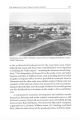
Show CHAPTER 4 LAND RUSH IN THE UINTA BASIN I .n 1861, when President Abraham Lincoln issued the executive order creating the Uintah Indian Reservation in Uinta (Duchesne) Valley to house relocated Ute Indians, the reservation was part of a federal policy of separating Indians from whites. This formal ethno-centristic policy of the federal government was rooted in earlier English colonial policy set forth in the Proclamation of 1763, which distinguished Indian territory and white territory in the British colonies in North America. The policy also attempted to prevent individual whites as well as individual colonies from dealing with the Indians politically and economically. All relationships with the Indians were to be conducted through the British crown. A similar policy was adopted with the election of Andrew Jackson as president. The Indian Removal Act of 1830 attempted to remove all Indians east of the Mississippi River to the newly formed Indian Territory located west of the Mississippi. Over a span of several decades, Indian territory shrunk to much smaller areas and generally more isolated reservations. The purpose of these policies-formal or informal-remained the same, however: remove 92 LAND RUSH IN THE UINTA BASIN 93 Land Office in Vernal. Would-be homesteaders registered their claims for land in this office after they made their selection of land. (Uintah County Library-Regional History Center) and isolate Indians from the march of white civilization and prevent conflicts between the two cultures. The settlement of Utah by t h e Mormons occurred before the United States claimed or controlled the Great Basin and the West beyond Colorado. The reservation policy, or at least separation of the 94 HISTORY OF DUCHESNE COUNTY Ute Indians and others from Mormon settlements, was not a high priority with federal officials in the tumultuous decades leading to the Civil War. As elsewhere in the West, conflicts occurred when Mormon settlers occupied Ute, Shoshoni, Goshute, and Paiute lands. As discussed, territorial governor and superintendent of Indian Affairs Brigham Young early on attempted to establish a similar program of segregation of the Indians from expanding Mormon settlements. Young's Indian farm system failed in part, however, because of lack of support by the federal government. President Lincoln replaced Brigham Young's Indian farm system with the Uinta Valley Indian Reservation. Eventually, most of the Ute Indians from along the Wasatch Front and central Utah were forced to remove to the new reservation. For Mormon settlers, the threat of conflict was removed and unlimited access to the land and other resources was achieved. The Uintah Reservation did for a time effectively separate and isolate the two cultures. The reservation program attempted to teach the Ute people the ways of the whites. But neglect by the federal government, some mismanagement of the reservation, dishonesty among Indian agents and others, and forced confinement wrought havoc among the Ute people, much as reservation life did among other Indian tribes in the West. The death rate soared, poverty was widespread among Indian families, and, in general, life for the Utes on the Uintah Indian Reservation was miserable. Added to the general despair of the Ute people was increased pressure from their white neighbors to acquire more of their land and water. The Ute people were not successful in adopting white culture in isolation, and their situation was typical of life on other reservations. Deplorable living conditions at reservations and the rapid decline of the national Indian population gave rise to several Indian reform groups, located primarily in the eastern United States. Foremost among those calling for reform was Helen Hunt Jackson, whose book Century of Dishonor outlined the plight of the Indians and predicted that Native Americans under the reservation system were not going to survive into the twentieth century. l Equally concerned with the growing "Indian question" were eastern Protestant churches, which called for reforming the ailing Indian reservation system. LAND RUSH IN THE UINTA BASIN 95 A homesteading family finds a place where they hope to build a home and make a living. (Uintah County Library-Regional History Center) Representatives from these reform groups and various churches came together at Mohonk Lake, New York, beginning in the late 1870s to find a solution to the Indian problem. Meeting annually, the reformers eventually adopted a plan. At the core of the Indian problem as they saw it was the reservation system and the collective control of land by the various tribes. This ran counter to the self-sufficiency and individualism preached and practiced by white Americans. To rectify the problem, the Mohonk Lake conference attendees called for a complete elimination of Indian reservations. Indian tribes would no longer be recognized, and reservations were to be replaced with individual ownership of land, which would encourage individuality. This would force assimilation of the Indians into white society. The Dawes Act The Indian reformers convinced Massachusetts Senator Henry L. Dawes, chairman of the Senate Indian Committee, to adopt their 96 HISTORY OF DUCHESNE COUNTY plan; and in 1887 Congress passed the General Allotment Act (Dawes Act), which reversed a century-old federal government policy of collective ownership of property by Indian tribes.2 In its place was the new policy of Indian self-sufficiency, with the key element of the policy the distribution of Indian land to individuals ("in severalty") and the eventual granting of U.S. citizenship to all Indians. The Dawes Act provided that excess reservation land, land not distributed to Indian families, be placed in the public domain and be opened to home-steading under existing land laws. For the next several decades, as various Indian tribes agreed to the Dawes Act, reservations across the West containing thousands of acres of land were opened to the rush of white homesteaders and others.3 At the outset, the Utes refused to accept land in severalty. Many felt that their former lands along the Wasatch Front and in Colorado had been taken without cause or their consent and that now the government was doing it again. Their resistence to accepting the Dawes Act was echoed among other tribes. Negotiations with the Utes and other tribes made little progress. The resistance by several tribes to negotiate and accept land in severalty was eventually challenged in the federal courts. In 1903 in the landmark U.S. Supreme Court case Hitchcock v. Lone Wolf the Court ruled that an individual Indian or tribe did not have to consent to have their lands allotted. The court further stated that although the Indians' right of occupancy prevented white trespass it did not prevent the government from acting unilaterally in the sale of the Indians' surplus reservation lands. With the Lone Wolf decision issued, the last obstacle in breaking up reservations was now in place. The federal government now could force allotment of Indian lands and open the remaining reservation lands to homesteading and mining. Thereafter, the process of distributing land in severalty to the Ute people moved quickly. Even after land was distributed and the reservation opened to white settlement, some Ute Indians continued to resist the federal Indian program. One group of 300 White River Utes, under the leadership of Red Cap, left the Uinta Basin for South Dakota in 1906, hoping the Sioux Indians there would take them in. Many white LAND RUSH IN THE UINTA BASIN 97 farmers and ranchers in Utah and Wyoming were alarmed by the flight of Red Cap and his band. From time to time it was reported that a cow or two was stolen; however, on the whole, the band of Indians along with several hundred horses and a few head of cattle traveled across Wyoming peacefully and without serious incident. Wyoming residents asked local law enforcement officials to prevent further travel of the Ute band. Fearing what might happen, two detachments of the U.S. Tenth Cavalry engaged the unhappy Utes and tried to persuade them to return to the Uinta Basin. The beleaguered Utes refused but did agree to accept an escort of soldiers to Fort Meade, South Dakota. To their dismay, the Ute band was not welcomed at the reservation in South Dakota. The Sioux had no land or supplies to share with them. For the next months, some of the Utes worked at odd jobs, but they remained dissatisfied with their conditions. In January 1908, after months of futile attempts to find a new life and place of residence for themselves, they agreed to return to the Uinta Basin. After a tragic two years they returned disillusioned and destitute; but their effort to leave was largely in protest over receiving lands in severalty.4 Part of the resistance of Red Cap and his followers to accepting land in severalty and adopting farming as a new way of life stemmed from their traditional way of life of freely hunting and fishing. Farming simply was not something most Utes were interested in doing, despite governmental pressure to do so. Irrigation Systems for the Utes As early as 1899 Uintah Indian agents and Bureau of Indian Affairs officials in Washington had urged Congress to appropriate funds for an irrigation system for the Ute Indians on the Uintah Indian Reservation. Hardly any appropriations were made by Congress during the next several years for an irrigation canal system, however; and, as a result, little effort was made to construct a canal system. Similar pleas from other Indian reservations also were made and were ignored by Congress. Without water and irrigation canals farming by either whites or Indians was impossible in the Uinta Basin. Indian agent H.P. Myton and the Ute Indian Commission understood that success of the Indian land-allotment program hinged on 98 HISTORY OF DUCHESNE COUNTY Twentieth Century Pioneers, circa 1905-1910. (Uintah County Library- Regional History Center) the Utes being able to secure water for their allotments. As part of their work, Myton and the Ute Indian Commission secured water rights from the state engineer in Salt Lake City. Myton and the commission also made preliminary plans to build an irrigation system to deliver water to the Indian farms; however, this required a great deal of money that the Utes did not have. Without irrigation canals and ditches, under state water law, the Utes would lose their rights to the water if the water wasn't used for beneficial purposes. Indians on other reservations faced similar problems, and it soon became evident that the allotment program would fail if Congress did not provide funds to construct irrigation canals for the Indians. In 1906 Minnesota Senator Moses Edwin Clapp successfully amended the general Indian appropriations bill to add $600,000 for the construction of the Uintah Indian Irrigation Project for the Utes living in the Uinta Basin.5 To design, construct, and operate the Uintah Indian Irrigation Project, Congress included it as part of the larger United States Indian Irrigation Service, the Indian counterpart to the Bureau of Reclamation. During the next decade, twenty-two canals stretching more than 162 miles and 635 miles of laterals and LAND RUSH IN THE UINTA BASIN 99 ditches were constructed, most of the work being done by Ute Indians.6 Homesteading the Uintah Reservation By the summer of 1905 Indian Office and U.S. Land Office officials had completed all the necessary preparation to open the Uintah Indian Reservation to homesteading.7 Over 111,000 acres had been allotted to Indian families. Another 282,560 acres were reserved for hunting, grazing, and other resource development for the Ute people; much of it was located in the Deep Creek area. The reserved Indian grazing ground also helped protect and guarantee water for the numerous Indian homesteads. In addition to Indian homesteads and grazing grounds, 60,160 acres were reserved for reclamation purposes. The opening of the Uintah Indian Reservation was a welcome opportunity for Utah Valley farmers, who for some time had coveted water from the Strawberry River. They had prepared a water plan similar in nature to the earlier successful but legally questionable transmontane water diversion system built by a group of Heber Valley farmers. In 1900 Utah state senator Henry Gardner from Spanish Fork and his close friend John S. Lewis conceived of the idea to store and divert Strawberry River water to Utah Valley. The idea developed further in 1902 when the Spanish Fork East Bench Irrigation and Manufacturing Company hired an engineer to conduct a feasibility study of Gardner's plan. The engineering study provided the farmers of Utah Valley with a solid proposal to seek federal financial assistance and engineering services from the newly established United States Reclamation Service, later named the Bureau of Reclamation, for the Strawberry Valley Reclamation Project.8 The Utah Valley reclamation scheme called for the construction of a large storage reservoir on the upper Strawberry River, a delivery system constructed through the Wasatch Mountains to the headwaters of Sixth Water Creek, and the subsequent use of Diamond Fork Creek and the Spanish Fork River to deliver Strawberry River water to sections of Utah Valley. The Utah Valley reclamation plan required a large financial outlay- more than the farmers of Utah Valley collectively could raise, 100 HISTORY OF DUCHESNE COUNTY and even more than the state of Utah could bankroll. However, financial and engineering assistance from the federal government awaited Utah Valley farmers. The Strawberry Valley reservoir and reclamation project was the first federally funded project in the state. It was made possible by the passage of the Newlands Act in 1902, which established a national revolving fund to assist in developing large reclamation projects in the West. The act also established the Bureau of Reclamation, which provided technical and economic support and direction for western reclamation projects. Fully aware of the Utah Valley farmers' reclamation scheme to divert Uinta Basin water to Utah Valley, the Vernal Express, the Uinta Basin's only newspaper at the time, voiced the concerns of settlers and water users of the Uinta Basin: "We cannot help but admire the supreme effrontery with which our friends over the [Wasatch] range set about appropriating something [water] to which they have no moral right in the world."9 To help with the Strawberry Valley Reclamation Project and ensure a location for a reservoir, President Theodore Roosevelt issued a presidential proclamation just days before the opening of the Uintah Reservation reserving a little more than 60,100 acres specifically for the reclamation project. Six months later, in December, Secretary of the Interior Ethan A. Hitchcock authorized $150,000 for work to begin on the reclamation project.10 Additional former reservation land, about a million acres, was withdrawn from public entry in July and added to the Uinta National Forest by President Theodore Roosevelt. The Uinta National Forest had been created in 1897 when President William McKinley set aside 482,000 acres of forested land on the Uinta Mountains. Other reservation land was withdrawn from homestead entry as well. Over 2,000 acres were set aside for townsites, and 2,140 acres were temporarily withdrawn from entry because of the land's potential mineral value. The balance of the reservation land, some 1,004,200 acres, was made available for homesteading.11 For several years prior to the opening of the Uintah Indian Reservation and the settlement of Duchesne County in 1905 much state and national political and economic intrigue and controversy swirled around the Uintah Indian Reservation. As mentioned, the LAND RUSH IN THE UINTA BASIN 101 Another hopeful family of homesteaders. (Photo courtesy Uintah County Library-Regional History Center.) virgin land and untapped water resources of the western section of the Uinta Basin were very much desired and became the source of intrigue and conflict. At the time of statehood in 1896, Utah's population was about 250,000 people. Because of a high birthrate, the continued immigration of Mormons, and the increased immigration of non-Mormon mining and industrial workers to the new state, Utah's population continued to grow, doubling over the next two decades. The demand for arable land was already high. It was little wonder that state officials and leaders of the Mormon church looked to the Uinta Basin to help meet the state's growing land needs. Mormon leaders were not yet accustomed to acting according to federal laws and procedures when it came to settling on new land; therefore, various church leaders in Heber City and in Salt Lake City developed their own plan to secure land for Mormon church members when the reservation opened. As a result, a political brouhaha erupted between the church hierarchy and Senator 102 HISTORY OF DUCHESNE COUNTY Thomas Kearns and others over the opening of the Uintah Indian Reservation. Part of the controversy began earlier over one of the state's two U.S. Senate seats. In the fall of 1900 Thomas Kearns, owner of the Salt Lake Tribune and a Catholic mining millionaire from Park City, was elected by the Utah legislature to the U.S. Senate with the support of most of the state's Republican party officials and some influential Mormon church leaders.12 The senate term was less than the normal six-year term, however; the abbreviated term was designed to stagger the subsequent elections of Utah's U.S. Senate seats. By the fall of 1902 when elections were held again, Kearns had fallen out of political favor with the leadership of the Republican party. The result was a nasty campaign between the incumbent Kearns and his challenger Reed Smoot, who was also a member of the Council of Twelve Apostles of the Mormon church. Smoot had organized a well-oiled political machine known as the "Federal Bunch," which gained control of the state Republican party. He won the election and joined George Sutherland, a fellow Utah Valley resident, in the U.S. Senate. Kearns was outraged by the turn of events, being denied a second term by the state Republican party. He charged the state's Republicans and certain Mormon church officials with a political double-cross for not supporting his senatorial candidacy. Kearns became politically bitter over his defeat, and he believed that Reed Smoot and Mormon church president Joseph F. Smith controlled the state Republican party and were therefore instrumental in denying him his seat in the Senate. Kearns then helped found the American party to challenge the church-dominated Republican party. Kearns's bitterness and his fighting with the Mormon church hierarchy spread to other issues, including the opening of the Uintah Indian Reservation. Kearns learned that the Mormon church hierarchy was promoting a scheme to secure Uintah Indian Reservation lands for church members, further convincing Kearns that the church under the leadership of Smith and Smoot was working to regain political and economic control of the state-a condition similar to what Utah faced before attaining statehood. Near the center of the Indian land scheme was William H. Smart, LAND RUSH IN THE UINTA BASIN 103 president of the Wasatch LDS Stake, a loyal supporter of Reed Smoot, and a member of the Republican party. With its headquarters in Heber City, Smart's ecclesiastical jurisdiction included all of the Uintah Indian Reservation. William Smart and the Wasatch Development Company Thomas Kearns's suspicions of a Mormon church conspiracy to gain control of the Uintah Indian Reservation were bolstered when he learned that William Smart had secretly explored the reservation prior to its planned opening to identify the best land and water sites for homesteading. Smart was convinced that certain sections of the reservation provided excellent opportunities for homesteading. As ecclesiastical leader of the area, he believed he should take the lead in helping church members homestead the reservation. He further recognized that the development of water resources was essential if Mormon homesteaders were to be successful in proving up on their homesteads. Smart acted quickly to accomplish the land settlement scheme. Prior to the opening of the reservation, Smart organized the Wasatch Development Company, a land- and water-development company which was in effect the secular arm of the Wasatch LDS Stake. Using both his positions as president of the development company and of Wasatch Stake, Smart contacted all the LDS stake presidents in the state, informing them that his company was ready to help church members secure land on the reservation. Thomas Kearns and the Salt Lake Tribune, having learned of Smart's clandestine forays to the reservation and the organization of the Wasatch Development Company, accused Smart, U.S. Senator (and Mormon Apostle) Reed Smoot, Mormon church president Joseph F. Smith, and certain land office officials in Washington, D.C., with a "hierarchic plot and conspiracy" to gain control of all of the Uintah Indian Reservation for Mormon church members. In a shrill editorial the Salt Lake Tribune declared: Besides, what mischief has the ecclesiastical jurisdiction of the stake presidency of Wasatch to do with this question of land opening by the United States? It is not in the least an ecclesiastical question, but an opportunity for American citizens to obtain a stated 104 HISTORY OF DUCHESNE COUNTY William Henry Smart circa 1907. Smart was instrumental in nearly every phase of the homesteading and early history of Duchesne County. (Photo courtesy Uintah County Library-Regional History Center.) amount of land for a homestead or other occupancy. The intrusion of the ecclesiasticism into the matter is an impertinence that deserves the sternest rebuke. It seems, however, that the beautiful and strenuous hand of President loseph F. Smith is in this ecclesi- LAND RUSH IN THE UINTA BASIN 105 astical move. The impudent interference assumed by the Wasatch presidency "is desired by the First Presidency," to the end that "our people" may get the land. It is the most daring encroachment upon the Government's prerogatives, the most insolent attempt to thwart by underhand means, the efforts of the Government to give every land-seeker a square deal, that has developed under the present odious presidency of loseph F. Smith.13 Throughout the spring and summer of 1905 the public feud over t h e reservation land between Kearns and the American p a r t y and Smart and the hierarchy of the Mormon church was carried out in t h e two statewide daily newspapers-the Tribune and the Deseret News. The women's auxiliary of t h e newly established American party also took up the fray, accusing the Mormon church of a "plot [of] . . . conspiracy" to gain control of the land on the former reservation. The women's group went so far as to petition the federal government, asking for a full investigation of the Mormon church's role in controlling land and water resources on the reservation for its members. The public voice of the Mormon church responded to the women's charges. What can be thought by decent people of the ministerial and journalistic deceivers who, not content with making ninnies of themselves in their furious assaults upon an imaginary "hierarchy" tricked a number of ladies of this city into assuming an absurd position before the country and exposing themselves to public ridicule.14 Kearns and others charged the U.S. Land Office officials in Utah with being part of the conspiracy to defraud American citizens from homesteading on the Uintah Indian Reservation. W.A. Richards, U.S. Land Commissioner in Washington, D.C., t o o k Kearns's charges seriously. Richards conducted his own investigation of the matter and found no wrongdoing by Smart, Smoot, the Mormon church hierarchy, or federal land office officials in Salt Lake City or in Washington, D.C. Land conspiracies-some actual, some u n f o u n d e d suppositions- organized to obtain vast tracts of Indian reservation lands in t h e West were not altogether u n c o m m o n . The alleged M o r m on 106 HISTORY OF DUCHESNE COUNTY church conspiracy was one of many that were part of the larger endeavor by individuals and special-interest groups (including individual states) to gain control of public western land. Land speculation, land fraud, and questionable activities and improprieties by government land office officials, speculators, and homesteaders had been continuous problems since the drafting of the United States Constitution. To address these problems, Congress had passed numerous land laws during the nineteenth century.15 On 14 July 1905 President Theodore Roosevelt declared that on 28 August of that year the Uintah Reservation would be opened to settlement "under the general provisions of the homestead and town-site laws of the United States."16 To ensure equal opportunity for all potential homesteaders and to prevent any possible corruption, the general land office added two special land offices at Price, Utah, and Grand Junction, Colorado, where homesteaders could register for Uintah Reservation land.17 A New System to Homestead Reservation Lands At other Indian reservation openings under the Dawes Act, the U.S. Land Office encountered numerous difficulties. The rush for land often resulted in serious accidents involving overturned wagons and runaway horses. Occasionally, eager homesteaders wanting the best land engaged in fistfights and gun battles. Through accidents and fights lives were lost. To avoid similar problems at the opening of the Uintah Indian Reservation, the United States Land Office adopted a new system to reduce the chaotic rush for land while at the same time providing a degree of fairness to all those wanting to homestead on the newly opened reservation land. New rules required would-be homesteaders to register at one of the temporary land offices at Provo, Price, or Vernal, Utah, or Grand Junction, Colorado. Each registrant received an entry permit granting permission to enter the reservation to scout possible homestead sites. The registrants' names were sent to Provo by Land Office clerks, where they were inserted in individual envelopes and placed in a large barrel. Names were then drawn and assigned numbers; those with the highest numbers had the first choice of land on the reservation. LAND RUSH IN THE UINTA BASIN 107 c • Uinta Basin Pioneers circa 1905. Would be homesteaders came by foot with a pack on their backs and others rode horseback, but the most common was families traveling by team and wagon. (Photo courtesy Uintah County Library-Regional History Center.) Under this procedure, during the first two weeks of August nearly 37,000 individuals from all over the country registered for former Uintah Reservation land. People who registered for the drawing of land were then given time to scout possible homesteads. During the early weeks of August, all of the roads and trails leading to the Uinta Basin were choked with wagons, horses, buggies, and homesteaders on foot. Government land office officials believed that at least 100,000 people would register for Ute land; however, the number of registrants fell short of the anticipated number-only about a third of the anticipated number registered for the land lottery. Even with the lower number, special travel arrangements were made. The Denver and Rio Grande Railroad added several special trains to Provo to accommodate hundreds of homeseekers from Sanpete and Sevier counties. Elsewhere, the temporary land office cities were choked 108 HISTORY OF DUCHESNE COUNTY with people. In Grand Junction, Colorado, the city council hired special police to control the anticipated crowd of land seekers. As many as 500 single women registered for land in Grand Junction. One young single woman indicated that she was indeed interested in settling on the reservation, but she also expressed interest in a man to assist her to prove up on her land.18 Franklin P. White, a Denver architect and leader of the Emethaehevahs, a religious sect, hoped to draw a high number, as he intended to establish a religious colony in the Uinta Basin.19 Most of the registrants were from Utah and were members of the Mormon church, however. In each of the land office towns, enterprising entrepreneurs vied for the homesteaders' money. In one Grand Junction newspaper appeared the following advertisement: "To get a good choice in the Uintah [Basin] you will need good eyesight. Have yours fitted with proper glasses in time by G.W. Strong, jeweler and optician."20 In Provo, local saloons remained open all night to meet the needs of thirsty men. Due to the lack of boarding houses and hotel rooms in Provo, city officials granted temporary permits to enterprising residents to establish tent cities in several open fields. At one of the tent cities located on the west side of the courthouse as many as 150 tents, each containing from two to four cots, were hastily pitched. Cots rented out for one dollar or more per night. Members of the LDS First Ward organized a special dining room and kitchen in the basement of the old Provo LDS Tabernacle.21 All preparations for the land lottery in Provo were completed by the evening of 28 August. At the Proctor Academy, where the lottery took place, Land Office personnel built a temporary wooden lean-to and platform canopied with white canvas against the side of the school building. Throughout the night, men and women gathered at the school. By early the next morning the air was thick with dust from the feet of hundreds of men and women stirring up the dirt. By 9:00 A.M. the hot August sun was making the day uncomfortable. Those selling cold drinks made good money that day. At precisely 9:00 A.M. U.S. Land Office officials John Dern and Irving Hewbert were ready to announce and record the names drawn from the barrel. Earlier, officials had chosen teenagers Lyman Noyes, Arnold Rawlings, Earl Gillespie, and Earl Dusenberry from the Parker LAND RUSH IN THE UINTA BASIN 109 School in Provo and Hoyt Ray, Charles Petersen, Raymond Peterson, Walter Williams, and Arthur Goodwin from the Proctor Academy to draw the envelopes containing the names of the homesteaders from the wooden barrel. The crowd pushed closer to the stand, and just before the first envelope was drawn an anxious homesteader shouted out: "Five hundred dollars, boy, if you draw my name first," breaking the tension of the moment.22 The first envelope drawn from the barrel contained the name of Roy Daniels.23 For the next several days some 5,772 names were drawn from the barrel one by one. At the end of the day, all the names drawn were reported in the state's daily newspapers. Thereafter, land office officials drew additional names from the barrels at the land office in Provo. The drama of the opening of the reservation was centered on the securing and holding of real estate. Nearly every individual had high hopes of securing and proving up on a choice 160-acre homestead. All dreamed their name would be drawn first, giving them the first selection of unallotted reservation lands. Those who were successful in drawing high numbers immediately began moving to the Uinta Basin to claim their new homesteads. What they found was not a paradise of green meadows and sparkling streams but a dry land covered with sagebrush, cedar trees, and blown sand. Some homesteaders were successful in proving up their claims. Others, however, discouraged with the poor soil and lack of water, left the basin after a few years of struggle, hardship, and poverty. The ultimate success of Smart's plan to secure land for Mormon church members is hard to determine. However, the proximity of the Uinta Basin to the Wasatch Front, coupled with the large number of Mormon church members who desired land, likely resulted in the fact that most of the homesteaders were members of the Church of Jesus Christ of Latter-day Saints. At the conclusion of the homesteading period in 1912, about 450,000 acres had been homesteaded. The remaining unclaimed land was offered for sale to the highest bidder, and in 1913 another 300,000 acres were sold. The remaining land was withdrawn from sale under a temporary mineral-reserve status.24 110 HISTORY OF DUCHESNE COUNTY The Dream of America-Land For the Taking The drama of the Western experience is usually portrayed as gunfights, Indian battles, range wars, or other violent action. If Hollywood actually were to capture the emotional base of Western history, however, the movies would be about land issues. The "heroes" often would have been surveyors or lawyers, not gunfight-ers or sheriffs. Western history and the early history of Duchesne County was basically about drawing lines on maps and making borders dividing the land into manageable units of property, and then persuading people to treat those lines with respect.25 The settlement of Duchesne County by whites is unique in Utah history. For the most part, Utah and its counties were settled under the direction of Brigham Young and other Mormon church leaders. Frequently, calls were issued from the church pulpit and faithful members of the church accepted the calls to establish new settlements in the territory or to strengthen existing ones. This often was done under much hardship, and the stories of settlements such as San Juan's Hole-in-the-Rock expedition are forever a part of Utah's heritage. Settlement of Duchesne County was delayed in part because of geographical barriers that isolated it and the eastern part of the state from the heartland of Utah. Discouraging reports initially postponed any church-directed settlement plans, and the establishment of the Uintah Indian Reservation delayed further the settlement of Duchesne County. As a result, Duchesne County was the last county in the state to be colonized, and it became the twenty-eighth county to be established. White settlement finally occurred under federal land laws, and it occurred as a result of a congressional solution to the national "Indian problem." One problem that wasn't solved was the continued mistreatment of the Native Americans. ENDNOTES 1. See Helen Hunt lackson, Century of Dishonor, reprint, (Boston: Roberts Brothers, 1973). 2. For a fuller discussion of the process of opening the Uintah Indian Reservation see Craig Fuller, "Land Rush in Zion: Opening of the LAND RUSH IN THE UINTA BASIN 111 Uncompahgre and Uintah Indian Reservations (Ph.D. diss., Brigham Young University, 1990). 3. Richard White, It's Your Misfortune and None of My Own (Norman: University of Oklahoma Press, 1991), 110, 115. Before Congress passed the Dawes Act, Indians held over 155 million acres of land on ninety-nine Indian reservations and the Indian Territory (later Oklahoma). Thirteen years later, Indian reservation lands had dwindled to less than 79 million acres, almost a 50 percent reduction of land. 4. Floyd A. O'Neil, "An Anguished Odyssey: The Flight of the Utes 1906-1908" Utah Historical Quarterly 36 (Fall 1966): 315-27. 5. For further discussion of Ute irrigation projects see chapter 9. 6. Craig Fuller, Gregory D. Kendrick, and Robert W. Righter, "Prelude to Settlement: The Efforts of the U.S. Indian Irrigation Service in the Uinta Basin, Utah," in Gregory D. Kendrick, ed., Beyond the Wasatch: The History of irrigation in the Uinta Basin and Upper Provo River Area of Utah (Denver: National Park Service, n.d.), 20. 7. For a new view on the meaning of the term "opening" see Patricia Nelson Limerick, The Legacy of Conquest: The Unbroken Past of the American West (New York: Norton, 1987), 46. According to Limerick, opening was "a metaphor based on the assumption that the virgin West was 'closed,' locked up, held captive by the Indians." In Limerick's opinion, the entire thought process that led to reservation systems, and their failures which resulted in the "opening" of Indian lands, is based in hypocrisy and ethnocentrism. 8. Craig Fuller, "Development of Irrigation in Wasatch County" (M.S. thesis, Utah State University, 1973), 112-25. For further discussion about the diversion of water from the Uintah Basin see Thomas G. Alexander, "An Investment in Progress: Utah's First Federal Reclamation Project, The Strawberry Valley Project," Utah Historical Quarterly 39 (Summer 1971), 286-304; and Kathryn L. MacKay, "The Strawberry Valley Reclamation Project and the Opening of the Uintah Indian Reservation," 68-89. 9. Vernal Express, 5 September 1903. 10. See Alexander, "An Investment in Progress." 11. U.S. Department of the Interior, Office of Indian Affairs, Annual Report (1905). See also Robert Hugie, "The 1905 Opening of the Uintah Reservation," n. 41, Uintah County Library, Vernal. 12. O.N. Malmquist, The First 100 Years: A History of the Salt Lake Tribune, 1871-1971 (Salt Lake City: Utah State Historical Society, 1971), 185-86. 13. Salt Lake Tribune, 2 luly 1905 14. DeseretNews, 11 luly 1905. 112 '' u >? ., HISTORY OF DUCHESNE COUNTY 15. There are a number of good works on the land question in American history; they include Vernon Carstensen, ed., The Public Lands: Studies in the History of the Public Domain (Madison: University of Wisconsin Press, 1968); Paul Wallace Gates, History of Public Land Law Development (Washington, D.C.: Government Printing Office, 1968); and Malcolm J. Rohrbough, The Land Office Business: The Settlement and Administration of American Public Lands, 1789-1837 (New York: Oxford University Press, 1968). For a closer look at land policies in Utah see George W. Robbins, "Land Policies of the United States as applied to Utah to 1910," Utah Historical Quarterly 20 (luly 1952): 239-51; Lawrence B. Lee, "Homesteading in Zion," Utah Historical Quarterly 28 Qanuary 1960): 29-40; Gustive O. Larson, "Land Contest in Early Utah," Utah Historical Quarterly 29 (October 1961): 308-26; Carlton F. Culmsee, "Flimflam Frontier: Submarginal Land Development in Utah," Utah Historical Quarterly 32 (Spring 1964): 91-98; and Fuller, "Land Rush in Zion." 16. 34 U.S. Statutes 3119 (14 luly 1905). 17. Detailed accounts of the controversy are found in almost every issue of the Salt Lake Tribune between late lune and August 1905. 18. Salt Lake Tribune, 11 August 1905. 19. Fuller, "Land Rush in Zion," 244. 20. Ibid. 21. Ibid., 240-46. 22. Provo Daily Enquirer, 17 August 1905, cited in Fuller, "Land Rush in Zion," 245. 23. Daniels worked at a stone quarry east of Colton, Utah, and had come to Provo to see the circus, which was in town at the same time as the land lottery. See Fuller, "Land Rush in Zion," 244. 24. Vernal Express, 16 February 1912, 16 August 1912. 25. Limerick, Legacy of Conquest, 54. |