| OCR Text |
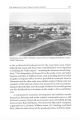
Show CHAPTER 6 DUCHESNE COUNTY COMMUNITIES AND THE MAKING OF UTAH'S TWENTY-EIGHTH COUNTY 1 he establishment of towns and villages on the reservation and the eventual creation of Duchesne County in 1914 followed a different settlement pattern than that of much of the state. Some 2,100 acres were reserved by presidential proclamation for new towns on the Uintah Indian Reservation. State law carefully outlined how counties could be created. Since statehood in 1896, only two counties, Duchesne and Daggett, have been organized.1 In addition to the allotment of land to Indian families and the withdrawal of land for town sites, there were other developments that took place prior to the opening of the reservation and impacted the settlement of towns on the reservation and the organization of the county. In 1897, as part of a national effort to preserve precious watersheds in the West, the Uinta National Forest Reserve of about 482,000 acres was established by presidential proclamation. In the summer of 1905 an additional 1.4 million acres, much of it located on the Uintah Indian Reservation, was withdrawn from public entry and added to the Uinta National Forest Reserve. The 1905 withdrawal was a result of an earlier survey of forested lands in Utah conducted 143 144 HISTORY OF DUCHESNE COUNTY by Albert Potter, chief grazing officer for the Department of the Interior.2 Additional land, about 200,000 acres, was withdrawn from public entry by President Theodore Roosevelt for agricultural and reclamation purposes in the summer of 1905. Creating a New County As early as 1909 the residents of the reservation portion of Wasatch County began the effort for home rule and the establishment of their own county. The desire was precipitated in part by the reservation's isolation from Heber City, the Wasatch County seat. Travel between the Uinta Basin and Heber City was particularly difficult from late fall to early spring of each year. Conducting legal and county business was costly to residents in terms of money and time because of their distance from county offices. The issues of home rule and schools were closely linked. By 1908 there were over a dozen school districts in the eastern half of Wasatch County, all accountable to the county school superintendent in Heber City. With the large number of school districts came an effort by the state legislature to consolidate districts, thus reducing costs while improving the quality of education. The remoteness and isolation of the Uinta Basin portion of the resulting Wasatch School District further promoted the will of those residents to divide Wasatch County. To have their own county would mean having a school superintendent who understood the particulars of providing educational facilities and opportunities to the newly settled and developing area. There was at least one other significant driving force for home rule. In 1910 the Duchesne LDS Stake was organized, and it established local ecclesiastical leadership apart from the Wasatch LDS Stake in Heber City and the Uintah LDS Stake in Vernal. The resulting ecclesiastical independence of local Mormons thus supported the drive for a new county on the reservation. The first effort to achieve home rule came in 1909 when the residents of the reservation portion of Wasatch County petitioned the county commission to separate themselves from the rest of the county. This petition for home rule failed in part because county commissions lacked legal authority to divide and make new counties. THE MAKING OF UTAH'S TWENTY-EIGHTH COUNTY 145 Old wooden bridge spanning the Duchesne River at Bridge (Myton) 1907. (Uintah County Library-Regional History Center) In January 1911 Don B. Colton of Vernal and William Smart of Roosevelt were appointed to work with the state legislature to change the law and give county commissions the authority to divide and create new counties. A second effort subsequently was organized to change the law. The Roosevelt Commercial Club under the leadership of Reuben S. Collett and Harden Bennion petitioned the state legislature for a change in the law. The Commercial Club's stated reason for a change in the law and the creation of a new county was that Wasatch County was too large to effectively govern and that additional counties would be required as the Uinta Basin developed. The Vernal Express reported: "This large territory, now so much in need of the benefits of county government, will in all probability yet require to again at some time in the future, be segregated into additional counties."3 The work of both committees ultimately paid off. In 1913 William L. Van Wagoner from Midway introduced the "Van Wagoner Amendment" in the state legislature, which provided for the creation 146 HISTORY OF DUCHESNE COUNTY of new counties. The new law stipulated that qualified voters from both the new and old counties must approve the division by a majority of each section and agree to the new county lines. The first hurdle for home rule had been crossed; however, a second, more difficult, hurdle now faced the residents of the reservation- to secure a majority consensus. A county boundary line committee of forty people was organized with H .C Means as chair to decide where the new county should be located. According to the newspaper, Means and the others were very much concerned with questions of fairness in locating the new county line: "The question is fair dealing with the people of the western portion of the county was not lost sight of and all present agreed that the division ought to be made with that in view."4 The proposed location of the county line was hotly contested by the residents from the rest of Wasatch County. At the heart of the issue was the control of the natural resources, particularly timber, water, summer grazing ground, and coal found in abundance in the west end of the Uinta Basin. The 1913 measure was also vigorously opposed by several of the leading businessmen in Heber City but was supported by leaders of the Mormon church. Satisfied with what they believed was a fair county line, 926 residents of the reservation petitioned the Wasatch County Commission to hold a special election for the purpose of organizing a new county. More than 800 residents from the west end of Wasatch County added their names to the petition. In July 1913 a special election was held and voters from the west end of the county turned down the division by a two-to-one margin. In the east end, an "overwhelming" majority voted in favor of creating a new county. The majority of opposition votes from the east side of the county were cast in Myton.5 Disappointed with the results, voters on the reservation soon set about again to win home rule for themselves. The major sticking point was the location of the county line. According to the Vernal Express: The west end people have insisted upon a line that will include most of the grazing land in the Fruitland District as well as the coal lands of that section, while the reservation people have stood with THE MAKING OF UTAH'S TWENTY-EIGHTH COUNTY 147 Myton in 1905. (Utah State Historical Society) Fruitland who desired to cast their lot with the proposed new county.6 Working with west end voters, east end voters proposed a new county line in 1914 which seemed to satisfy the concerns of many voters from Wasatch County's west end. The county commissioners also supported dividing the county. Their reasons included the inconvenience in managing such a large county, the lack of representation from the Duchesne side of the county, and the fact that law enforcement officers needed to travel from Heber over poor roads. In short, most of the reasons had to do with geographical considerations. Both roads from Wasatch County to Duchesne-Daniels Canyon through Strawberry and over Wolf Creek-were often completely blocked by winter snows and spring mud, making travel impossible for several months each year. Even with the commission's support for the division, however, the first election held in 1914 failed.7 In July 1914 a second election was held. This time, east end voters voted 675 to 65 to create Duchesne County, approving the 148 HISTORY OF DUCHESNE COUNTY Wasatch-Duchesne county line. Wasatch County's west end voters voted 833 in favor and 409 against. Home rule for Duchesne was obtained. On 13 August 1914, Governor William Spry, as stipulated in the Van Wagoner law, issued a proclamation establishing Duchesne County, which had a population of nearly 9,000 people.8 Duchesne County became Utah's twenty-eighth county. The newly elected officials included County Clerk and Recorder Edward Mackey; Treasurer Lula Hood; Assessor C.W. Smith; County Attorney Ray E. Dillman; and County Commissioners J.E.L. Carey, George Lindsay, and S.A. Russell. A number of issues faced the new county. One was the lack of a tax base to build roads and other infrastructure. Nearly 80 percent of the new county's budget was dedicated to education. The Duchesne Record, which moved from Myton to Duchesne in 1915, published an open letter to the state legislature, asking it for financial help: We don't ask you to build a railroad, the prime requisite, but we do ask for help that we may grow quickly to that point that a road shall be built. Wagon roads always precede the railroad. We have not yet a good wagon road in any direction, either in the basin, or leading out of the basin. All that we have we have built ourselves, without taxes, without aid from the State worth mentioning. What do we want? We want the great State of Utah to either loan us about $500,000, or arrange for our securing such an amount, for completing our irrigation projects. This is not all: We ask help to build a western gateway so that we may go to Salt Lake, or Utah county-to the old settled part of Utah, with a load, so that autos may go east and west during the major part of the year. Is it possible for Utah to do this? Yes, it is not only possible but it is morally obligatory that the state does this. . . . We think it is about time that the legislature awaken to your plain duty. Incidently, we trust that you have seated Duchesne county's representative. A little more cold-hearted treatment of this section, will turn us all toward Denver and we shall likely get some help.9 The county's first representative to the state legislature was William O'Neil of Roosevelt. At his first session as a member of the state legislature, O'Neil introduced a bill to appropriate $10,000 to build a new bridge over the Duchesne River near Utahn. The repre- THE MAKING OF UTAH'S TWENTY-EIGHTH COUNTY 149 Main Street Myton 1912. (Uintah County Library-Regional History Center, Todd Collection) sentative from Uintah County introduced a bill to appropriate $25,000 for a highway to be constructed from Vernal to Heber City. Both bills passed both houses of the state legislature. However, O'Neil's supplication and that of his constituents for help in building better wagon roads did not meet with Governor William Spry's approval. Neither did a dozen or more other road construction bills; Spry did not want to expend money for road improvements.10 The Fight to Locate the County Seat The struggle to establish a county seat presents a study of early rural politics. The law stipulated that a majority of voters of a new 150 HISTORY OF DUCHESNE COUNTY This building housed the Myton Bank, Opera House and Myton Free Press, circa 1920. (Uintah County Library-Regional History Center, Todd Collection) county were to select their new county seat. The drive for the county seat triggered a hotly contested race among the communities of Myton, Roosevelt, Duchesne, and Lakefork. As the various town promoters campaigned, it soon became apparent that the three largest towns-Myton, Roosevelt, and Duchesne-were the prime contenders. Myton was the principal community of the non-Mormon population and Roosevelt was the county's center for Mormon homesteaders and the Mormon church. The people of Roosevelt campaigned hard, and the hometown Roosevelt Standard urged its readers to place their mark for Roosevelt. The Standard of 12 October 1914 had as its front-page headline the prediction, "Roosevelt, as largest and best town in the basin will be the choice for county seat." A week before the election, the newspaper's headline was "If you Think, Your Choice Is Roosevelt!"11 When the vote was taken, however, Duchesne was selected by a majority of county voters. THE MAKING OF UTAH'S TWENTY-EIGHTH COUNTY 151 There were several reasons Duchesne was able to edge out the other towns for the county seat. Although a larger portion of the population was concentrated in the east end of the county, Duchesne and Roosevelt residents voted almost as a block for their own towns, as was to be expected, as did the citizens of Myton. However, the town of Roosevelt failed to win the surrounding votes. Altonah, with 146 voters (the fourth-largest town), split its vote, with 54 for Duchesne and 48 for Roosevelt. The remaining votes from Altonah were divided between Lakefork and Myton. The deciding votes for Duchesne came from Boneta and Stockmore, with 384 votes for Duchesne and only 53 for Roosevelt. The voting figures also help reveal the number of people in the towns of the county. There were 2,378 votes cast in this election among adults over twenty-one years of age. Voting for the county seat is seen in the accompanying chart. Duchesne County Seat Vote by Precinct: Duchesne Roosevelt Boneta Altonah Utahn Midview Antelope Lakefork Packard Stockmore 1 Cedarview Myton Fruitland Totals Duchesne 412 3 244 54 48 31 18 17 5 40 5 4 86 1,067 Myton 3 4 2 12 1 17 13 8 1 2 7 211 0 331 Lakefork 1 1 0 32 0 0 0 64 0 0 0 58 0 163 Roosevelt 3 485 40 48 6 0 0 7 78 13 13 21 0 81712 Having achieved the victory for county seat, the town of Duchesne was assured growth, with new jobs created for the various county officers, school district office, and the county court. Presently the county government still constitutes a significant portion of employment in Duchesne City. 152 HISTORY OF DUCHESNE COUNTY Myton Main Street, circa 1922. Notice the change in just a few short years between the traffic of horse and wagon to automobiles. (Uintah County Library-Regional History Center, Todd Collection) Duchesne-Uintah County Line In creating Duchesne County there was one final issue to be resolved-the Uintah-Duchesne county line. During the campaign to select the county seat, a rumor circulated in the new county that Roosevelt was not really in Duchesne County. "Malicious persons, thinking, to check the people from voting for Roosevelt for the County Seat of the new county, are actively circulating the story that Roosevelt is not in Wasatch County and therefore cannot be the county seat of Duchesne County," wrote the Roosevelt Standard.1* The disputation was more than rumor, however. A close reading of the original Wasatch-Uintah county line description revealed a serious difference between the earliest survey and the more recent survey, which was done after the election for the county seat and the approving of the new Duchesne County. The results were confusing, and the possibility existed that all previous elections associated with the establishment of Duchesne County and the county seat would be THE MAKING OF UTAH'S TWENTY-EIGHTH COUNTY 153 nullified. For several months the controversy occupied the front pages in the Roosevelt Standard. To the supporters of Myton, this was an opportunity to hold new elections and win the campaign for the county seat. At the core of the controversy was the Interior Department's survey of the Great Basin and eastern Utah in 1876. Problems were compounded when the territorial legislature created Uintah County using the inaccurate 1876 survey. At the time of Utah statehood in 1896, the legislature reaffirmed that the Uintah-Wasatch county line was the 110th meridian, used earlier by the territorial legislature. A new survey was conducted following statehood, however, which determined the 110th meridian to be one and three-eighths miles farther west than the older survey had it. The new survey running the entire length of Duchesne County's eastern boundary placed more than 130 square miles, including some of the best reservation land, in Uintah County. The potential loss of revenue from property taxes was serious. All land deeds which had been recorded in Wasatch County and later filed in Duchesne County would need to be refiled in Uintah County.14 Some of the newly elected county officials, including County Attorney Ray Dillman, County Surveyor Craig Harmston, and County Sheriff Roy Wilkins, all lived east of the disputed line. Equally troubling was the fact that the newly completed Duchesne County high school, paid for by Duchesne County citizens, was located east of the new survey line. Bitter feelings were felt throughout the county over the county-seat election, and many Roosevelt citizens felt that the rest of the county did not want them in Duchesne County. Lines from a letter published in the Roosevelt Standard summed up many people's feelings: "Roosevelt is still on the map but we hardly know what map. Are we in Uintah or Duchesne County? . . . Don't [sic] Duchesne County want us?15 For a short time there was a move, led mostly by Roosevelt citizens who were disgruntled over losing the county seat, to create their own county, with Lake Fork and the Sand Ridge as the west and east boundaries, respectively. The proposed new county also would have included Altonah, Fort Duchesne, and Myton. As the controversy continued, Uintah County even considered giving a five-mile strip on 154 HISTORY OF DUCHESNE COUNTY the west end of its county to Duchesne County. This would have placed Fort Duchesne and Whiterocks in Duchesne County.16 Several paths were taken to resolve the county-line question. The state attorney general, after an investigation by the state engineer in October 1914, decided that Roosevelt was in fact in Duchesne County. Based upon this decision, the Utah Supreme Court ruled on the county line and established it at the present location.17 Some residents of Roosevelt asked Utah Attorney General A.R. Barnes if the question over the disputed county line could not be resolved by holding an election. Barnes responded that such elections were illegal. To end the dispute, William O'Neil from Duchesne County introduced a bill in the state legislature in 1915 clarifying the county line. Two years later, the state legislature passed such a bill and the issues were finally resolved.18 Myton Sometime in the mid-1880s, William Henderson of Vernal was granted a license from Indian officials to establish a trading post on the Uintah Indian Reservation. Henderson's trading post was located near one of several natural fords of the Duchesne River and initially consisted of a single building of rough-cut pine. The trading post served a small segment of the Indian population until 1886, when the army, as part of building the road between Price and the newly established Fort Duchesne, built a bridge over the treacherous Duchesne River. To defray construction costs, a toll was charged for use of the bridge for the next few years. The trading post's importance increased with the completion of the bridge and the Nine Mile Road. Henderson's trading post soon became an important way-station on the Nine Mile Road as well as the less-traveled road to Heber City through Strawberry Valley It was the first watering place between Smith Wells and Fort Duchesne. The trading post was quickly identified as "The Bridge" or "Bridges." Several additional wooden buildings were added to accommodate the dozens of teamsters hauling freight between Price and Fort Duchesne and Vernal, and returning with Gilsonite to the railroad at Price. In 1888 a stage stopped twice weekly at The Bridge, and a year later daily stage service was established, which added to the business and other activities at The Bridge. THE MAKING OF UTAH'S TWENTY-EIGHTH COUNTY 155 Myton Baseball Team. (Uintah County Library-Regional History Center, Todd Collection) Sometime near the turn of the century, Owen Smith, after selling out his business to I.W "Ike" Odekirk at Smith Wells, moved to The Bridge and opened a store to serve a growing clientele of Indians and travelers on the two roads.19 Sometime prior to the opening of the reservation in 1905, William Henderson sold out to H.C. Clark who in turn sold the trading post to Hayden Calvert. Calvert was already familiar with the Uinta Basin and the Uintah Indian Reservation, having been employed in the Indian Service at White Rocks since the mid-1880s. Prior to the opening of the Uintah Indian Reservation, The Bridge bustled with federal government surveyors and members of the Uintah Indian Commission, which was making allotments to some of the Uintah and White River Ute Indian families. Major Howell Plummer Myton, Indian agent for the combined Uintah and Ouray Indian Agency, spent considerable time at The Bridge making preparations for the opening of the reservation in 1905. The Bridge quickly changed from a small but bustling way-sta- 156 HISTORY OF DUCHESNE COUNTY tion and Indian trading post to a town of tents and a few wooden buildings in September 1905. The Calvert family and others at The Bridge naturally wanted to establish their community as a full fledged town, and William H. Smart, promoter of settlement of the reservation and stake president of Wasatch LDS Stake, encouraged the establishment of The Bridge as the reservation's first town.20 Myton, Calvert, and others took immediate steps to secure a post office for their community. A petition was submitted to Joseph Briston, a friend of Myton and a U.S. Post Office official in Washington, D.C., requesting that a post office be established at The Bridge. The petitioners suggested the name of Briston for their new post office and, hence, for their community. Joseph Briston, however, changed the name to Myton. Years later, Howell Myton, in an autobiographical sketch, recalled the community's effort to secure a post office and the changing of the name from The Bridge to Myton. I was U. S. Indian agent and the settlers handed me a petition for a Post Office there. loseph Briston a friend of mine from Kansas was 4th assistant Post Master General and I sent the petition to him and named the Post Office "Briston." He scratched the word "Briston," and named the office "Myton," that is the way the town got its name."21 Myton attracted people from various parts of the world. Settlers from Denmark, England, Switzerland, Sweden, Wales, and Germany, as well as many states of the Union were found on the dirt streets of Myton. Myton and the reservation offered settlers fresh opportunities to secure land cheaply or to establish new businesses.22 The young town of Myton faced numerous challenges, not the least of which was spring flooding. The winter of 1908-09 was particularly harsh, with more than average snowfall in the Uinta Basin and deep snow on the Uinta and Wasatch mountains. The spring of 1909 was late in arriving, and its arrival then caused the Duchesne River to run extremely high, with a great deal of flooding as a result. At Myton the forceful floodwaters of the Duchesne River carved a new channel, leaving the bridge built by the army spanning a dry gulch. A bridge across the Duchesne River was critical for the existence of the new town of Myton as well as the economic vitality of THE MAKING OF UTAH'S TWENTY-EIGHTH COUNTY 157 Myton baseball field with game in progress, circa 1920s. Note the extensive stands which evidence large attendance. (Uintah County Library-Regional History Center, Todd Collection.) much of the Uinta Basin. Transportation was seriously hampered, stage travel was disrupted, and freight wagons had to be transported across the river by raft. The citizens of Myton and the entire Uinta Basin appealed for a new bridge. Senator Reed Smoot responded and secured a $25,000 appropriation from Congress for a new bridge at Myton.23 A year later, in September 1910, the new "government" bridge was completed at Myton. In addition, part of the Duchesne River channel was straightened near Myton, reducing the threat of flooding from the Duchesne River. The people of Myton and the reservation portion of Wasatch County organized a two-day celebration to officially open the new bridge. Governor William Spry, Senator Reed Smoot, and a host of state officials and LDS church leaders were invited to participate. The Vernal Express wrote of the event that the state officials from Salt Lake City were met at Colton and transported by carriage to the outskirts of Myton, where the distinguished guests were met 158 HISTORY OF DUCHESNE COUNTY by a "bevy of young girls dressed in white." The company proceeded to the government bridge between two lines of the country's finest young women and girls and were welcomed with a "bomb blast of dynamite." At the bridge speeches were made, and cheers from 3,000 people in attendance followed each speech. At the conclusion of the speeches, the master of ceremonies asked who should unlock the large padlock. The key was offered to Senator Smoot, who acknowledged the honor but told the master of ceremonies to give the honor "To the Governor of the greatest state of the greatest country in the world." Governor Spry then did the honors of unlocking the padlock to the bridge.24 The rapid construction of the new bridge with federal dollars and the support of the state reflected the importance of good transportation facilities and the increasing interstate commerce to the Uinta Basin including the town of Myton. The construction of the government bridge was one of several important building projects in Myton. Later that year, the Myton Opera House Company was organized. Investors elected Joseph M. Bryant as president, and H.C. Means, J.M. Coltharp, J.L. Ewing, and I.W Odekirk as directors of the company. The construction of a 40-by-80-foot building was begun. It was later used as a dance hall, theater, and a conference center. At least a dozen homes were built in Myton in 1910, along with an eight-room lodging house and the Calvert and Waugh general store.25 A year earlier, the Myton State Bank was organized and a bank building was planned. Life was less than the homesteaders expected not only because of the bleak landscape but also due to the lawlessness of the first years of the homesteading era. Joseph Harold Eldredge, who settled in Myton in 1913, said of the frontier town: The saloons had all the rough elements which could be attracted to a frontier town. There were shooting scrapes. One man was shot down in the street as he ran from the marshal. . . . They eventually got another marshal in office. However, he worried so much about the fighting and rough stuff that went on in the saloons that he eventually became mentally disturbed and tried to THE MAKING OF UTAH'S TWENTY-EIGHTH COUNTY 159 Roosevelt Main Street 1907, two years after its founding.(Utah State Historical Society) blow up the saloons with explosives. . . . I had not been in town many months until I heard two shots which killed two people.26 The rough elements of frontier life were short-lived and mostly confined to Myton and the west end of Uintah County, especially The Strip, but they were distressing to those who came to the area from well-established regions that had passed their frontier times a full generation before. The building boom and the establishment of new business continued for the next several years, and by 1912 Myton's business district included the Barry D. Mercantile Company, a general merchandise and agricultural implement store; Calvert and Waugh General Store; the Myton Hotel, operated by Mrs. E. McGuire; Ike Odekirk's general store; the Myton Trading Company, a general merchandise store owned by A.F. Maxwell; the Uinta Lumber Company, a hardware and lumber store owned by E.M. Jones; Abraham Liddell's livery; a construction and carpentry business owned by J.O. Hahn; the opera house, and a school.27 Fred Watrous published the weekly Uintah Record newspaper. The Uintah Record was the successor to the Uintah Chieftan and the 160 HISTORY OF DUCHESNE COUNTY Uinta Standard, both of which had been published in Roosevelt and owned by Watrous. The Uintah Record changed publishers in 1913 when William H. Smart took over the newspaper. A year later the newspaper changed publishers again; J.P. May became the new publisher and moved the paper to Duchesne, where he changed its name to the Duchesne Record.29, The Reservation News was published in Altonah in 1913 by Morton Alexander. This newspaper's masthead championed the cause of the common man: "Always fighting for the Plain People and the Under Dog."29 Myton was not left without a newspaper when the Uintah Record was moved to Duchesne. In 1915 C.B. Cook, who was associated earlier with the Vernal Express, began the Myton Free Press. Myton's business district attracted homesteaders from a wide area of the reservation. Harold Eldredge recalled trips that people from outlying communities made to Myton. When I first came to Myton, the people came from Altonah, Mountain Home, and all of that high country and outlying areas to do their shopping and business in Myton. They came in wagons, and it was a long day's trip to town. Many of the people would stay for two or three days doing their buying and other business when they came to town. Then they had the long trip back to their farms and ranches again.30 At the very outset of the opening of the reservation, the citizens of Myton aspired to make their town the governmental, social, and economic center of the reservation. With its opera house and other facilities, Myton leaders encouraged the LDS church to hold its quarterly regional conferences in Myton. For a short time both Mormon and Presbyterian church services were held at the opera house. Frequently, in fact, they met at the same hour, and a sheet was hung to separate the congregations. Following their respective Sunday services they combined to enjoy a pot-luck dinner together.31 By 1915 sufficient funds had been raised that the congregants under the ministry of George Sloan built themselves a new church in Myton.32 Myton civic leaders promoted a fair for the reservation, and for a few years following the establishment of Duchesne County annual county fairs were held in Myton. However, despite all of its promo- THE MAKING OF UTAH'S TWENTY-EIGHTH COUNTY 161 Roosevelt Main Street 1917. (Uintah County Library-Regional History Center) tional efforts, its strong economic role, and its location, Myton failed to win the position of primary city for the reservation and later county seat for Duchesne County. A local story tells of a LDS committee, headed by stake president William Smart, that came to Myton to meet with the non-Mormon town council to ask that certain Mormon interests have the opportunity to buy into one of the banks in town as well as several of the businesses. The town council and business owners emphatically declined the request. At this point, according to the story, Smart uttered what has afterward been called the "Mormon Curse." He reportedly said: "If you do not allow us to buy into your town, you will see the day when only jackrabbits and tumbleweeds will inhabit your main street."33 Another version of the Mormon curse relates that when President Smart came to a church stake conference in Myton he was dismayed at the attitude and actions of many of the local church members. Especially detrimental to spiritual growth in Smart's opinion was the support church members living around Myton were giving to the saloons of the town. He warned the members that if such action were not immediately stopped Myton would fail and weeds would grow in the sidewalks. A third version of the curse deals with the building of a Mormon 162 HISTORY OF DUCHESNE COUNTY chapel. Bill Peatross, old-time resident of the county and the son of William Stuart Peatross, who was involved with the Myton Free Press newspaper in 1915, related the following: In September of 1910 during a meeting held to discuss the proposal of a new Mormon Stake Center to be built in Myton, opposing non-Mormons fiercely shouted the Mormon leader down telling him that if he even tried it they would tar and feather him and ride him out of town on a rail. The Mormon leader, President William H. Smart, told the fierce crowd that the stake center would be built in Roosevelt. . . and from that day forward Myton would go down hill until the day would come when they would see weeds growing in the cracks of the side walks, rabbits would play in the streets, and many of their busy streets would turn into swamps.34 Whatever the true story, many county residents believe in the Mormon curse. Several historical developments help explain the declining position of Myton. Fred Todd, long-time resident of Myton, claimed that the founding of a local Masonic lodge in Myton contributed to the town's decline. It was chartered on 19 January 1916, and members met in the Myton State Bank, owned by Ralph Dart.35 Todd maintained that Mormon homesteaders feared, unreasonably, that the Masons were conspiring against them in business and banking; this resulted in the Mormons pulling their support from the Myton business district.36 Financial difficulties of the Myton State Bank in August 1922 forced suspension of banking activities until the bank could be reorganized. The bank problems severely disrupted financial activities in Myton and placed a dark shadow over the bank following its reorganization. The viability of Myton as a town of commerce and trade was severely affected during the early morning hours of 19 June 1915 when a fire razed virtually the entire business district of Myton. The fire began about 2:00 A.M. at the back of J.D. Beaver's saloon, pool hall, and rooming house. The townspeople tried valiantly to put out the inferno, but Myton was without a water system. Ironically, the citizens of Myton days earlier had voted by a wide margin (49 to 3) to bond themselves for a new town water system. High winds fanned THE MAKING OF UTAH'S TWENTY-EIGHTH COUNTY 163 Duchesne County High School, Roosevelt, Utah. Duchesne County High School, built in Roosevelt 1919-20. (Uintah County Library-Regional History Center, Snow Collection) the flames, and the heat from the fire forced the bucket line of firefighters to retreat across the street. Without a water system in town, the fire raged for four hours and was only halted when the Airdome Theater, which had been vacant for several years, was hurriedly torn down and the combustible materials removed from the fire's path. Estimated value of the losses varied; according to one newspaper report, the loss was placed at $30,000. Beaver's establishment was totally destroyed, as was the Myton Free Press facilities. However, the day before the fire, the newspaper had moved most of the printing equipment and paper supply to another building, and therefore the loss to the newspaper company was minimal. E.J. Marchant's barber shop, Reservation Realty, the office of the mayor, Wells's butcher shop, the law offices of R.B. Croix, the office of the Pleasant Valley Irrigation Company, a dental office, and other offices were totally destroyed.37 Fires struck Myton in 1925 and again in 1930. The 1930 fire turned much of the business district into ashes and rubble. The 1930 164 HISTORY OF DUCHESNE COUNTY fire, coupled with the onset of the national Depression, made it impossible for most businesses in Myton to fully recover.38 Today the community is bravely struggling to reinstate a viable business district and attract new construction and families to the area. Other challenges to Myton's efforts to become the preeminent city on the reservation came from the communities of Duchesne and Roosevelt. In 1910 Myton's population was 350; Duchesne's population was 150 people less than Myton's; and Roosevelt topped Myton, with a population of 563. Geographically, Duchesne was more centrally located in the county and was situated on the increasingly more-traveled Strawberry Valley road to Heber City. Myton also faced stiff competition from the community of Roosevelt. Earlier, before the opening of the reservation, William Smart had made it known that he wanted to prevent any land-grabbing on the reservation, meaning that he wanted the reservation reserved for Mormon homesteaders.39 This had irritated many non- Mormons in the state and the few residents already living in Myton. This irritation was further provoked by Stake President Smart when in 1910 he wanted to build a "theological seminary" in Myton and wanted the building financed with public bonds. Smart even wanted to change the town's name to "please the Lord."40 The residents of Myton objected, and Smart turned to Roosevelt to develop his plans to establish the ecclesiastical center of the Mormon church on the reservation. Despite these challenges, the citizens of Myton continued to promote the town and the surrounding area as the best town and the choicest land to farm. Earlier, in 1894, through a bill sponsored by Wyoming Senator Joseph M. Carey which bears his name, Congress granted up to 1 million acres of additional federal land to each of ten semiarid western states and territories, with the provision that the state make efforts to reclaim the land and make it available to actual settlers in tracts not exceeding 160 acres. In 1910, Public Law 114 was passed; it extended the provisions of the Carey Act to include land that was once Indian reservation land. Frank Lott of Denver, Colorado, using the provisions of the Carey Act, applied to the state of Utah for permission to develop and irrigate over 30,900 acres of land southeast of Myton. Financing the THE MAKING OF UTAH'S TWENTY-EIGHTH COUNTY 165 Theodore (Duchesne) 1910. (Uintah County Library-Regional History Center. Snow Collection) large South Duchesne Irrigation Project (also known as the South Myton Carey Project) was estimated to cost $500,000-well beyond the collective means of the homesteaders. J.P. Smith and George C. Jones, both from Oklahoma, Isaac Odikirk of Myton, and William Smart, LDS stake president and president of the Wasatch Development Company, lent their financial support to the South Duchesne Irrigation Project. The combination of homesteaders and investors applied for financial assistance and leeway under the federal Carey Act. It was hoped that much of the money could be raised through selling the 30,900 acres as well as selling water shares. The homesteaders already on the Myton Bench joined Lott's scheme and in a cooperative effort planned to help dig a canal from the Duchesne River to their homesteads. The plan called for the start of the canal thirty miles upstream. This long distance was needed to provide sufficient grade to successfully lift the water to the land on the south Myton Bench. The announcement of Lott's plan in the summer of 1909 created great expectancy, even an atmosphere of economic boom and land rush, which would bring some 600 families and upwards of 3,000 166 HISTORY OF DUCHESNE COUNTY additional people to the immediate vicinity around Myton. Headlines such as "Myton on the Eve of Great Boom" and "Magic Myton Destined to Become the Commercial Metropolis of the Rich Duchesne Valley" appeared frequently in the weekly Uintah Chieftain and lent encouragement to the boosters and backers of the land and water project.41 The scheme received a hopeful boost when word circulated throughout eastern Utah that the new Moffat Railroad Company was planning to construct a rail line through the Uinta Basin to connect Denver with Salt Lake City. Other railroad companies, including the Grand River and the Meeker and Salt Lake railroads, indicated strong interest in building a rail line through the reservation.42 However, both the railroad and Lott's land and reclamation scheme went bust. Lott's filing for nearly 500 second-feet of Duchesne River water lapsed in November 1916 and was never renewed.43 A significant problem for Lott and the others was that the financing for the scheme never was met. The railroad plan, one of several proposals rumored from time to time in the Uinta Basin, also failed to materialize because of the lack of financial backing, the limited transportation market, a small population base in the Uinta Basin, and the presence of the Denver and Rio Grande Railroad to the south of the Uinta Basin. For those homesteaders whd managed to stay on the south Myton Bench, it took nearly sixty years for the South Duchesne Irrigation Project canal to be completed. The canal from the Duchesne River to the south Myton Bench finally was dug after Starvation Dam was completed. For many anxious homesteaders this was much too late. The disappointment of both the failed railroad and the delayed irrigation project stunted Myton's commercial development. Newspapers of the Uinta Basin were full of the spirit of promotion and boosterism. Local business organizations and chambers of commerce, and even state and national organizations, promoted the Uinta Basin and the newly formed Duchesne County towns as places to prosper in. Newly established county extension agents from the state agricultural college in Logan frequently reported on the agricultural possibilities of the basin. Newspaper headlines and stories THE MAKING OF UTAH'S TWENTY-EIGHTH COUNTY 167 Theodore (Duchesne) 1910. (Uintah County Library-Regional History Center, Todd Collection) such as "Peaches and Pea-nuts and many, many varieties of other farm and garden products proclaim the great fertility of the reservation," "Lakefork Prospering," and "Altonah is the Place to Settle" appeared often in local and state newspapers. The hope was that others would come and settle and thus share in the great amount of work that needed to be done for all to prosper; and the tone of these articles boosted the morale of some of those already in the Uinta Basin.44 Poor crops, early or late frosts, the lack of transportation facilities and infrastructure, problems of insect infestations, and even the failure of the Duchesne Irrigation Project did not halt the continued promotion of the region. There were other possibilities to promote. The Uintah Chieftain ran one headline that read, "Great Hydro- Carbon Wealth," and continued, "new discoveries throughout the Uinta Basin is a sure indication that with the advent of the railroad this part of Northeast Utah will become world famous."45 At the opening of the reservation and for years after, the promise of one or more railroads loomed on the horizon of promoters and settlers alike. Politicians and businessmen courted officials from the Union 168 HISTORY OF DUCHESNE COUNTY Pacific, Denver & Rio Grande, and other companies, hoping a railroad would be built. Newspaper headlines varied from hope to despair to virtual certainty about the prospects of the railroad coming. As late as the 1940s there was still hope and talk of a railroad and how it would raise the Uinta Basin's fortunes to new heights. But the railroad never did come to the county. However, the narrow-gauge Uintah Railway was built from Mack, Colorado, to Dragon in southeastern Uintah County in 1904.46 Roosevelt The area of Roosevelt was homesteaded by Ed F. Harmston, Frank Orser, Henry Guckert, J. Garnet Holmes, Elroy Wilkins, Dan Llyberts, A. Birch, and George M. Pickup in September 1905.47 Their homesteads along with others were located in the heart of William Smart's Wasatch Development Company's land plans and those of the newly formed Dry Gulch Irrigation Company. As early as December 1906 the Dry Gulch Irrigation Company and its assignee, the Wasatch Development Company, were making plans to make water rights applications with the state engineer.48 Much too busy to prove up on his homestead himself, Harmston had two of his sons, A.C. and Floyd, live there in a boarded tent. To demonstrate that improvements were being made on the land they piled up rocks and dug a well. The following spring Harmston turned his homestead claim into a townsite.49 While men were surveying and laying out the townsite, a curious Ute Indian asked what they were doing. When told they were laying out a city, his incredulous reply was that they were crazy.50 Harmston planned to call the new town Dry Gulch City, thinking it had a western ring to it. His wife, Mary, was dismayed with the name. "Imagine naming a town after a dry gulcher who shoots a man in the back from ambush. This will be a respectable town. Its got to have a respectable name," she said.51 She promptly named the new town in honor of President of the United States Theodore Roosevelt, whom she greatly admired. Roosevelt's beginnings were unique. Most towns in Utah were located near a dependable water source; not Roosevelt. One water THE MAKING OF UTAH'S TWENTY-EIGHTH COUNTY 169 Abe Murdock's Store in Duchesne circa 1915. (Utah State Historical Society) source, from Dry Gulch, was frequently roily and sometimes dry. The other source was some distance from the townsite. Some early residents of Roosevelt were forced to haul their water in barrels from the Duchesne River; others obtained water from the closer but smaller stream. Clearing the water of silt was done by placing small chunks of prickly pear cacti in the barrels of water and letting the water stand for a few days. The cacti drew the silt and other sediments to the bottom of the barrel, leaving the top clear and ready to be boiled and used. During windy days this method was hampered when blowing dust was deposited in the barrels of water. Also, during the winter water in the nearby stream and in the water barrels frequently froze.52 By 1914 the citizens of Roosevelt in their need had developed a municipal water system, months before the older community of Myton bonded itself to build a similar water system.53 The promise of an irrigation system from the Dry Gulch Irrigation Company was an encouragement for homesteaders and townfolks alike. In spite of the water concerns, the town grew rapidly. By 1910, according to the federal census, the precinct of Roosevelt numbered 688, Myton's population was 1,048, and the Theodore 170 HISTORY OF DUCHESNE COUNTY precinct was second largest on the reservation, with 939 people.54 Seven years later, the estimated populations of the three towns were: Roosevelt, 1,000; Myton, 700; and Duchesne (Theodore), 650.55 Roosevelt quickly became a commercial center for the eastern end of the former reservation. Closer to Fort Duchesne than was Myton, Roosevelt soon eclipsed Myton in providing commerce, trade, and other services to the soldiers and Indians at the fort. In 1911a post office was established, which added stature to Roosevelt; and by 1914 Roosevelt became a town of the third class, being so designated by the state legislature. The Roosevelt Standard on 18 January 1915, in a booster effort for the community, listed the businesses and institutions located in Roosevelt. The article said that the town had a population of 563 and had waterworks, electric lights, a telephone exchange, and a school system with Duchesne High School. Businesses included the newspaper, three general stores, a meat market, two drug stores, two carriage repositories, one implement store, two hardware stores, a furniture store, a harness shop, two barber shops, a bank, a bakery, a photograph studio, two blacksmith shops, a hotel, three lawyers, two civil engineers, two doctors, two livery stables, one hospital, seven real estate offices, one ice cream factory, three planing mills, a flour mill, a millinery shop, a brickyard, and the Dry Gulch office. There was also an Odd Fellow Lodge, a Presbyterian church, and a LDS church. C.C Larson epitomized the can-do spirit of early Roosevelt settlers and businessmen. This hardy Danish immigrant did everything from pulling teeth to selling almost everything settlers needed. A widower with several children, Larson remarried a widow who also had several children. Two years after their marriage Larson moved his family to the new town of Roosevelt and lived there in a tent for three years before building a twenty-one-room house.56 Numerous other entrepreneurs chanced the opportunity to settle in the new town. In addition to the Larsons and Harmstons, others included R.S. Collett and family, the O.H. Bracken family, the Owen Bennion family, Clarence I. Johnson and family, Ernest H. Burgess and family, and dozens of others.57 By 1909 the Mormon population was sufficiently large that Roosevelt LDS Stake was created, and William Smart chose Roosevelt THE MAKING OF UTAH'S TWENTY-EIGHTH COUNTY 171 Duchesne circa 1920. (Uintah County Library-Regional History Center, Todd Collection) as the ecclesiastical headquarters for the reservation area. Smart believed that towns and those who controlled them were important to building the "Utah empire"-meaning the Mormon church kingdom. 58 The designation of Roosevelt as the stake center and other business activities of William Smart, such as locating the Dry Gulch Irrigation Company offices in town, provided an economic boon to Harmston and the other early town settlers, many of whom were not members of the Mormon church but seemed to be more accommodating to the faith than were the people of Myton. Roosevelt's growth was also facilitated by its location on the roads to Price and Heber City. A community's economic development and stability usually depends on diversity, and, as the county's communities grew, so did the local economy. Roosevelt soon became more diversified, having more services than did Myton. The Roosevelt Mercantile Company, organized by J.G. Holmes, William Smart, H.J. Harding, and Ward Pack, offered a wide variety of dry goods, groceries, and farm imple- |