| OCR Text |
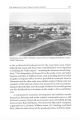
Show CHAPTER 2 UTE LANDS AND PEOPLE Early Ute History The Ute people traditionally have claimed large portions of the states of Utah and Colorado as their native homeland. The Utes' territorial claim by the middle of the sixteenth century included the territory west of the Front Range of the Rocky Mountains in Colorado to the territory surrounding Utah and Sevier lakes in present-day Utah. The northern boundary of Ute territory was at about the Wyoming border and the southern boundary in Colorado was in the region of the New Mexico border. From the Four Corners region, the southern boundary of Ute territory in Utah extended northwest to Sevier Lake. In this two-state region, the Ute people occupied as diversified a geographical region as any Indian tribe in North America. The larger Ute tribe was divided into smaller tribes, bands, and family groupings in the two-state region. Adaptation to various regions and the natural resources there led to different lifestyles of many Ute bands. Europeans were quick to recognize differences of 39 40 HISTORY OF DUCHESNE COUNTY the various bands of Utes. Catholic priests Dominguez and Escalante, for example, called the Ute Indians living around Utah Lake Timpanogotzis, or Fish Eaters-a name those Ute people called themselves. The Timpanogotzis, unlike the Yampa band of Utes living in northwestern Colorado who regularly hunted deer and other game, utilized the local abundance of fish and waterfowl for their major source of food. Ethnographers, historians, anthropologists, and other scholars have carried on the process of studying and identifying the various bands of Ute people. The commonly recognized bands of Utes in Colorado were the Muache, Capote, Weeminuche, Taviwach, Yampa, and Parusanuch.1 In Utah the five bands of Ute people were the Uintah, Timpanogots, Sanpits, Moanunts, and Pahvant. By the early 1860s most of the Utah bands of Ute Indians resided in the Uinta Basin; by the 1880s they were joined there by several bands of Colorado Ute Indians. Before contact with the Europeans, the Uintah Utes used the bow and arrow to hunt small game and the Timpanogots Utes used bows and arrows as well as spears to fish. Travel was done by foot. However, with the Spanish expedition of Francisco Vasquez de Coronado into the region in 1540 significant changes began to occur for the Ute Indians. Slowly, the Ute people acquired the horse from the Spanish, and by the middle of the seventeenth century the Utes living in Colorado and several of the bands in Utah had horses. By the middle of the eighteenth century virtually all Ute Indian bands possessed the horse and had become expert horsemen. The Ute Indians also acquired iron items from the Spanish, using them in place of stone tools. They also obtained woven cloth, which replaced fur and hide clothing and was a highly sought after trade item. Guns and horses were symbols of power among the Ute people.2 The horse made the Ute people very powerful compared to their poorer neighbors. The Utes made good use of the horse, extending their hunting grounds to the plains of Wyoming, where once again buffalo became an important source of food, shelter, and clothing for those Utes. Several Ute bands turned to slave trading, raiding other tribes in Utah and trading captured women and children in particular as slaves to Spanish and (later) Mexican traders. Horses UTE LANDS AND PEOPLE 41 Ute Warrior and his bride, photo taken in the Uinta Basin circa 1873. (Utah State Historical Society) also were an important trade commodity. Horses were acquired in California, trailed to Utah, and then traded for goods to the Spanish and Mexicans from Santa Fe. The political and cultural organizations of the Utes centered on family groupings and bands and remained distinct until the acquisition of the horse. An elder or chief was chosen by each band based on wisdom gained and proven leadership. Chiefs or elders were men with strong personalities who could usually sway others to their points of view. Once counsel was given and opinions rendered, however, there was no mandate for others to follow decisions made by the chiefs, and the leaders had no authority to enforce their decisions.3 The transmission of culture and tradition fell to the older men and women of the tribe who had reputations for wisdom, spiritual power, healing ability, and success in hunting or war. It was they who taught cultural traditions to the children of the tribe. Ute bands came together from far distances to participate in various cultural activi- 42 HISTORY OF DUCHESNE COUNTY ties including the annual Spring Bear Dance, a celebration of renewal and the promise of summer and times of plenty. One of the Ute cultural elements acquired from the Plains horse culture was the Sun Dance.The Sun Dance united human life with the domain of the spiritual, or other world, through mortification of the flesh. The Sun Dance also was believed to restore health and promote the spiritual and physical well-being of the participant. Dancing often lasted several days and, in combination with several days of fasting, individual dancers could receive a vision showing their path in life. At the time of the arrival in Utah of the Mormon settlers in the mid-nineteenth century, several bands of Utes were concentrated along the Wasatch Front, especially in Utah Valley; others were in the Pahvant and Sanpete valleys as well as the lower Sevier Valley. Because of their fluid nature, it is difficult to determine the exact size, territory, and leadership of the various bands. Wakara was one of several chiefs of the Timpanogots Utes, and he claimed the territory from the Sevier River to the Green River in the Uinta Basin as his horse pasture. 4 Wakara was a very successful horse trader. In one of the most successful acquisitions of horses in western history, Wakara and mountain man Peg-Leg Smith stole more than 1,000 horses from California ranchers at San Luis Obisbo and drove them swiftly across the desert to the mountain valleys of Utah to escape pursuit and to pasture them before trading them to Mexicans in Santa Fe or along the Old Spanish Trail. Some of the other tribal chiefs of various bands of Utah Utes in the mid-nineteenth century included Peteetnet, Ankatwest, Kanosh, Saweset, Tintic, Sanpitch, Sooksoobet, Merikahats, Anthrow (Antero), Sowysett, and Tabby-to-kwanah (Tabby).5 They were all referred to by other Utes as brothers; some were true brothers, others half-brothers, and others cousins. Indian population figures at mid-nineteenth century vary according to sources. Utah Indian agent Jacob Forney reported to the Commissioner of Indian Affairs in 1859 that there were 1,000 Utes living in the Uinta Basin.6 In 1855 it was reported that the Pahvant band, which included the smaller group of Tintic Utes, numbered between 1,000 and 1,500.7 Perhaps as many as several thousand Ute Indians resided in Utah when the Mormons set foot in the Great Salt UTE LANDS AND PEOPLE 43 Ute lifestyle rapidly changed after they acquired horse, including use of lodges (tepees) instead of the smaller wickiup. Photo taken in the Uinta Basin circa 1873. (Utah State Historical Society) Lake Valley in 1847. Fourteen years later, the Commissioner of Indian Affairs in a report to the Department of Interior in 1861 indicated that there were 20,000 Indians living within the Utah superinten-dency. 8 At mid-nineteenth century the Ute Indians collectively were at the pinnacle of their strength and power. They had become noted 44 HISTORY OF DUCHESNE COUNTY throughout the Mountain West for their horses and riding ability.9 George Brewerton, a guide who worked with Kit Carson, said of the Utes in 1848: "The Eutawa are perhaps the most powerful and warlike tribe now remaining of this continent."10 The Ute people had carved out a territory and maintained their territorial integrity from encroachment from the Navajo, Comanche, Cheyenne, Shoshoni, and Bannock tribes as well as occasional incursions into Ute territory from Sioux and Blackfeet Indians. Two centuries of interaction with the Spanish, sometimes as the enforcement arm of Spanish domination of other tribes, coupled with their own frequent aggressive forays against neighboring tribes, brought them to this lofty contemporary position. Ute-Mormon Relationships The small trickle of white involvement with the Ute people of Utah and Colorado grew into a flood following the permanent settlement of the Great Salt Lake Valley by Mormon settlers and the discovery of gold and silver in Colorado in the 1850s. When the Mormons first settled the valley of the Great Salt Lake most Utes felt little or no concern. The valley was the unofficial border between the Utes and their Shoshoni rivals to the northwest. Both groups of people occasionally hunted in the Great Salt Lake Valley and the nearby Wasatch Mountains to the east. Neither Indian tribe resisted the permanent settlement of the Mormon pioneers in the valley. However, as Mormon settlements expanded southward into Utah and San Pete valleys, the heartland of Ute territory, the Ute people understandably felt threatened. From the Mormons' point of view, the Utes neglected to make full use of the land; instead, they hunted, fished, and harvested seeds and berries. Little did the newcomers understand that the Utes followed seasonal cycles, camped in the same places, hunted and fished the same valleys and streams, and harvested at the appropriate times what nature provided year after year. The Mormon colonizers failed to understand that their occupation of the eastern valleys of the Great Basin dangerously disrupted both the fragile ecology and the traditional subsistence patterns of the Ute people. Brigham Young promised the Utes that the Mormons would not UTE LANDS AND PEOPLE 45 Utes in the Uinta Basin circa 1873. (Utah State Historical Society) drive them from their lands or interfere with their lifestyle. However, Mormon cattle grazed the same grassy areas that the Ute horses grazed. Competition for the same resources intensified, and the Ute Indians demanded payment for the loss of their land and wild game. Payment to the Utes for the land settled or loss of game was not part of Brigham Young's colonizing policy. "The land belongs to our Father in Heaven," Brigham Young said in August 1847, "and we cal- 46 HISTORY OF DUCHESNE COUNTY culate to plow and plant it; and no man shall have the power to sell his inheritance for he cannot remove it; it belongs to the Lord."11 Especially important to the Utah Valley Timpanogots Utes was the abundant supply of fish found in Utah Lake and in the region's various waterways. However, when Mormon fishermen began catching large numbers of fish from the Provo and Spanish Fork rivers, the Utes' important food supply was seriously threatened. In a matter of a few short years the Timpanogots Utes were near starvation. To fend off starvation and the loss of their land, individual Ute Indians turned to taking unattended Mormon livestock as compensation for their lands and the loss of game and fish. Mormon settlers responded by pursing the presumed thieves; when caught, the Indians were whipped or killed without the benefit of a trial. The Indians sought retribution. In turn, retaliatory raids were made by the Mormons on Ute camps. Tensions mounted. In an attempt to resolve the problem, the Utah Territorial Indian Agency was created by Congress in February 1851. The territorial Indian agency, headed by Brigham Young, attempted to isolate the Ute Indians from Mormon colonizers and at the same time provide them a place to camp and learn the ways of agriculture. Several small Indian farms or reservations were created in the territory: at Corn Creek in Millard County, in the Sanpete Valley, and later in Utah County. However, clashes of economic and cultural values continued, and tension between the Utes and Mormons remained high. Little support was given to the Indians to teach them agriculture, and Mormon livestock continued to encroach on the Indian farms. For years, the Utes had dealt in the Indian slave trade. Goshute and Paiute women and children abducted were traded to Mexican traders on the Old Spanish Trail. Chief Wakara was a key figure in the slave trade business. The slave trade repulsed Brigham Young and others, and in 1852 the Utah Territorial Legislature passed a law banning all slave trade within the territory, effectively putting an end to lucrative trade between the Utes and New Mexican slave traders.12 The combination of the loss of land, game, fish, and other resources, Mormon interference in the lucrative Indian slave trade, UTE LANDS AND PEOPLE 47 Ute women weaving baskets circa 1870. (Uintah County Library-Regional History Center) and the not-too-successful Indian farm program coalesced Ute anger against the Mormons. The Walker War In the summer of 1853, while Wakara's band was camped on Spring Creek near Springville, an ugly incident occurred between Wakara and the Mormon settlers. A trade altercation between Mormon settler James Ivie and some of Wakara's band touched off full-blown hostilities known as the Walker War.13 Wakara and Arapeen undertook a campaign of raids against Mormon settlements. During the next ten months, raids, theft, and retaliation took place between the Utes and the settlers. About twenty Mormons and at least as many Utes were killed. Victory for the Utes was futile, however. The Mormons, at Brigham Young's direction, "forted up" throughout the territory, and trading with the hostile Utes-especially guns and ammunition-was prohibited. A peace agreement was reached between Brigham Young, then acting Indian 48 HISTORY OF DUCHESNE COUNTY Superintendent of the territory, and Wakara in May 1854 at Chicken Creek (Nephi). In January 1855, a few months after agreeing to end the war, Wakara died, leaving the leadership of the Utes to his brothers, particularly Arapeen.14 Ending the Walker War peacefully did not resolve the underlying problems between the Mormon settlers and the Ute Indians. Brigham Young attempted to revive the Indian farm system at Corn Creek, at Twelve Mile Creek, and at other locations, and he also established a farm on the Spanish Fork River in Utah Valley. However, the federal government failed to provide financial support or other means of assistance to Young's Indian farm program. In 1855 federal Indian agent Dr. Garland Hurt began to undermine Young's Indian program. Indian agent T.W Hatch reported that the Indian farms were in a "destitute condition, stripped of their stock, tools, and moveable fences, and no one [was] living upon either of them."15 Most of the Utes refused to settle on the farms, preferring to live according to traditional ways. Also, Mormon settlers encroached on the land which had been set aside for these Indian farms as they fell into disuse. The Ute Indian population suffered from poverty, ill-treatment, and declining numbers due to conflict and white man's diseases. Their plight forced Brigham Young and federal Indian officials to find another solution to the Indian problem. A large isolated region for the Ute people became the solution preferred by Brigham Young and the federal Indian agency. Setting Aside the Uinta Valley Reservation For all its vast acreage, Utah has only a few valleys that are highly desirable for farming and have a sufficient supply of water, and these valleys were highly desirable to Mormon settlers. From the mid- 18505 to the early 1860s, the most desirable land in the Great Basin portion of Utah was being settled. Garland Hurt was forced by federal government policy to abandon the Indian farms in part because these lands were increasingly valuable as grazing and farming grounds for Mormon settlers. The idea of separating the Utes from the Mormons and removing them to some isolated region of the territory remained with Hurt and other federal territorial officials. A search was undertaken to locate such an area in the territory. UTE LANDS AND PEOPLE 49 In 1861 Brigham Young sent a second small expedition to the Uinta Basin to investigate its suitability for settlement. The negative report of the earlier expedition of George Washington Bean had postponed Mormon entry into the Uinta Basin for nine years, and Young wanted a second look at that region. Shortly after the 1861 expedition's return to Salt Lake City the Deseret News printed its report: The fertile vales, extensive meadows, and wide pasture ranges were not to be found; and the country, according to the statements of those sent thither to select a location for a settlement, is entirely unsuitable for farming purposes, and the amount of land at all suitable for cultivation extremely limited. After becoming thoroughly satisfied that all the sections of country, lying between the Wasatch Mountains and the eastern boundary of the Territory, and south of Green River Country, was one vast "contiguity of waste," and measurable valueless excepting for nomadic purposes, hunting grounds for Indians and to hold the world together.16 This discouraging r e p o r t solidified the n o t i o n s of Brigham Young and federal Indian officials that the Uinta Basin was undesirable for Mormon settlement. Territorial Indian officials thus believed that the expedition had located a place considered of little value and isolated geographically; this rendered it, by government standards, an ideal location for an Indian reservation. That same year, President Abraham Lincoln issued an executive order establishing the Uintah Valley Indian Reservation.17 This new Indian reservation included all of the territory within the drainage of the Duchesne River, mistakenly named in Lincoln's executive order as the "Uintah" River. The r e s e r v a t i o n included all t h e l a n d on the s o u t h side of t h e Uinta Mountains to the Tavaputs Plateau, and from the summit of Daniels Canyon to the confluence of the Duchesne and Green rivers, an area of slightly m o r e t h a n 2 m i l l i o n acres. In 1864 t h e United States Congress voted to approve President Lincoln's action and make the Uinta Basin the permanent homeland for the Utah Utes. There was, however, nothing in Lincoln's order to force the removal of the Utes to the Uinta Basin, and the Timpanogots band of Utes and the other Ute bands resisted being relocated to the basin. 50 HISTORY OF DUCHESNE COUNTY An Uneasy Decade 1855-1865 Following the Walker War, the Utah Utes remained on their traditional homelands, but they increasingly were forced to give way to growing numbers of Mormon settlers and watch the depletion of their food sources. The Tintic War soon resulted-a brief conflcit localized in the Juab, Tooele, and Millard counties area. The outburst of hostilities was clearly seen as evidence of a persistent problem simmering among the Ute people. The presence of the federal troops known as Johnston's Army during and after the so-called "Utah War" of 1857-58 further reminded the Utes of their inferior position. The withdrawal of the troops in 1861 with the beginning of the Civil War renewed the possibilities of further confrontation between the Utes, Shoshonis, and Mormon settlers. Squeezed onto less desirable lands to live, the Indians of the territory threatened the uneasy coexistence with the Mormons as well as vital national transportation routes through the territory. Worsening conditions among the Ute people forced some of them to resort once again to stealing cattle and other food from the Mormons to stave off wholesale starvation. To safeguard the overland trail from Indian raids at the outbreak of the Civil War, Colonel Patrick Connor and a group of volunteers from California were assigned to Utah to maintain peace with the Indians of the territory and to keep a watchful eye on the Mormons. To demonstrate his leadership, Colonel Connor and his men without provocation attacked and massacred several hundred Shoshoni men, women, and children at their winter encampment on the Bear River near the Utah-Idaho border early in January 1863. The continued tension between Mormons and Utes and the massacre of the Shoshoni Indians at the Bear River prompted Indian Superintendent O.H. Irish to hold a council with Ute leaders at the mouth of Spanish Fork Canyon in 1865 for the purpose of persuading them to relocate to the Uintah Valley Indian Reservation. In a later report to Washington about the urgency of holding a council with Ute leaders, Superintendent Irish wrote: "Owing to the Indian difficulties in the adjoining territories which were having a bad influence upon our Indians and that they were very uneasy about the UTE LANDS AND PEOPLE 51 Chief Tabby of the Utes was the first tribal leader to move his followers to the Uintah Reservation. He lived to be over one-hundred years old. (Utah State Historical Society) reports . . . I thought it dangerous to delay negotiations."18 In the surrounding territories within the years just prior to the Spanish Fork 52 HISTORY OF DUCHESNE COUNTY Treaty the Shoshoni were attacked at Bear River, the Navajo were forced on the "Long Walk" to Fort Sumner, and the Cheyenne were massacred at Sand Creek. Although these tribes were enemies of the Utes, the Utes took little joy in seeing their foes defeated by armies of volunteer soldiers, for they could see, all too clearly, what might happen to them. At the council the Utes were asked to abandon their claims to Utah and San Pete valleys and accept permanent settlement in the Uinta Basin. Several Ute chiefs and leaders advised against the treaty. However, Brigham Young, holding no official capacity but having the trust of many Indians, advised the Indians to accept the government's offer. He told them that the Indians should take what the government offered and go to the Uinta Valley, otherwise the government would simply take their land and give them nothing for it. After much discussion among themselves, twelve Ute leaders including Sow-e-ett, Kan-osh, An-kar-aw-keg, and Tabby agreed to the terms of the treaty. Sanpitch was one of several chiefs who opposed the treaty. To make things more difficult among some of the Utes, Sanpitch was a relative of Chief Tabby of the Uintah Utes. The Spanish Fork Indian Treaty granted to the Utes a $25,000 annuity each year for ten years, $20,000 a year for the next twenty years, and $15,000 annually for the last thirty years. In addition to the annual annuities, the Ute people were to be supplied with staple goods, homes, and schools.19 After the signing of the Spanish Fork Treaty it was understood that the Utes would move immediately to the Uinta Basin. However, only a few bands of Utes did so. The federal government was also neglectful in complying with the mutually agreed-upon terms of the treaty. Congress, facing the problems of Reconstruction after the Civil War and the recent assassination of President Lincoln, failed to ratify the treaty, and the expected annuities were never delivered to the Utes. The Utes once again were left without assistance and understandably felt betrayed. The Black Hawk War The lack of food, poor treatment, and the loss of resources and land led to the continued desperation of the Ute people; led by Black Hawk in the summer of 1865 some Utes attempted to recapture land, UTE LANDS AND PEOPLE 53 Chief Antero suggested that the Indian agency be moved from the junction of the Duchesne River and Rock Creek to Whiterocks where it remained until Fort Duchesne was built in 1886. (Utah State Historical Society) steal livestock, and drive the Mormon settlers from their traditional homeland. Many areas of the t e r r i t o ry of Utah were victims of the raids either led by or attributed to Black Hawk and his followers and allies. The Black Hawk Indian War was the most costly of the Indian difficulties in Utah history. 54 HISTORY OF DUCHESNE COUNTY Reacting to the lack of food and the unratified Spanish Fork Treaty, some Utes resumed making raids on Mormon settlements. With estimates of only about 100 followers, some of whom were Paiutes, Goshutes, and Navajos, Black Hawk's warriors ran off as many as 5,000 head of cattle and killed dozens of settlers and territorial militiamen. Towns, ranches, and outlying farms in the territory were attacked by the disgruntled and hungry Utes under the leadership of Black Hawk. So effective were the Ute marauders that several small settlements in central and southern Utah were abandoned, including major settlements at Richfield, Circleville, Kanab, and Panguitch.20 Many Mormons' perception of the raids was that the entire Ute tribe was at war with them. The San Pitch, Elk Mountain, and Uintah bands did supply and occasionally reinforce Black Hawk's raiders, but most of the Utes were not actively engaged in hostilities. Territorial and LDS church officials reacted to the raids by mobilizing as many as 2,500 militiamen, primarily from the Mormon church's militia, the Nauvoo Legion, to combat the Indians. Most of the militia saw little action. Black Hawk and his band were rarely found, avoiding direct confrontation with troops. However, time and pressure from the territorial militia ultimately worked against Black Hawk. Suffering from a debilitating gunshot wound, in a meeting during the summer of 1867 at the Uintah Agency Black Hawk agreed to a peace treaty and a return to the reservation. Several of his more desperate or truculent followers continued making raids for two or three more years until most had been killed.21 Considering the band's successes, it was fortunate for the Mormon settlers that the majority of Utes did not participate in the war. Ute Agencies The end of the Black Hawk War began in earnest the relocation of the Utes to the Uinta Basin. This placed additional strain on the limited resources available at the agency. The location of the Uinta Indian Agency was unsettled, which added to the agency's difficulties. The first location was at the head of Daniels Canyon, where, in 1865, soldiers under the command of Colonel Connor constructed a small log building to serve as the agency headquarters. This was a poor UTE LANDS AND PEOPLE 55 choice; heavy winter snows limited access to the new agency. The next summer, special Indian agent Thomas Carter relocated the Indian agency to the upper Duchesne River near present-day Hanna. The agency moved again in 1867 to the junction of Rock Creek and the Duchesne River, north of present-day Starvation Reservoir. This location, like the others, proved to be unsatisfactory. Chief Anterio urged Indian agent Pardon Dodds to move the agency a final time to Whiterocks.22 This location was of considerable historical and geographic significance for the Utes; nearby had stood Antoine Robidoux's Fort Uintah, and most of the major Indian trails in the Uinta Basin converged at Whiterocks.23 The change was made, and Whiterocks served as the agency headquarters until Fort Duchesne was built in 1886. Previous to Fort Duchesne's establishment, the army built Fort Thornburg in Ashley Valley near present-day Maeser, but it existed for only a short time and the Indian agency was never established there. When the Ute Indian agency moved east to Whiterocks, most of the Utes moved east as well. Strawberry Valley and the Duchesne River and Rock Creek regions remained important for hunting and summer camping areas for the Utes, but few lived there. The Indian agency at the outset was plagued with fraud, misappropriation of goods, mismanagement, and the lack of resources, which was almost disastrous for the Utes. For example, Indian Agent L.B. Kenney was fired for "gross neglect."24 In 1866 Indian Superintendent EH. Head, who had replaced O.H. Irish, complained bitterly that he had no money and that the Utes at the agency were desperately in need of flour and beef, farm implements, and other provisions.25 In 1871 Agent J.J. Critchlow complained in his annual report that too little had been done for the Utes by his predecessors in procuring sufficient foodstuffs and clothing for the Utes.26 On at least one occasion when the situation on the reservation was especially critical, Brigham Young hurriedly sent several wagonloads of food and supplies to feed the starving Utes. As was the case with other Native Americans, during the last quarter of the nineteenth century reservation life for the Utes was a period of readjustment of culture, restriction of travel and personal freedoms, and loss of social and personal esteem. The government's 56 HISTORY OF DUCHESNE COUNTY Utes at Calvert Trading Post at Bridge (Myton) circa 1906. (Uintah County Library-Regional History Center Fred Todd Collection) reservation policy forced Indians onto reservation lands which stripped them of the ability to maintain control of their lifeways and their traditional lands. The result was Euro-American occupation of their lands. By the early 1880s the various bands of Utah Utes that had relocated to the Uintah Reservation were collectively identified as the UTE LANDS AND PEOPLE 57 Uintah Utes. Placed in a situation where they became dependant on the federal government for most of their needs, it is little wonder that the Ute population, like other tribes, declined under reservation life. Indian Agent Critchlow counted only about 800 Utes living on the Uintah Indian Reservation during the winter of 1872-73. That number was reduced each summer when many Utes left the reservation in search of food.27 In terms of real dollar value, the reservation policy more than justified the cost of feeding and clothing the Indians rather than campaigning against them militarily. All reservation Indians became "wards of the government." The government to a great extent treated Indians as children unable to care for themselves, and the Utes were no exception to this way of thinking. Removal of the Utes from Colorado In 1881 the Uintah Utes were forced to share their lands with Utes from Colorado. The Uncompahgre and White River Utes were removed from the western slope of the Rocky Mountains to eastern Utah after having been forced to relocate several times prior to 1881. The shrinking of Colorado Ute land began when gold was discovered on the floodplains of the Rocky Mountains at Cherry Creek (Denver), Colorado, in 1858. Within the next several months additional discoveries were made at Central City and Leadville. New towns sprouted up and thousands of miners sped to the new mine fields. During the next several decades the land claims of the Colorado Utes, which had initially been from the foothills of the Rocky Mountains on the east to the Colorado Plateau, were reduced and pushed westward by four different treaties. The last of these took the southwestern corner of Colorado from the Utes when new silver and gold discoveries were found in the San Juan Mountains. Not only did the Utes lose land, but as was the case with other Indian tribes, the Colorado Utes' population also dwindled. By the late 1870s most of the Utes of Colorado were living on either the White River or Los Pinos (Uncompahgre) reservations.28 As much as possible the Colorado Utes were trying to maintain their traditional lifestyle while adjusting to new ways. Many of the Uncompahgre band Utes had turned to the raising of sheep, cattle, 58 HISTORY OF DUCHESNE COUNTY and horses and were having some success. However, this ranching type of economic activity was not what some Indian agents wanted; Indians, some believed, must be turned to husbandmen, receiving their food from the crops they planted and harvested each year. A violent incident relating to this then occurred in the spring of 1878 which caused Coloradoans to demand the removal of the White River and Uncompahgre bands of Utes from western Colorado to the Uinta Basin. The main player in the final act of the drama of the removal of the Utes from Colorado was Indian Agent Nathan C. Meeker. A former poet, novelist, newspaperman, churchman, and organizer of Utopian agrarian cooperative colonies, at all of which he had been a virtual failure, Meeker through political connections was appointed in 1878 to the position of Indian agent for the White River Ute Agency. With missionary-type zeal Meeker set about to transform the Utes into what he thought to be a higher image, which he saw as being much like that of his own. Meeker was confident that he could bring the Native Americans out of a "barbaric and savage" stage to one of "enlightenment" within twenty years. He believed that instead of caring for their livestock the Utes should be making the ground ready to plant crops. Shortly after his arrival Meeker moved the agency fifteen miles downriver to an area of beautiful meadows where the White River Utes could be better taught in the use of the plow and he could begin the process of transforming the Utes into farmers. These meadows, however, were a favored pasture for the Utes' herd of horses. When the Utes refused to plow the ground, Meeker hired non-Indian plowmen to perform the task. This usurpation of grazing land increased tensions between Meeker and the Utes. Determined Utes fired their rifles as a warning to Meeker and the white farmers. In a confrontation with a Ute leader called Johnson by whites (Canalla was his Ute name), the hot-tempered Meeker told Johnson and the other Ute owners of the horses pasturing in the meadows that they had too many horses and must kill some of them. More words were exchanged between Johnson and Meeker; finally, before Johnson left, he reacted angrily by giving Meeker a shove. Meeker was not about to be shown-up by an Indian and was determined to have UTE LANDS AND PEOPLE 59_ his way. Recognizing that he was outnumbered and fearing Johnson and the others might attack him, Meeker telegraphed Colorado governor Frederick Pitkin requesting protection from the army. Meeker in his appeal to the governor claimed that he had been assaulted by a leading chief, forced out of his house, and injured badly. Pitkin welcomed Meeker's request. The Meeker-Johnson confrontation was the cause celebre for Governor Pitkin and other white Coloradoans who had been demanding the removal of the Utes from the state. For some time Governor Pitkin and newspaperman William B. Vickers had been using their combined skills of political persuasion and the power of the press to campaign for the removal of the Utes from Colorado. The Denver Tribune in a short editorial outburst reflected the sentiments of Pitkin when it wrote, "The Utes Must Go." Throughout the year of 1877, Vickers continued his tirade against the Utes in many of the issues of the Denver Tribune. Meeker's request was the excuse opponents of the Indians needed to bring to culmination their goal of evicting the Utes from the state. The governor and the army reacted quickly to Meeker's request. Several cavalry units were ordered to the reservation to maintain peace. When the disquieted Utes learned that soldiers were on the way to their reservation, Indians attacked the agency. Meeker and all of the white male agency employees were killed, and three women, including Meeker's wife, were taken hostage. The immediate Indian success in the killing of Meeker and the taking of hostages stopped the army's advance for several days at Milk Creek. Meanwhile, the Uncompahgre Utes under the leadership of Chief Ouray held a council to persuade the other Utes to end the hostilities. Having been to Washington, D.C., on several earlier occasions, Ouray and others knew of the futility of fighting the army. They reasoned that if fighting continued the result would be the removal of all Utes from Colorado. If necessary, Ouray was prepared to fight on the side of the whites against his fellow Utes. Ouray's intercession and the arrival of reinforcements to the beleaguered cavalry units ended the fighting. The three captive women were released. The Uintah Utes stayed out of the action in Colorado. Fearing retaliatory raids from the army, they made plans to seek refuge in the 60 HISTORY OF DUCHESNE COUNTY Uinta Mountains, if necessary, and urged Agent Critchlow and his family and employees to join them.29 Using the "Meeker Massacre" as justification for removal of the Indians, a successful campaign of white Coloradans to take over Ute lands occurred during the next three years. Indian agents and state officials, overlooking the willingness of Ouray and other Uncompahgre Utes to fight their own tribal members to avoid war with the whites, ordered both the White River and the Uncompahgre Ute bands removed from Colorado. Beginning in August 1881 the Uinta Basin was to be their new home. Here the White River band, numbering about 650 individuals, joined the Uintah band, numbering about 800, at the Whiterocks agency. The smaller Uncompahgre band, numbering less than 375 people, was removed to a new agency at Ouray, named for Chief Ouray. The Uncompahgre Indian Reservation was established on land southeast of the Uintah Reservation on 5 January 1882 by order of President Chester A. Arthur on some of the most desolate land of the Tavaputs Plateau. The land extended to the Colorado line just north of present Grand County but could not support the number of Utes send there. Two years later the Commissioner of Indian Affairs reported that there were 1,400 Utes living on the Uncompahgre Reservation and 965 Uintah and White River Utes living on the Uintah Reservation.30 The two Indian agencies remained separated until 1887 when Fort Duchesne was built and the agencies were combined. Most Indians at the Uncompahgre Reservation were transferred to the Uintah Reservation. With the arrival of the White River Utes from Colorado, the Uintah Utes felt they were being unfairly treated by having to share their reservation lands. Several groups of Uintah Utes protested the overcrowded conditions at their agency, and more than 100 Uintah Utes moved to Hanna and the Strawberry Valley at the west end of their reservation. Their protest was short-lived, however; after several months, the disenchanted Uintah Utes returned to the agency at Whiterocks. Fort Duchesne Within five years following the arrival of the Colorado Utes to UTE LANDS AND PEOPLE 61 the Uinta Basin, it was decided that the two Indian agencies should be combined and that the United States military should be posted on the reservation. On 23 August 1886 Fort Duchesne was established to serve as a protector in the area and to keep peace. Initially the Utes opposed the fort and even planned an attack on the army. Cooler heads among the Utes prevailed, however, and they accepted the new fort and the soldiers who manned it. Stationed at Fort Duchesne were approximately 250 men. The fort's roster included two companies of black cavalrymen, referred to by the Indians as "Buffalo Soldiers."31 The first commander of the newly established fort was Major Frederick Benteen, survivor of the Reno-Benteen contingent of the bungled attack on Sioux villages in the valley of the Little Big Horn in July 1876, where General George Armstrong Custer was killed. Although the fort was in Uintah County, its existence greatly affected the development of what became Duchesne County. One of the most significant developments was the construction of a road to Price through Nine Mile Canyon to supply the fort; another was the building of a telegraph to link Fort Duchesne with military command headquarters elsewhere. More about the road will be found in a following chapter. Ute Reservation Life Life on the reservation was hard for the Utes to understand and accept. Within one generation's lifespan they had gone from days of little contact with whites, when the few white intruders there were posed very little real threat and the Utes enjoyed a life of autonomy, to a new lifestyle not of their own choosing where they were restricted and confined to a reservation and dependent on limited annuities of the whites. Many tried to live according to the traditions of their forefathers, but that was nearly impossible in the confines of the limited reservation in the Uinta Basin. Hunting forays off the reservation during the summer months frequently created concern among Indian officials and white settlers. In 1887 a group of Uncompahgre and White River Utes left the Uinta Basin to hunt and fish in western Colorado. Local sheriffs attempted to arrest them for poaching and some were accused of stealing horses. The Ute people resisted; this brought 62 HISTORY OF DUCHESNE COUNTY about growing white hysteria in western Colorado, and the Colorado militia was ordered to put an end to the so-called "Colorow War." Outnumbered and destitute, the Ute hunting party finally capitulated and was accompanied back to the Uinta Basin by soldiers from Fort Duchesne. The failure of the government to provide adequate annuities, the continued encroachment of white ranchers and Gilsonite miners on the two reservations, and the passage of the Dawes Act by Congress in 1887, which eventually eliminated the two reservations and distributed small amounts of acreage to Indian families, drove many Ute people into depression and despair. In a response to their collective despair, many Utes turned to the Ghost Dance religion. In 1890 a reworked new religion, the Ghost Dance, swept through western tribes. The original Ghost Dance was begun in 1869, and in 1890 it was revived by a Nevada Paiute, Wovoka (Jack Wilson), who had been raised by Mormon settlers. A key element of the religion was the performance of circle dancing. The new Indian religion included a belief in an Indian messiah who would come and cleanse the land of whites and nonbelieving Indians, restore the buffalo and other game, and resurrect deceased ancestors, Indians of earlier generations. Leaders of the new religion promised that grass would grow again on the prairies and that all Native Americans would live the free, happy life of days gone by. Some Indians believed that their faith would render them immune to white men's weapons, and this growing belief brought apprehension from many whites and their growing opposition to the religious movement. Matters came to a head at Wounded Knee in South Dakota, where scores of Indians were killed by U.S. troops in what Native Americans and others have long regarded as a tragic massacre. The tragedy of the Sioux at Wounded Knee in 1890 diminished the enthusiasm for the Ghost Dance; however, a few Utes and other Native Americans remain adherents of the Ghost Dance religion. Many Ute Indians in the 1910s turned to the Peyote religion, which was imported from Indian tribes in Arizona, New Mexico, Texas, and northern Mexico. It involved the use of small quantities of a part of a small spineless cactus, peyote, whose hallucinogenic prop- UTE LANDS AND PEOPLE 63_ erties were claimed to promote communication with the spiritual world. The Peyote religion was an expression of spiritual power, which helped to compensate the participant for the loss of personal political and economic control fostered by the reservation system. Like the Sun Dance and Ghost Dance, the Peyote religion emphasized Indian traditions. Within one generation perhaps as much as 50 percent of the tribe was involved. Presently this religion is known as the Native American church.32 Christian churches also influenced the lives of Utes living in the Uinta Basin. In the 1850s and 1860s, some Utes converted to the Mormon church. However, when the Uintah Reservation was established and most of the Utes were removed to the reservation, many Indian Mormons became disaffected and no longer were adherents of the Mormon church. Difficult relations between the Mormon church and the federal government in the 1870s and 1880s further prevented formal missionary work by the church with the Utes on the two reservations. Informally, contact between church members and the Utes continued when Mormons living in Ashley Valley helped the Utes there construct several short irrigation ditches. Early in the 1870s President Ulysses S. Grant instituted an Indian program, identified as the "Peace Policy," which for a few years dramatically altered the administration and management of Indian reservations. An important element of Grant's Indian policy was the encouragement of Christian churches to take an active part in teaching Indians the art of agriculture, in organizing schools for the Indians, and in providing teachers for the Indian schools. Various Christian denominations were assigned to work with specific Indian reservations. However, for nearly ten years the United States Indian Commission ignored the Uintah and Uncompahgre Indian reservations; no churchmen were permitted to serve there as Christian missionaries. In the early 1880s the Board of Home Missions of the Presbyterian church was contracted for several years to operate a school at Whiterocks for the Ute Indians. Presbyterian teachers met with little success, however. Meanwhile, on the Uncompahgre Reservation, the Episcopal church was invited through the efforts of Indian agent James Randlett to become involved with the Uncompahgre Indians. The 64 HISTORY OF DUCHESNE COUNTY first Episcopal church minister to the Indians was Reverend George S. Vest. Milton J. Hersey, Lucy Carter, and Sue Garrett, members of the Episcopal church, were also involved on the reservation in the 1890s.33 In the 1880s, after many of the Uncompahgre families accepted farmsteads on the Uintah Indian Reservation as a result of the Dawes Act-the new government Indian policy of t e r m i n a t i o n of Indian reservations and Indian tribes-the Episcopal church continued to serve the Indians at Fort Duchesne and at Leland. In 1893 the Episcopal church established a mission to serve t h e Ute people at Whiterocks. A small chapel was built there later. Following the opening of the Uintah Indian Reservation to white settlement in 1905, Christian churches became more active working with the Indian people in Duchesne and Uintah counties. In 1915 the Episcopal church built a c h u r c h at Randlett. Presently t h e r e are Episcopal church congregations at Randlett and Neola, LDS wards at Randlett, Myton, and Whiterocks, as well as in other towns in Duchesne County, a n d the Ute I n d i a n Baptist church on Indian Bench to serve the Indian population in the two counties. ENDNOTES 1. For examples of different band or tribal names of Utes see lulian H. Steward, Basin-Plateau Aboriginal Sociopolitical Groups, Smithsonian Institution Bureau of American Ethnology Bulletin 120 (Washington, D.C.: U.S. Government Printing Office, 1938), 219-30; lulian H. Steward, Ute Indians I: Aboriginal and Historical Groups of the Ute Indians of Utah (New York: Garland, 1974), 50-104; and Donald G. Callaway, Joel C. Janetski, and Omer C. Stewart, "Ute," in Warren L. D'Azevedo, ed., Handbook of North American Indians: vol. 11, Great Basin (Washington, D.C.: Smithsonian Institution, 1986). 2. Ted J. Warner, ed., Dominguez-Escalante Journal, 26-38. 3. Fred A. Conetah, A History of the Northern Ute People (Fort Duchesne, UT: Uintah-Ouray Ute Tribe, 1982), 6, 9. 4. Omer Stewart, "Ute Indians: Before and After White Contact," Utah Historical Quarterly 34 (Winter 1966): 54. 5. Steward, Basin-Plateau Aboriginal Sociopolitical Groups, 224-25. 6. Part of the Forney report is found in Steward, Ute Indians I, 28. 7. Steward, Ute Indians I, 55. UTE LANDS AND PEOPLE 65 8. Report of the Commissioner of Indian Affairs, accompanying the Annual Report of the Secretary of the Interior, 1861 (Washington, D.C.: Government Printing Office, 1861), 218. 9. Osborne Russell, Journal of a Trapper 1834-1843, ed. by Aubrey Haines (Lincoln: University of Nebraska Press, 1965), 120-22. See also Warren E. Ferris, Life in the Rocky Maintains (Denver: Old West Publishing Company, 1968), 312. 10. George Brewerton, Overland With Kit Carson (New York: Coward- McCann, 1930), 99, 100. 11. Quoted in Howard A. Christy, "Open Hand and Mailed Fist: Mormon-Indian Relations in Utah, 1847-52," Utah Historical Quarterly 46 (Summer 1978): 219. 12. For further discussion of the Indian slave trade see William J. Snow, "Utah Indians and the Spanish Slave Trade," Utah Historical Quarterly 2 (luly 1929): 67-73; Charles Wilkes, "Some Source Documents on Utah Indian Slavery: Indian Tribes of the Interior of Oregon, 1841," Utah Historical Quarterly 2 (luly 1929): 73-75; Garland Hurt, "Indian Agents Report on Slavery," Utah Historical Quarterly 2 (luly 1929): 86-87; and loseph J. Hill, "Spanish and Mexican Exploration and Trade Northwest from New Mexico into the Great Basin, 1765-1853," Utah Historical Quarterly 3 Qanuary 1930): 3-23. 13. Conetah, Northern Ute People, 39. For more detail on the beginnings of the Walker War see Peter Gottfredson, Indian Depredations in Utah, reprint (Salt Lake City: Merlin G. Christensen, 1969, 43-47. 14. See Snow, "Utah Indians"; loseph J. Hill, "Spanish and Mexican Exploration and Trade"; Christy, "Open Hand and Mailed Fist"; Howard A. Christy, "The Walker War: Defense and Conciliation as Strategy," Utah Historical Quarterly 47 (Fall 1979): 395-420. 15. T.W. Hatch to Commissioner lames D. Doty, September 1862, Report of the Commissioner of Indian Affairs, 1862, 205. 16. Deseret News, 25 September 1861. 17. A. Lincoln, Executive Order, 5 October 1861, in Executive Orders Relating to Indian Reservations, 1855-1912 (Washington, D.C.: Government Printing Office, 1912), 169. 18. O.H. Irish to W.P. Dole, 14 February 1865, Bureau of Indian Affairs, Letters Received by the Office of Indian Affairs, Utah Superintendence, 1866-1869, Recrd Group 75, National Archives, Washington, D.C., microfilm copy at Brigham Young University Library. 19. O.H. Irish to Commissioner of Indian Affairs, 7 lune 1865, Letters Received, Record Group 75, National Archives, microfilm copy at Brigham Young University Library. 66 HISTORY OF DUCHESNE COUNTY 20. Conetah, Northern Ute People, 86. See also Deloy J. Spencer, "The History of the Black Hawk War 1865-1871," (Master's thesis, Utah State University, 1969), 54-55. 21. Warren Metcalf, "A Precarious Balance: The Northern Utes and the Black Hawk War," Utah Historical Quarterly 51 (Winter 1989): 24-35. 22. Conetah, Northern Ute People, 90. 23. lames Warren Covington, "Relations Between the Ute Indians and the United States Government, 1848-1900" (Ph.D. diss., University of Oklahoma, 1949), 138-43. 24. Conetah, Northern Ute People 90. 25. F.H. Head to D.N. Cooley, 31 March 1866, Bureau of Indian Affairs, Letters Received. 26. Annual Report of the Commissioner of Indian Affairs to the Secretary of the Interior for the year 1871 (Washington, D.C.: Government Printing Office, 1872), 547. 27. Floyd A. O'Neil, "A History of the Ute Indians of Utah until 1890," (Ph.D. diss., University of Utah, 1973), 110. 28. The Ute Mountain and Southern Utes did not play an active part in the proceedings or in the removal from Colorado. For more reading of the removal of the Utes from Colorado see Conetah, Northern Ute People, 96-113; Dee Brown, Bury My Heart At Wounded Knee (New York: Holt, Rinehart 8c Winston, 1970), 349-67; Robert Utley, Frontier Regulars: The United States Army and the Indian 1866-1891 (Lincoln: University of Nebraska Press, 1973), 332-43. 29. Conetah, Northern Ute People, 92. 30. Annual Report of the Commissioner of Indian Affairs to the Secretary of the Interior for the year 1883 (Washington, D.C.: Government Printing Office, 1883), 280. 31. For more information of Fort Duchesne see Gary Lee Walker, History of Fort Duchesne Including Fort Thornburg: The Military Presence in Frontier Uintah Basin, Utah (Ph.D. diss., Brigham Young University, 1992). See also Ronald G. Coleman, "The Buffalo Soldiers: Guardians of the Uintah Frontier, 1886-1901," Utah Historical Quarterly 47 (Fall 1979): 421-39. 32. For more on the Ghost Dance religion see lames Mooney, The Ghost Dance Religion and the Sioux Outbreak of 1890 (Washington D.C., 1893); and Arrell Morgan Gibson, The American Indian: Prehistory to the Present (Lexington, MA: D.C. Heath and Company, 1980), 477-83. For Ute participation in the Ghost Dance religion see Conetah, Northern Ute People, 91. This book is the best study to date done by a Ute historian on his people. There are, however, some errors in the book and the date for the Ute par- UTE LANDS AND PEOPLE 67^ ticipation in the Ghost Dance is one of them. Conetah dates the Ghost Dance in 1872, but Wovoka did not start the new religion until the last part of 1899. See page 132 for additional information about the Peyote religion. 33. For further information about Episcopal church activities in the Uinta Basin see lames W. Beless, Ir., "The Episcopal Church in Utah- Seven Bishops and One Hundred Years," Utah Historical Quarterly 36 (Winter 1968): 77-96. |