| OCR Text |
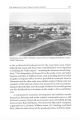
Show CHAPTER 5 TWENTIETH-CENTURY HOMESTEADERS T, he federal land lottery of Indian reservation land offered many twentieth century homesteaders the opportunity to acquire 160 acres of land with little cash expense. Those who settled on the reservation did so with high hopes and expectations to turn the virgin land into highly productive farmland through hard work and a desire to build a new life for themselves and their families. Many arrived with few belongings and resources. Through the sweat of their brows, the strength of their hands, and their faith and prayers some succeeded in proving up on their 160 acres, building homes, establishing communities, and creating Utah's twenty-eighth county. It Was Less Than They Expected Not all who filed for the right to take up land on the reservation actually took up land, and, of those who did try their hand at homesteading, perhaps more than a third left the reservation within a year of settling. These failures did not halt other families from taking up homesteads, however. Those who stayed understood that the former reservation was 113 114 HISTORY OF DUCHESNE COUNTY not a land of mountain meadows watered with sparkling streams and dark rich soil. Like much of the land elsewhere in Utah, they found much of the reservation full of sagebrush, cedar trees, sand, and rock. There were no ready-made irrigation canals awaiting them to irrigate their freshly plowed ground. Charles W Smith, an early settler in Midview, recalled his first encounter with some homesteaders, who after just a year of hard work had decided to give up on their dream: The second day out, we met many who were disappointed, begrimed, and weary from a hot dusty trip into the known region of the rolling, barren hills without water except that which flowed down the several rivers. To subdue the sunbaked prairie appeared to many to be an insurmountable task. Many of these discouraged victims were ready to sell their number for a song and return to their homes.1 Smith was one who was determined to "make a go of it" regardless of the difficulties faced. His chances to secure good land were somewhat diminished when his name was one of those drawn after the initial drawing in Provo. He later wrote, "Our numbers were so high that all of the good land had been taken before we had a chance to draw." He recalled that Provo was filled at the time with hundreds of people. "It seemed there were people from all parts of the Union: White, Black, and Yellow," he added.2 In the spring of 1906, after having made his selection of land, Smith proceeded at once to build a log cabin for his family. A good stand of pine was found in Strawberry Valley some distance from his homestead east of Myton. Felling the trees was easy; transporting the rough-cut logs to his homestead was difficult. Smith wrote that after having felled the trees his group traveled east: "When we reached the Strawberry and Duchesne rivers with our first load of logs, the water had risen so high that the Theodore [Duchesne] Townsite was completely under water up to our waists. There was nothing for us to do but pull back up the canyon and take the old road to Myton." Spring flooding of all the major streams in the Uinta Basin was nearly an annual occurrence. Down the road he later faced a similar situation at Myton; both the town and road were flooded.3 TWENTIETH-CENTURY HOMESTEADERS 115 Famers in Myton circa 1915. (Utah State Historical Society) Smith was not the only one to face the problem of high streams each spring. The families of Joseph and Zella Cowan and their young baby girl Shirley; John D. and Emma C. Wimmer; and the teenage nephew of John Wimmer, Victor Green, all had difficulties crossing the Strawberry River. Emma Wimmer wrote later of the difficulty: [We] reached the Strawberry river [on 14 lune 1906]. . . . The Strawberry was much larger than it is now, and it being the time of year flood waters were overflowing the banks, but the river had to be crossed. The water ran over the horses backs, and almost floated the boxes off the wagons. The crossing of the cattle and all caused a little commotion.4 There was a steady flow of homesteaders to the west end of the Uinta Basin for several years after the opening in 1905. The third year of homesteading, 1907, brought the greatest number of settlers to the reservation. Like the hundreds who had preceded them, the later-arriving settlers traveled by every conceivable means of transportation: wagons drawn by mules and horses, surreys, and buggies. 116 HISTORY OF DUCHESNE COUNTY William R. Evans, an old-time resident of the county, remembered: "Sometimes you would see one large horse and one very small one hitched together, some so poor and run down they could hardly walk."5 Some homesteaders came by horseback with pack strings or alone with a bedroll on their saddles; others even walked with packs on their backs.6 The Nine Mile Canyon road was the most popular route to the Uinta Basin for the homesteaders. Local historian George Stewart recalled: "My dad said he stood on a peak at the head of Gate Canyon and from there he could trace the Stage Road all the way to Vernal and the Land Office, by the dust churned up from the turning wheels and pounding hoofs."7 Less used but worthy of mention was the Indian Canyon route. Verda Moore's extended family of twenty-two members (including grandparents, an uncle and his family, and her father's family) all came by train from West Virginia to Colton to live in Zion, after having sold their farms and homes in the East. Arriving by train at Colton when snow was still on the ground, Moore's family group was hauled to the head of Indian Canyon by several large sleighs. There they transferred their belongings to large wagons for the last leg of their journey to Theodore, as Duchesne was then called.8 By 1910 the 3,800 homesteaders and those who settled in the newly surveyed towns of Myton, Theodore, and Roosevelt were a diverse group of people. The 1910 federal census, the first census taken after the opening of the reservation, recorded several cooks, a servant, a jeweler, a barber, several teachers, a photographer, a ditch rider, several druggists and merchants, an engineer, a carpenter, a minister, laborers, and teamsters. Farmers constituted the largest group. Years later, George Stewart recalled that many of the homesteader farmers were accompanied "with mom and the baby on the seat [of the wagon], the older kids in the wagon box behind them, old bossy on a lead rope and a crate of chickens tied on behind."9 Homesteading in the Uinta Basin was not for the faint-hearted. The newcomers had many concerns as they moved to what seemed to be a harsh and forbidding land. Their justified apprehensions of settling new land were further compounded by unjustified fears of their neighbors, the Ute Indians. The Ute farmers were friendly but TWENTIETH-CENTURY HOMESTEADERS 117 remained secluded from their white neighbors, preferring to associate among themselves. Many white settlers, having grown up hearing fearsome stories about Indians, were anxious when meeting Ute families. Friendship and trust came slowly between whites and Indians; however, the extended hand of whites was often warmly welcomed by the Indians. Harold Eldredge recalled: I found the Indians of the Uinta Basin very friendly and interesting. I made friends with several . . . and participated in the Bear Dance on several occasions. . . . Most of the white people would not eat Indian food. But I ate it. I wanted to show the Indians that I considered them to be my brothers and sisters. . . . I wanted their respect and got it."10 Swindlers and Schemers Frequently, trouble for the white homesteaders came from other whites who endeavored to take advantage of unwary or easily fooled homesteaders. Some homesteaders came with the mistaken idea that one of the reservation's assets was a mild climate. Others were misinformed by land speculators of the land's possibilities.11 Land promoters used a variety of means to promote settlement on land owned by them, including the use of photographs. The photographs could be easily framed or adapted to mislead hopeful land seekers. One land company took photos of the region between Red Creek and Currant Creek which captured many cedar (juniper) trees at a distance. Using the scenes of cedar trees in the background, land promoters carefully crafted their promotional material to suggest that the region between Currant and Red creeks was suitable for fruit trees. Some eager homesteaders purchased land in the area thinking their fortune was ready to be plucked from the fruit trees which could be grown in the area. However, the hopeful fruit farmers soon realized that, with the land at nearly 7,000 feet in elevation and with an arid climate, the hope of producing fruit was fruitless, a hoax perpetrated on them by unscrupulous land schemers using misleading photographs and false promotional material. With dry humor the disappointed farmers named their community Fruitland.12 A few of the homesteaders were themselves guilty of defrauding the government through questionable intent and the methods they 118 HISTORY OF DUCHESNE COUNTY Grain harvest in the Uinta Basin, circa 1915. (Utah State Historical Society) used to demonstrate permanent occupancy of the land, which was one of the requirements for proving up on the 160 acres of land of the homestead claims. Shanties often were hastily built, hardly liveable dwellings; but, to demonstrate occupancy, the would-be homesteaders strung clothes from makeshift clotheslines. When federal officials inspected the homestead they would find no one at home, but they would see the supposed wash drying on the clothesline. Other similarly questionable measures were used to trick homestead inspectors.13 Pioneering in the Twentieth Century A common adage told of reservation residents describes the difficult living conditions they endured: "Marry a girl from the Uinta Basin-for no matter how hard times get for you she has seen worse!" The settlement of the reservation occurred at a time of economic and social transition in Utah and across much of the United States. As several thousand people settled on the reservation lands, their urban cousins in Salt Lake City, Provo, and elsewhere in the state were becoming recipients of modern conveniences such as indoor plumbing, telephones, sewer systems, public transportation systems, TWENTIETH-CENTURY HOMESTEADERS 119 and electricity.14 However, living conditions on the former reservation were not significantly different to those of other recently settled areas of the state. Homesteaders of the reservation arrived late in the summer of 1905. Cabins, dugouts, and other dwellings were hastily thrown together to ward off the first winter's cold and snow. The earliest log cabins were usually one or two rooms with dirt roof and floors. Martha Giles, an early homesteader in Hanna, recalled her first years living in such a cabin: In March 1908 we moved to the Indian Reservation at Stockmore. Monroe [her husband] built a nice new cabin for our house. The cabin had two windows: one in the east so we could see the sunrise and one in the west so we could see the beautiful sunsets. It had a door in the south, dirt floor, dirt roof and nothing in it but chips hewed from the logs. I stood and cried while Monroe unloaded the sleigh. He asked me if I wanted to go right back home but when I thought of going over those roads again, I decided to stay until the snow was gone. Everyday I put hot water on the dirt floor to harden it. . . . It was three months before I saw another woman. . . . We lived in log cabins for twenty years.15 Wood floors, usually made from rough-cut boards obtained from William Jolly's and John Anderson's sawmill or some other local sawmill, were added to the cabins as soon as possible. Sawmills at various locations, including Indian Canyon, Tabiona, and John Starr Flat above Neola, were in place by 1906-07. For the first several years, glass windowpanes had to be purchased from Ashton Hardware Store in Vernal, the Wasatch Lumber Company in Heber City, or from the Price Co-operative Mercantile Institution, the J.C. Weeter Lumber Company, or the C.H. Stevenson Lumber Company in Price and shipped to the reservation. Within a year or two, windowpanes and other building products could be purchased locally from A.M. Murdock's Pioneer Supply Store in Duchesne, or from the Uinta Lumber Company or E.M. Jones's Hardware and Lumber Store, both in Myton. Rooms were added to homesteaders' cabins as time and finances allowed and as their families grew. Arbun C. Wilkerson recalled first living in a "two-room lumber 120 HISTORY OF DUCHESNE COUNTY shanty." Wilkerson's father, Jennings Lachoneus "Con" Wilkerson, later bought a piece of land that already had a two-room log cabin on it. "It had," Arbun later wrote, "a dirt roof and was quite warm, but Mother had to put up a muslin ceiling to keep the dirt from leaking down into our food and into our beds."16 Some of the homesteaders built their first domiciles, called "sod-dys," using sun-baked bricks made from mud mixed with grass to give each brick strength and cohesion. Within a few years, clapboard siding milled at the several area sawmills was added to the exterior of the mud walls to protect the "soddy" from the weather. Sod homes had high insulation qualities; they were warm in the winter and cool in the summer. Less common than log cabins or "soddys" were dugouts, which generally were temporary in nature. To make one, a homesteader would dig a four-foot-deep rectangular hole, which was eight to ten feet wide and twelve to fifteen feet long. The hard-packed dirt floor sloped upwards toward the door. Walls made from logs, sod, or field rock were added, making the inside of the dugout about eight feet high. Poles overlaid with brush and then clay dirt formed the roof. When the dugouts were abandoned for more permanent housing, many were used as root cellars. They, like soddys, possessed excellent qualities to preserve garden produce. Some homesteaders lived in tents until they could afford to build better structures. Tents were formed with wooden frames and covered with canvas. Heavy blankets were hung on the inside of the canvas walls to help hold in the heat. Barbara May Workman Wilkerson recalled living in a tent when her father and mother first took up land on the reservation: "[Father] came to the Reservation in March [1906], and built us a one-room cabin out of cedar posts standing up with posts and dirt on the top and with a dirt floor. We had a large tent which we slept in-it was a good thing we did, for when it rained the cabin leaked everywhere."17 Alice Firth's family moved to the reservation in the winter of 1905. For the first months, they lived in a tent lined with woven carpet and grass.18 Stanford Gardner, whose family settled on the North Myton Bench, recalled his first house: "We moved into our homestead into a tent. We lived in the tent through that winter and in late summer TWENTIETH-CENTURY HOMESTEADERS 121 Threshing alfalfa seed in Myton, 1915. (Uintah County Library-Regional History Center, Todd Collection) Father built a one-room log cabin which had one bed, a stove, a table, and a few blasting powder boxes for chairs, and a stand and wash basin." With a family of several children living in it, the cabin and tent were very crowded. Gardner continued: "A clothes closet was built behind the bed, and we had to move the bed out to get into the closet. The little children slept on a straw tick which we put onto the bed through the day and pulled off onto the floor at night."19 Some of the original log cabins and "wooden shantys" are still in use today as farm outbuildings; a few have been incorporated into well built and fashionable houses. Still others grace the county's landscape, a clear reminder of how recent was the homesteading experience in the county. Hardscrabble Medical Care Much of the doctoring performed on the reservation after its opening was administering home remedies, herbs, and salves. A favorite remedy for fevers was peppermint and yarrow tea. A sage- 122 HISTORY OF DUCHESNE COUNTY brush and quaking aspen bark tea was thought to purify the blood, help reduce boils, and remove the teenage problem of skin acne. Bread and milk poultices were used for infections. Lard and pepper poultices were used for sore throats. Onion or mustard poultices were applied for coughs or pneumonia, and kerosene mixed with a bit of sugar would dislodge mucous from the throat. Castor oil or turpentine would reduce inflammation of the bowels. Burnt flour was used for diaper rash, and soda relieved minor burns. Wealthy Halliday Sheffer had a special recipe for a plaster for pneumonia that perhaps had some real medicinal value. Wealthy was educated as a nurse under Dr. Ellis Shipp in Salt Lake City before moving as a young widow to Cedarview with her sister Florence Bacon and her family. Wealthy's recipe was as follows: A pound of hog's lard mixed with four ounces of yellow bee's wax, four ounces of camphor gum, and four ounces of rosin. The mixture is heated, then cooled to a creamy stage. Four ounces of spirits of camphor is added and, if available, a few drops of whiskey. The plaster is thinly spread on several large pieces of cloth which are then placed on the upper back and the chest of the patient. The plaster was also used to treat chest colds.20 Midwives were essential at birthing, and volunteer nurses were essential for those bedridden illnesses. In Neola, Wilmer Burgess served as midwife and rode horseback in all weather to serve the ill and deliver babies until she was well past seventy years of age. Her regular fee for a visit was three dollars, but many of the people were too poor to pay for her services; nevertheless, she provided medical care to those in need.21 When home remedies failed or a severe injury or illness occurred, a doctor was called. Pharmacists and druggists were important as medical providers, dispensing favorite remedies, drugs, and offering medical advice. Before 1910 M.E. Harmston, Jim Mease, Herb Isham, James Jensen, and Robert Delaney owned drugstores in Roosevelt. Myton had several druggists-Bert Whitmore, D.M. Frost, and James Dalgleish- before 1914. According to the business gazetteer for Utah for 1912, Wilfred C. Perry was the only druggist in Theodore for several years. In addition to pulling teeth, dentist E.J. Maxwell offered other medical assistance when called upon in the Hanna area of the reservation. TWENTIETH-CENTURY HOMESTEADERS 123 Harry Walker established a small dental practice in Duchesne, where his brother Walter operated a drugstore. Physicians located in Roosevelt, Myton, and Duchesne soon after the opening of the reservation to settlement. A Dr. Bjornson practiced in Duchesne in 1905 before moving to Myton. Five years later, Dr. WE. Gossett filled the medical void left by Bjornson. Other dedicated doctors who practiced medicine in the county included a Dr. Thomas and a Dr. Nule, both of whom practiced in Myton; Dr. William Leonard Sutherland, who also served on the Roosevelt City Council in 1920 and 1921; Dr. L.L. Saunders, Dr. W.J. Browning, Dr. John E. Morton, Dr. C.T. Kendall, and Dr. J.W Padget, who practiced from 1915 to 1919 in Roosevelt. Others who worked in the county were Dr. E.R. Enoch, Dr. J.D. Whitmore, and Dr. Lurrine Miles. Of all of the physicians who practiced in the county before the 1930s, Dr. Lurrine Miles is probably the most remembered by county residents.22 Lurrine Miles was born in 1887 in Payson and then moved to Salt Lake City, where she graduated from the University of Utah. She decided to attend medical school at Rush Medical University in Chicago and her family decided to buy a ranch in Nine Mile Canyon. She graduated in the top five of her class and was the first Utahn admitted to Alpha Omega Alpha, the National Honorary Medical Fraternity. She turned down attractive offers to practice medicine in Boston and other cities, instead returning to Utah and then going to the Uinta Basin to begin her medical practice. She felt that the Lord called her to serve the medical needs of the residents of the Uinta Basin. Not long after arriving in the basin Dr. Miles was called to assist a woman in labor during a day of steady rain that had turned most of the roads in the county into quagmires. Arriving at the woman's cabin, Dr. Miles found the rain also had turned the packed dirt floor into a thick heavy mud, and the dirt roof leaked badly. Brown muddy water poured into the room and onto the bed of the expectant mother. A neighbor had also been called to assist and comfort in the labor. To protect the mother and baby from the badly leaking roof, pans were arranged to catch the muddy water. The leaks outnumbered the pans and buckets, however, drenching the laboring woman. Dr. Miles opened her umbrella and asked the neighbor to hold it over 124 HISTORY OF DUCHESNE COUNTY Lot Powell homestead in Altonah. Log homes were common in Duchesne County through the 1930s. (Allan Kent Powell) the birthing bed during the delivery. The birth of the baby was one of the first of an estimated 5,000 successful deliveries Dr. Miles made during her long career.23 Dr. Miles's fruitful career spanned nearly forty years, from 1915 to the early 1950s. She lived in good health until her death at the age of ninety-one. Her contributions to the quality and longevity of life of thousands of Duchesne County residents were numerous and legendary. 24 County residents were well served in their medical needs by the area's doctors, midwives, nurses, and others during the earliest years of settlement. Early Life in the County An old saying among the early homesteaders was, "The government bets the homesteader 160 acres of land at a price of $1.25 an acre that he can't live on it fourteen months without starving to death."25 It often required fourteen months or more to clear and prepare the land before there could be a harvest of crops. Louie Galloway settled in the Roosevelt area with his father and mother. He later recalled the long hot summers as a young teenager TWENTIETH-CENTURY HOMESTEADERS 125 he and his brother spent leveling the ground on their father's farm: "I spent almost the entire summer for at least two years leveling the ground. My older brother Wesley and I took turns driving the team and loading and unloading the scraper." Working in the sun and constant winds took their toll on Louie. "It seemed the wind blew and the air was filled with dirt almost every day. My lower lip became a raw sore and never healed completely even in winter."26 Louie Galloway's experience was typical of that of many others. Another difficult task was clearing the land of sagebrush and cedar trees. All members of the family were expected to work at this chore. A team was hitched to a long log or, when available, an iron rail and pulled across the ground, uprooting sagebrush and other vegetation. It frequently took several passes from different directions to uproot the larger sagebrush plants. The remaining brush was cleared by hand using a grub ax.27 In many parts of the county, rocks were another problem. Year after year, children were put to work clearing rocks from the fields. It seemed to many farmers that they were better at producing rocks than they were at growing crops. Daniel Spencer Allen and his family had moved several times on the reservation before deciding to take up an eighty-acre homestead near Neola in 1905. He said that this homestead was rocky and hardly worth settling on: "There are so many rocks and boulders on the place,. . . there is not enough good ground in the whole eighty acres to whip a dog on."28 George Potts and his neighbors at Lake Fork (Upalco) were typical when it came to grubbing out a life on the reservation. A neighbor said of him, "Oh, we were poor but the Potts were rich, give George Potts a pick, shovel, crowbar, and axe and he would dig out a living anywhere."29 Self-reliance and hard work were a way of life for the county homesteaders. Most farm women made their own soap by rendering the lard from hogs, mixing it with wood-ash lye and then letting the mixture set up. It was then cut into bars and used for washing everything from dirty hands to clothes to the plank floors of log cabins. Clothes were washed on a scrub board in a galvanized tub. Water for the washing as well as for cooking was frequently hauled some distance by the women of the family until a well could be sunk or a canal or 126 HISTORY OF DUCHESNE COUNTY ditch was dug nearby. Clifford Drollinger wrote of the work to get water for the family wash and other needs: "Water for the house had to be hauled from a spring over a mile away in three wooden barrels mounted on a wagon drawn by a team of horses."30 Most clothes, except men's bib coveralls, were sewn at home. Dresses, shirts, coats, and boy's pants were sown; socks, mittens, and caps were knitted. Along with bib coveralls, hats and leather gloves were purchased at Myton, Roosevelt, or Duchesne. A good share of the family income of the homesteaders in the county was derived from the labor of women on the farm. Income from the sale of cream and eggs was often the source of cash for much of the store-bought items. Eggs in particular were traded for store items. In the 1920s, eggs traded at the various stores for about twelve cents a dozen.31 A dozen eggs traded at Murdock's store bought two yards of calico, and it took about twelve dozen eggs to buy a pair of children's shoes. Men's suits sold for $11.00 and overalls cost seventy- five cents.32 Periodic trips were made to town to purchase flour, salt, sugar, bacon, beans, coffee, pickles, crackers, raisins, cloth, boots, coveralls, coal oil, and other household items from A.M. Murdock's Pioneer Supply Store or Frank E. Davis's Grocery and Meats in Duchesne; or from the Roosevelt Mercantile in Roosevelt; or from Hayden Calvert's and R.E. Waugh's Mercantile or the Barry D. Mercantile Company in Myton. Currant Canyon and Currant Creek were named because of the abundance of wild currants found at each location. Many women and children spent considerable time each late summer and early fall gathering native bullberries, elderberries, currants, and chokecher-ries. These delicious wild berries were transformed into jams and jellies and stocked in family pantries. A small but important source of family income produced in part by women of the county was the cultivation of small fruits such as strawberries, raspberries, and currants. According to records, in 1919 the county produced over 10,500 quarts of small fruits. Currants remained the leading small fruit crop in 1919 accounting for about a third of the total produced in the county.33 By 1949 the variety of small berries produced in the county for sale was reduced; however, the harvest and sale of strawberries and raspberries remained at TWENTIETH-CENTURY HOMESTEADERS 127 Aft Homestead in Arcadia. (lohn D. Barton.) about 11,000 quarts.34 It is likely that the bulk of the harvesting and processing of the strawberries and raspberries was done by women and teenagers. At least one woman, Mary Sulser of Midview, added to her family's income as one of a number of apiarists, or beekeepers, in the county. Honey production was an important element of the county's economy as early as 1919, when 415,000 pounds of honey valued at $84,000 was produced.35 Nineteen women farmers were identified by the 1920 federal agricultural census as being the head of a farm household. They constituted only 1.5 percent of county farmers, however, compared to the rest of the state in which women farmers (627 women) owned or operated 2.4 percent of all farms.36 Women added to the family income in other ways. Family vegetable gardens were an important source of food for the family and for market. For the year 1920 the value of vegetables raised on the 1,248 farms in the county was over $200,000, or about 3.5 percent of the total vegetable crop produced in the state.37 Women and children cared for a large part of the 470 acres of vegetables. 128 HISTORY OF DUCHESNE COUNTY Cash among farm families was a scarce commodity in the county during the first several decades of the twentieth century. Money earned went to pay for land, buy seed, purchase needed farm equipment, and pay mortgages. There was plenty of discouragement in the new county. To some early settlers, the wide-open expanses of Wyoming seemed better than parts of the reservation. Alice D. Galley recalled that the farm her father John S. Dickson bought in 1919 was "a severe disappointment. Our home in Wyoming was very pretty with a lawn and trees. And there sat this house, on a high spot of ground, surrounded by alkali. It was a very desolate-looking place."38 Due to the lack of ready cash, some farmers found work in the off seasons as freighters or miners. Those who had sturdy wagons and strong teams of horses hired out to haul supplies from Price and haul Gilsonite to Price. Others hired out during the winter months as Gilsonite miners. For many farmers who found work mining Gilsonite, the work was hard and conditions were difficult and unfamiliar. The separation from their families was difficult; however, the wages of four dollars a day added significantly to many incomes.39 Some farmers found seasonal work at the various sawmills. Occasionally, housewives were hired to cook and do the laundry for the loggers and sawmill hands. Due to the combination of seasonal jobs and farming, 67 percent of the farmers in the county were mortgage free by 1920; this compared to nearly 75 percent of the farmers in the state who owned their farms free and clear.40 The Hope Mine One of the largest hydrocarbon mines in Duchesne County was the Hope Elaterite Mine, located just a mile south and slightly east of the Strawberry Pinnacles. Elaterite, a hydrocarbon, is similar to Gilsonite and is sometimes identified as wurtzilite. The only known significant source of elaterite in the nation is found in the county. The Hope Mine was the home and workplace of more than a dozen families and upwards of twenty men. Complete with a pony-powered track line to haul the elaterite out of the mine and down the mountain to the road, the mine was an intricate operation. The area families lived in small log cabins, and for a time there was a short-lived school there to serve the children's educational needs. TWENTIETH-CENTURY HOMESTEADERS 129 Homespun Fun Before the construction of Mormon meetinghouses and cultural halls and the building of schools larger than one or two rooms, community entertainment facilities in the county were limited. Community dances for the adults and older teenagers were almost everyone's favorite entertainment. For most older single people, Friday night community dances were the only occasions to meet and socialize. Friday and then Saturday night dances were very popular among the single men and women of the communities. Woodrow Wilkerson recalled a story about his father, Con Wilkerson, and several other young men, who, after working twelve- to fourteen-hour days for several weeks at the sawmill on lohnny Starr Flat, decided to walk the twenty miles to Neola to a Saturday night dance. Following the dance, they walked back in time to report to work the following Monday morning.41 In the town of Duchesne, for the first several years the only building large enough for more than a few couples to dance at the same time was the Murdock store, and it soon became too small. According to Bernice Peterson Mecham, a "40 x 50 [foot] amusement hall" was built to accommodate the growing numbers of dancers.42 Mecham added that most community dances were held on Friday evenings, with music generally provided by a fiddle player supplemented by a whole array of instruments ranging from a harmonica to piano to guitars. For the first few years in Roosevelt Peter Peterson played his fiddle for square dances. By 1915 James Barnes built an amusement hall in Roosevelt, where, in addition to dances, motion pictures were shown to audiences of settlers and Utes.43 Occasionally, phonographs with large horns were used to provide music for dances. They played cylindrical records of "In the Shade of the Old Apple Tree" and other favorites. The Friday night community dances in Duchesne and elsewhere in the county were family affairs. When the hour got late, small children were bedded down along the walls where they could be easily checked. The adults and teens danced waltzes, the popular two-step, and quadrilles. During holidays locals sometimes danced two or 130 HISTORY OF DUCHESNE COUNTY Myton baseball team 1912. (Uintah County Library-Regional History Center) three nights in a row. Ute Indian families often came to watch and were amused by the dancing of their white neighbors.44 The first local orchestra in the Roosevelt area consisted of German Workman, Pearletta Taylor, Janez Taylor, Richard Beeler, and Sadie Burgess. A brass band was organized in 1916 in Roosevelt and entertained throughout the area for years.45 Myton also had a town band, with Fritz Schleinitz as director. The Duchesne Record boastfully claimed that the Myton town band was "one of the best local bands in eastern Utah."46 Skits and plays were often practiced and performed in the communities. Also, professional theater productions visited the county from time to time. In July 1914, for instance, the Ralph Collings Theatre Company gave three performances in the Myton Opera House. Nearly every community in the Uinta Basin-Craig, Colorado, Vernal, Watson, Myton, Roosevelt, Fruitland, Lakefork, Cedarview, Altonah, Bennett, Neola, and Boneta-had baseball teams, and TWENTIETH-CENTURY HOMESTEADERS 131 Moffat boasted an Indian team. Games were frequently played on Sundays until June 1914, at which time Myton and Roosevelt, the two dominant teams in the county, made an informal pact that no Sunday games would be played thereafter. Baseball games were played for prizes or to raise money for worthy causes. In the summer of 1914, for example, the residents of Myton were building a new church and needed financial help. After a hotly contested game between Myton and Roosevelt that Myton won, the proceeds of the game, some eighteen dollars, went to the building fund to purchase lumber. Frequently the Myton Hotel hosted dinners for visiting teams when they played Myton, often termed the "perennial" champion. Baseball games, dances, parades, speeches, roping contests, and other activities were at the core of many communities' celebrations of July Fourth and Utah Pioneer Day on 24 July. For Altonah's July Fourth celebration for 1914, the Duchesne Record proclaimed, "We have no autos yet, but have some mighty fine saddle horses on which the young folks [will] enjoy themselves."47 The Altonah celebration began with the firing of guns at sunrise; guns were shot off again at noon, and a final volley was fired at sunset. In between all of the gunfire, a parade was held which included portrayals of the Goddess of Liberty, the Queen of Utah (with twenty-four little girls as maids of honor), and numerous floats. Not to be outdone, Lakefork also held a July Fourth parade which included three floats representing the Reservation Past, the Reservation Present, and the Reservation Future. Following the parade, a sham battle with Indians was held. In the afternoon, a baseball game was played against the Ioka team. Following a community dinner, dances for both children and adults were held. A baseball tournament was the center of Roosevelt's celebration of Pioneer Day in 1914. In a six-team, three-game tournament, Roosevelt upset Myton 10 to 7 in the first game and then proceeded to beat Vernal 9 to 5 in the second game to win the tournament.48 Travel in the County After the reservation was opened to settlement, the responsibility for area roads fell to Wasatch County, of which the land was a part at 132 HISTORY OF DUCHESNE COUNTY the time. The earliest roads were constructed to serve the military at Fort Duchesne and the Indian agency. The best of the early roads, discussed earlier, was the Price to Myton road. The Indian Canyon Road, the Strawberry Valley Road to Heber City, and the road over Wolf Creek Pass to Park City were rough roads, used primarily by homesteaders, livestockmen, and freighters. The "roads" between the several towns and villages on the reservation were little more than ruts. Few dollars were budgeted for roads in the county, and what little was budgeted generally went for improvements of the roads in Heber Valley. Roads and bridges were high on the agenda of the reservation settlers, however. It was difficult to travel to the county seat at Heber City to conduct important legal business. It often took several days to travel to Heber City or Vernal, and in bad weather travel to Heber City was nearly impossible. Elden Wilkens told of a time he and his family went from Hanna to Provo to visit relatives.49 Traveling by wagon, they crossed Wolf Creek Pass into Heber and then proceeded down Provo Canyon. The trip, including the four-day visit, took nearly two weeks. Peter Duncan remembered it taking him all day to travel between Roosevelt and Neola, a distance of ten miles.50 Roads on the former reservation began to be improved after the state legislature established the state road commission and created a state road system in 1909. Designation of state roads was limited. No more than one road in the same general direction in each county was declared a state road, and the authority to designate which county roads became part of the state road system fell to the county commissions. In 1910 the Wasatch County Commission designated the roads from Duchesne to Heber City, from Duchesne to Roosevelt, and from Duchesne to Colton as state roads. Funding for road construction and maintenance remained scarce. The state bonded itself to raise money to build and improve roads that had been designated part of the state road system in each of the counties. Wasatch County and the other counties in the state were also hard-pressed for funds to make road improvements. Federal funds of $7,000 were made available for an upgrade of the road from Stockmore to Kamas through the Uintah National Forest.51 TWENTIETH-CENTURY HOMESTEADERS 133 4 Coyotes were the most hated and hunted of all predatory animals in early Duchesne County history. These early Basin residents show their trapping success cira 1925. (Uintah County Library-Regional History Center) Highway maps were distributed in Utah and Colorado promoting travel by automobile between Denver and Salt Lake City. The Myton Commercial Club, with its membership of D.J. Pierce, H.G. Clarke, a n d D.M. Frost, j o i n e d with the Roosevelt and Duchesne commercial clubs to encourage the development of the Uinta Basin, including its use for automobile tourism, fishing, and hunting. The Duchesne Record wrote in June 1914 that the state should pay more attention to the road needs of the Uinta Basin: The first proposition for the coming year-the building of a road into the Uintah Basin. Salt Lake must surely be awakening to the real value of this basin! We may criticize Zion's Capital for her long slumber as to our wonderful empire, yet we must admit that she has been working for her own advancement.52 The newspaper's call for better roads, the work of the commercial clubs, increased commercial activities, improved mail service, and 134 HISTORY OF DUCHESNE COUNTY a national "Good Roads" campaign all placed pressure on county officials to make road improvements. The lack of funds for roads from the Wasatch County Commission continued, however, and the lack of road improvements was one reason that the residents of the former reservation voted to establish their own county in 1914. By 1915 at least twenty miles of roads in the county were graded and another 1.5 miles were surfaced with either clay or gravel. Road improvements continued; by 1918 over 100 miles of road had been graded in the county.53 Increased travel by gasoline-powered cars and trucks in the county made local services for the machines necessary. The Odekirk and Company Mercantile in Duchesne, for example, installed some of the county's first gasoline tanks in 1915. By the early 1920s the Hotel Grant Garage and Grocery Company and the Victory Service Station had been established in Duchesne. In Myton similar companies were established, including Bridge Garage, operated by H.O. Tuttle, and the Tourist Service Station. Myton Motor Inn sold Dodge and Ford trucks and cars. Roosevelt had Basin Service Garage and M & L Auto Wreckage and Repair. Funding for road improvements in the county remained a problem. Federal funds did come to the county in 1916 from the Federal Aid Act to help with road construction; the Castle Gate to Duchesne road was one of several roads to which the state assigned federal money. The state also provided some labor for several years for road improvements in the county. For example, Governor Simon Bamberger assigned convicts from the state prison in Salt Lake City to make improvements on the Indian Canyon road. Ownership of automobiles remained limited in the county Horses and wagons were the standard method to travel into the 1920s and remained common with many of the farming families until the 1940s. Jack Barton remembered his and many other families in Boneta driving teams and wagons to church as late as the World War II years. Wild Animal Predation The early settlers not only fought the harsh mountain desert terrain to wrest a farming livelihood but also contended with wild ani- TWENTIETH-CENTURY HOMESTEADERS 135 mals. Grazing on ranges alongside domestic stock were thousands of wild horses that roamed at will. At the turn of the century, the homesteaders fought wolves with a vengeance. Bears, cougars, and coyotes also were hard on early livestock, especially sheep. It was not uncommon for coyotes to scatter and kill dozens of sheep in a single night. It was estimated that at the turn of the century Utah farmers lost over $ 1 million a year to predation, and early Duchesne County residents shared in that loss. Coyotes were so hated that a bounty was offered on them that continued until World War II.54 Mountain lions also killed sheep, but their special prey was colts and yearling horses. Homesteaders' chickens and turkeys were threatened by skunks, weasels, foxes, and coyotes. To combat predators every stockman relied on the keen ears and noses of his dogs to warn him when sheep and cattle were in danger. Guns were always at hand when out herding. Poison and trapping were heavily used at the turn of the century. From 20 March 1915 to 20 March 1916 bounty was paid by Duchesne County on eighteen bears killed.55 The federal government also employed professional trappers at this time to curb predation. Within a few years after settlement the wolves were gone and the bears and mountain lions for the most part had retreated into the higher mountains. Coyotes continue to plague sheepmen even to this date. Present-day sheepmen rely on trained dogs or even llamas to ward off or kill coyotes that come near their herds. The early residents saw few deer and elk. Natural predation coupled with intense hunting by the Utes for several years of reservation life had greatly thinned the herds. The successful hunting that frequently supplemented homesteaders' diets in other places rarely happened in early Duchesne County. Homesteaders' stories of Mountain Home told of a time a doe came down a wash and was shot by a resident. It was such an uncommon incident that the neighbors were invited to barbecue and eat the animal.56 Cattle Drives Without a railroad in the region, cattle and sheep were driven to Heber or Colton for shipment.57 These drives, although much shorter, were similar to the cattle drives of earlier generations. George Fisher, 136 HISTORY OF DUCHESNE COUNTY • • ; ' . • • • " > •• k"* '-^^J . • • ... ': % \ i - - Sheep grazing in the high Uintas. (Utah State Historical Society) Sr., a prominent early cattleman of Altonah, related that the cattle were rounded up and then the men and boys would start them overland to Heber by way of Strawberry and Daniel's canyons. The trip usually took just over a week. The cattle were sold upon arrival to a buyer and loaded on railcars for transport. The cattlemen would then would purchase supplies for their families and load them on the well-trained pack horses. These horses, most having made the trip many times, were turned loose to go home. The cowboys usually stayed in town for a day or so to reward their hard work.58 Sheep Country County sheepmen would rely on traveling shearing companies to clip the wool from their sheep in the spring. In 1915 the average price for wool was twenty-two cents a pound, and sheepmen did well that year. When the forests of the high Uintas were opened to grazing, many herds were brought in. The U.S. Forest Service would only issue a limited number of permits, which were usually renewed each year. These high-country grazing permits drew sheepmen from the TWENTIETH-CENTURY HOMESTEADERS 137 north slope of the Uintas in Wyoming; some came west from Colorado, and other flocks of sheep were brought in from many other parts of the state. There was a down side to the grazing of sheep in the high Uintas: some depletion of the range occurred, and the sheep herds brought diseases that infected the few remaining bighorn sheep that lived in the region. It is estimated that the last native bighorn sheep in the region were gone by the early 1930s. (Bighorn sheep have been reintroduced into the Uinta Mountains by the Division of Wildlife Resources and limited numbers are found there presently.) Some cattlemen also were granted forest grazing permits, usually for the lower elevations rather than the high basins where sheep ranged. This limited conflict between cattlemen and sheepmen in the Uintas, unlike areas in southeastern Utah and western Colorado where range wars went on at that time. There is no mention in the county papers of politicking to restrict the grazing permits to only local stock growers. The grazing permits issued by the Forest Service were granted on a first-come, first-served basis. Once obtained, they would usually remain in the family for many years; some of the cattle grazing permits still in use today were originally obtained two or three generations ago. The permits were issued for specific areas of the Uintas, and this kept competition and conflicts over grazing to a minimum between all stockmen. Stephan and Edward Barton moved into the Uinta Basin in the early 1920s when they obtained a grazing permit for Ottoson and Cleveland basins on the Rock Creek and Lake Fork drainages in the high Uintas. It took over one month for Edward (Ted) Barton to trail his herd of sheep from Manti to Boneta. He did moderately well for the next several years before the Great Depression and a drought hit. One cold winter a large band of coyotes attacked Barton's sheep on Blue Bench. Barton spent the whole winter riding the country from Rock Creek to Duchesne looking for what was left of his scattered and slaughtered herd. He lost two-thirds of his flock that winter. Barton's experience was not unlike that of many other sheepmen in Duchesne County's early era. The 1920s saw the high point in sheep raising for the period. Some of the stockmen were successful. With the reservation 138 HISTORY OF DUCHESNE COUNTY opening in 1905 an individual could only obtain 160 acres of land to homestead. As some settlers left the Uinta Basin due to poor crops, droughts from 1918 through 1922, poor soil on many of the homesteads, or many other problems, stockmen were able to purchase or lease land from homesteaders who had stayed long enough to obtain title to their lands. Purchasing and leasing land at reasonable prices enabled stockmen to control many acres and graze larger herds. Starting in 1912 larger blocks of land were put up for sale, and from time to time over the next three decades the government occasionally sold large pieces of land on a sealed-bid basis. This also added to the acreage available to stockmen. Presently the descendants of early stockmen each utilize ranges of several thousand acres. Most descendants of pioneering stockmen have continued to add to the land their fathers and grandfathers left them. Some of the notable names of stockmen in Duchesne County who have been ranching for two or more generations include the Moon, Jessen, Brotherson, Peatross, Fisher, Hartman, Horrocks, and Bastian families. Grazing Public Lands Around the turn of the century most stockmen in the West worried little about overgrazing public lands. In Utah most of the early Mormon settlers had only a few cattle, which they grazed in cooperative herds that shared the pasture lands. As people and livestock increased, however, over the decades throughout the state rangelands became overgrazed. By the 1920s most of the Uinta Basin range was overgrazed as well. In fact, the most notable grazing legislation, the Taylor Grazing Act of 1934, was passed due to problems brought into national focus because of overgrazing throughout the West. U.S. Representative Don B. Colton from Vernal, concerned about overgrazing on Taylor Mountain, began work on the bill that gave more control to government agencies to manage the rangelands. The intent of the Taylor Grazing Act was to "stop degradation of public grazing lands through improper usage, stabilize the range livestock industries, classify lands in order to assure proper u s e , . . . establish grazing districts and permits to graze, and facilitate the charging of a reasonable fee for use of grazing lands."59 Overgrazing, unfortunately, was a problem in early Duchesne TWENTIETH-CENTURY HOMESTEADERS 139 County. Much of the land that had been unclaimed by homesteaders as worthless did provide grazing areas to stockmen. The mostly unregulated grazing on the Tavaputs Plateau region attracted many ranchers to bring their cattle, horses, and sheep there. This region was both legally and illegally grazed by local and outside stockmen. The competition for free grass and the fact that the ranchers were not overly concerned by range conditions on land that was not theirs led to overgrazing in parts of the region. Early settlers told of the "belly high to a horse" grass on many of the benches. The open range country between Myton and Gate Canyon, for example, was lush gamma grass mixed with crested wheat; both grow well with little water but do not tolerate overgrazing. Today, most of the grasses are gone and the area is bleak, with stunted sage and brittlebush as its primary vegetation. 60 In other places in the county overgrazing caused severe damage to riparian lands, which led to erosion that formed deep gullies and washes, such as one in Indian Canyon. It took some residents many years to realize that regulation of the land, though unwelcome, was necessary to help preserve the resources that remained. It is hoped that concerted efforts to better care for the land will help lead to the restoration of some valuable plants and animals. County stockmen presently are very conscientious about the land they graze; however, they face accusations and accept responsibility for damage caused by three and four generations of past cattlemen. All grazing on public lands in Duchesne County is controlled by either the Bureau of Land Management or the U.S. Forest Service. The creation of Duchesne County in 1914 closed the brief "pioneer" period in the county's settlement history. The nearly 4,000 new residents of the county worked hard to create homes and farms. They shared tasks, struggled against difficult weather conditions, and were isolated from each other and from the rest of the state. They helped bear each others' burdens when there was illness and they created their own fun. In many ways the land was less than many hoped for, and some left in discouragement; but most stayed and built communities that are testaments to their industry. 140 HISTORY OF DUCHESNE COUNTY ENDNOTES 1. Emily Wilkerson, compiler, From Then Until Now, (Roosevelt, UT: n.p., n.d.), 795-96. 2. Ibid. 3. Ibid. The old road to Myton that Smith mentioned goes from about two miles from the mouth of Indian Canyon eastward through the hills and comes out at Antelope Creek; a dirt road presently follows that route. 4. Quoted in Mildred Miles Dillman, comp. Early History of Duchesne County (Springville: Art City Publishing Company, 1948), 223. 5. William R. Evans, Homesteads and Indian Leases on the Lake Fork (Provo: Stevens Genealogical Center, 1983), 1-4, 11. 6. See George Stewart, "Roosevelt's Yesterdays," copy in Uintah County Library and also in the Utah State Historical Society Library. 7. Ibid., 4. 8. Verda Moore, interview with I.P. Tanner, May 1991, Duchesne, Utah, copy held by the author. 9. Stewart, "Roosevelt's Yesterdays," 4. 10. Pearce, O My Father, 74-75, 81-82. 11. Wilkerson, From Then Until Now, 991-92. 12. Another commonly told story on the name of Fruitland is that an early fruit trader's wagon overturned there, prompting the name. 13. Wilkerson, From Then Until Now, 991-92. 14. In several oral interviews in the past few years with surviving settlers, most of whom were children when they came with their families into the Uinta Basin to homestead, all remember coming in by teams and wagons, none came by automobile. See Donna Barton, "Pioneer Medical Practices in the Uintah Basin-1905-1945," (Master's thesis, Utah State University, 1991), 4. See also Wilkerson, From Then Until Now. 15. Martha B. Giles, Footprints in a Beautiful Valley: A History of Tabiona-Hanna (Tabiona and Hanna, UT: n.p., 1908), 308. 16. Quoted in Wilkerson, From Then Until Now, 926. 17. Ibid., 930. 18. Stories told the author by Barbara Wilkerson. See also Alice Firth, interview with I.P. Tanner, luly 1991, Duchesne, Utah, transcript held by the author, original in the possession of I.P. Tanner, Duchesne, Utah. 19. Wilkerson, From Then Until Now, 289. 20. Ibid., 781. 21. Dillman, Early History of Duchesne County, 320. In spite of her will- TWENTIETH-CENTURY HOMESTEADERS 141 ingness to treat the sick and leave her own home's warmth, "Grandma" Burgess, as she was called, lived to be ninety-two years old. 22. Barton, "Pioneer Medical Practices," 21. 23. Ibid., 6, 21. 24. Donna Barton, "Dr. Lurrine Miles, A Cultured Lady in a Frontier Land," Outlaw Trail Journal 2 (Winter/Spring 1992): 3-11. A newspaper reporter interviewed Dr. Miles shortly before her death and asked her if she had delivered 5,000 babies in the area. She did not know precisely but conceded that she must have delivered four-fifths of those in the Uinta Basin. See "Uintah Doctor's Career Proves 'Involvement,'" Salt Lake Tribune, 3 October 1977. 25. Dillman, Early History of Duchesne County, 97. 26. Wilkerson, From Then Until Now, 280. 27. Vera Hinckley Mayhew, "Of Our Family Life," 1965, 66, manuscript copy in possession of the author. 28. Quoted in Wilkerson, From Then Until Now, 14. 29. Percy Potts, "History of Percy Potts," in A Harvest of Memories, 1905 to 1988; Histories ofUpalco, Altonah, Mt. Emmons, Altamont, (n.p.: History Preservation Committee, 1988), 135. 30. Wilkerson, From Then Until Now, 229. 31. Potts, "History," 133-34. 32. Dillman, Early History of Duchesne County, 207. 33. Bureau of the Census, Fourteenth Census of the United States: Utah (Washington, D.C.: Government Printing Office, 1924), 60-61. 34. Bureau of the Census, United States Census of Agriculture: 1950: Utah and Nevada, Part 31 (Washington, D.C.: Government Printing Office, 1952), 66. 35. Ibid., 58. 36. Ibid., 54. 37. Fourteenth Census of the United States: Utah, 60. 38. Wilkerson, From Then Until Now, 218. 39. Ibid., 796. 40. Fourteenth Census of the United States: Utah, 54. 41. Stories told to the author by Woodrow Wilkerson. 42. Dillman, Early History of Duchesne County, 206. 43. Ibid., 318. 44. Ibid., 206. 45. Ibid., 320. 46. Duchesne Record (Myton), 17 luly 1914. 142 HISTORY OF DUCHESNE COUNTY 47. Duchesne Record, 12 lune 1914. 48. The Duchesne Record, published in Myton, periodically provided readers with box scores of games between Myton and its opponents. For a county newspaper to provide such detailed information about baseball games before the 1930s was unusual and demonstrates the tremendous pride the community had in its hometown team. 49. Elden Wilken, interview with lohn Barton, 14 May 1991, Duchesne, Utah, copy in author's possession. 50. Dillman, Early History of Duchesne County, 321. 51. Vernal Express, 21 February 1913, 26 April 1915. 52. Duchesne Record, 5 lune 1914. 53. Utah Secretary of State Biennial Reports, 1917-1918, copy at Utah State Historical Society Library. 54. Vernal Express, 21 February 1913. 55. Roosevelt Standard, 13 September 1916. 56. Stories told by lack D. Barton, Altamont, Utah. The few numbers of deer in the Uinta Basin is confirmed in the Vernal Express of 16 October 1914. Only about 1,000 deer were killed in Utah during 1914, yet there was a concern that if this number was not reduced the herds would be exterminated. At this writing the Division of Wildlife Resources is again concerned about the number of deer in the Utah herds. A 16 April 1994 Vernal Express article reported the 1993 hunt had only an 18 percent success ratio. This was the poorest hunt since 1936 when 13,800 deer were killed. The number of Uinta Basin elk in the early 1940s were so depleted that the Division of Wildlife Resources purchased elk for seed herds from lackson, Wyoming, and trucked then into the Uinta Mountains. 57. The old train stop at Colton is presently found along the highway between Price and Soldier Summit. There is a small store there called Hill Top. Colton in its heyday had cattle pens, a store, loading docks, and even a roundhouse. 58. Stories told to the author by George Fisher, Ir. 59. Cited in lerry Spangler, Paradigms and Perspectives, 832. 60. Information from H. Bert lenson, based on stories told him by his grandmother, Gladys Stewart Dennis. lenson's grandfather, Wallace Dennis, was a farmer who hauled freight between Fort Duchesne and Price on the Nine Mile Road to augment family income. |