| OCR Text |
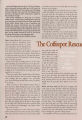
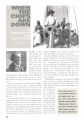
Show IN 1841 THE UTE chief Wanship told mountain man Os-borne Russell that bison had once nickname " Buffalo Jones." Jones also dealt in real estate and helped create Garden City, Kansas. Somehow, William Glasmann, who lived in Utah and also dabbled in real estate development, met Buffalo Jones and became interested in his efforts to save- and profit from- the monarch of the plains. He convinced Jones to establish a bison ranch near the Great Salt Lake. In due time, thirty- five of the animals, seven bulls and twenty- eight cows, were prodded onto a train headed for Utah. Jones and Glasmann planned a combined zoo and game pre-serve on the south shore of the lake, with Jones act-ing as manager. Glasmann had a particular motivation for bringing bison to Utah: he wanted to stimulate interest in a real estate development on the south shore of the Great Salt Lake, where he and several business asso-ciates planned to 1 roamed the Salt Lake Valley. Dur-ing dry seasons, Wanship said, the animals crossed the Great Salt Lake to Antelope Island without having to swim. But Russell was visiting the valley decades too late to witness that sight. By the time he arrived, all the bison were gone. Almost 50 years later, two entrepreneurs, William Glasmann and Charles J. Jones, reintroduced bison to the Salt Lake Valley. The story of how American bison were returned to Utah and eventually taken to L take advantage of the transporta-tion provided by the Utah and Nevada Railroad Antelope Island provides a seldom- told tale of the embryonic stage of the conservation movement in the state. In his early life, Charles J. Jones made a living and the popularity of saltwater bath-ing. They pur-chased a block of land west of Black Rock and Garfield Beach resorts. On hunting bison, but as the number of animals became - depleted to near- extinction, Jones realized it was possible to make more money protecting them than hunting them. He caught and raised bison calves and sold them at a good profit to zoos and private collec-tors as far away as Europe. His campaign to save the American bison from extinction earned him the this gentle slope, surveyors laid out a triangular townsite died. Evidently, one " fine old gentleman" bison lost that was intersected by the railroad. part of a hnd leg on the trip to Salt Lake, and when HOPINGTOCR EATE a park- like a- p - p earance, the devel- he arrived at the park his owners wondered if he opers planted 5,000 trees on the homesites and should be put out of his misery. However, Glasmann ~ romised to water them without charge for two designed a wooden leg that was soon strapped to the years. They also ~ romisedt o build a pier from the amazed animal. At first, the bull seemed puzzled by edge of the townsite out into the lake. After giving his new leg and spent several days gazing in wonder-their development the rather optimistic name of ment at this new appendage. When he finally grasped Garfield City, they offered residential corner lots for , hat its function was, he seemed to take solid pride $ 250 and inside lots for $ 200. in it. It is said that he even grazed near the railroad Ads in the Salt Lake Herald and the Salt Lake track on purpose to display his new leg to train pas- Tribune dubbed Garfield City the best- watered area sengers. N~~~~ has a bison acted more proud of a in Utah. The ads boasted of a large artesian well wooden leg. called " The Giant Spouter" that developers claimed ~ hp, ro jected resort town did attract a number of flowed at two million gallons a a eastern buyers, and Buffalo Park brought groups of that provided 270 additional gallons of water Per curious visitors eager to see the animals. However, by minute, and two the time the chips large natural springs were down and barely of pure water. Two dry enough to lndle other wells provided sulphur water and a good cooking fire, it became apparent soda water, and E. T. that the whole pro- Irrigating Canal ject was eventually Company water was going to fail. Jonec also available. The left and went back to trees, beach cottages, his ranch in Kansas. fountains, and flow- Within a year and a ing streams pro- half of the park's mised to beautify opening, there were the drab desert ter- Plat of Garfield City, from an ad in the Salt Lake rumors that Glas-rain. Herald, Sunday, March 9, 1890. mann was reluctant- A large tract of ly planning to sell land in the northern section of Garfield City blos- the bison, and it seemed as if utah would lose its somed into a glorified corral that the partners named herd. june 1891 a rcprcsentative from ~~~ h park, Buffalo Park. Jones also collected other exotic ani ~ ~ dlows, ~ came to~ salt ~~~ k~ cit~ y and d mals, and the park Own a offered to buy the animals. But Glasmann seemed to dred bison, twenty halcbreed bison, thirteen deer, be sincere in his desire to help perpetuate the bison ten antelo~ e, nine two in Utah, and he refused to sell. People in Salt Lake Mexican ponies, five bears, two seals, and six silver- Valley f& proud to claim one of the few small bison gray foxes. The foxes, caught by an Indian in north- herds left in country. ern Canada, were said to be worth $ 250 each. Some fifty- three animals, including at least thirty- five bison, had arrived at the site by the spring of 1890. Starting with this small nucleus of animals, Glasmann and Jones formed the rather grandiose goal of mak-ing Buffalo Park the largest zoological gardens in the world. Many of the wild animals had panicked during their ride over the rails, however, and had injured themselves and each other. Jones estimated that about half of all the animals he transported by rail ANOTHERYEAANRD A HALF had barely passed when a more palatable option presented itself. John E. Dooly and John H. White, the owners of most of Antelope Island, expressed an interest in the animals. On January 17, 1893, the lords of Antelope Island struck a deal with Glasmann and took possession of three yearlings and nine full- grown bison. Dooly, White, and Glasmann kept the details of the purchase a secret. John Dooly hung his head and claimed the price was so stiff that people would laugh at him if they knew what he had paid. The Ogden Standard and the Deseret Evening News observed that the last yearling bison Glasmann had sold went to France and England for $ 1,000 a head. The Salt Lake Tribune ventured the guess that Whte and Dooly had paid more than that. The Antelope Island partners took possession of the small herd and announced their intention to establish a large game reserve for all animals indige-nous to the West. Several years earlier the two men had rein-troduced deer and transplanted California and eastern quail to the island. The transplants had thrived. Now the partners had bison and planned to add ante-lope, elk, moose, Rocky Mountain sheep, and more. If their experiment succeeded, they would possess one that night at a cattle ranch. The next day the caravan crossed the Jordan River on the White Bridge, entered the outskirts of Salt Lake City, and traveled up Second West to the Union Stockyard, where the animals bedded down. The next morning they clumped northward along the state highway. The trek over this thoroughfare created quite a stir as people gathered along the route to watch the cavalcade. The bison often spooked the horses of I fellow travelers, and the Wild West assem-blage almost ended in disaster when the herd spied a loaded hay wagon lumbering to-ward them. How lucky the great beasts must have considered them-selves to meet this bi-son version of meals on wheels. The beasts did not stand on ceremony but charged forward to of the first large game help themselves. After preserves west of the Fn idealized Buffalo Park, fmm the H ~ d d , a the animals were fmally Rockies. separated from the wagon and its li ened load, the herders decided to ONF EBRUARY9 , 1893, Dooly and White ~~ r~ frontedse nd a man ahead to clear the road of all traffic until a formidable challenge as they attempted to move the unpredictable bison had passed. the bison from Point eastward along the south On Monday, February 1 3, the herd left the state shore of the Great Salt Lake and then rx~ thwardv ia road and headed west. They finally reached Lake Salt Lake and Lake Park to Antelope Island. Mr. park, west of Farmington, where James William White soon found that bison are not very tractable Walker, White's ranch foreman, waited with a boat animals. A ~ o uopf i nterested neighbors gathered to to ferry the critters to their new home on the island. watch as he gamely swung into the saddle and rode Walker had anticipated the difficulty of transporting out to face UMajor McKinley," a giant bison bull the bison over the lake and had prepared the boat by reputed to weigh 3,600 pounds. White and the making its sides higher and building a frame of poles bbmajor" m et eye to eye on the field of battle and over the top of this seaworthy cattle corral. The stared each other down. The man saluted the animal work of loading the animals began Monday after-with his hat in an attempt to " shoo7' the bull. Wrong noon and continued Tuesday morning Forcing the move; McKinley charged, and White quickly turned unwieldy cargo up the chute and onto the boat and spurred his horse away. For & out two miles the required considerable effort. After ffinishing the task, indignant bull pursued the horse and rider. the men sailed for Antelope Island, where the crit- Fortunately, the bull finally paused for a drink of ters likely disembarked with far more zeal than they cool water. This offered Whte the opportunity to had shown for loading. Bison had returned to slip away. But in a mere two miles, he had lost his Antelope Island. desire to chase bison, and he turned the job over to Because of their rarity, bison commanded high the herders and to his partner, pointing out that prices on the market. A February 8, 1896, article in Dooly was the buffalo man anyway. the Deseret News claimed that bison robes sold for After half a day's work, the men induced the bison a minimum of $ 100, and a bison head could bring to leave the park and hit the trail. The animals spent $ 300 to $ 500. The meat could also be sold as some- what of a curiosity to those who hadn't tasted it. Zoos and potential breeders paid $ 1,000 to $ 2,000 for a mating pair of bison. Dooly and White must have hoped to make some money while helping save the bison. By 1896 the Antelope Island herd had grown to H-teen animals. The newly evolved policy of Dooly and White seemed to be to leave the bison alone to mul-tiply unless they became troublesome. If an animal presented a prob-lem, it was killed for profit. As the original shipment of bison acclimated to the island, ranchers noticed that one solitary bull seemed to be ostracized & om the herd, roaming the north end of the island, and fre-quenting what the ranch hands called Satan's Gulch. The bull bewne cantan-ing or falling several inches in the same day, depend-ing on the velocity and direction of the wind. When the Ergo was launched, a stiff northwest wind blew across the lake. The boat was within about two miles of the island when the wind ceased; the water dropped and deposited the cattle barge firmly atop a large sandbar. The men began working to free the craft. They likely considered themselves in little peril, since the lake was calm and I DISV~ n unr on the island in 19Ga. kerous and chased bird and rabbit hunters. Twice, this bull attacked foreman William Walker. One of its final acts of violence occurred when it caught Walker by sur-prise and gored his horse to death. The man barely escaped with his life. This experience convinced him that the animal was too dangerous to keep, and plans for the island's first commercial bison hunt came to fruition two weeks later. ON A SUNDAY MORNING early in December 1896 fourteen men, including a butcher, several hunters, two journalists, and four sailors, boarded the Ergo, a large, lubberly, flat- bottomed schooner capable of hauling some thirty head of cattle. Since the boat was an open affair, it offered little or no shelter from the elements. The men hoped to complete the twelve-mile trip to the island in several hours. According to plan, they would land on the island, kill the trouble-some bull, and return that evening- r on Monday at the latest. The sailors knew that the Great Salt Lake was a tricky body of water to navigate. Because it is large and comparatively shallow, the force of the wind fre-quently caused water to shift from one section of the lake to another. The depth of an area could vary, ris-they had ample provisions to last several days: a roast loin of beef, several cooked chickens, abundant links of sausage, ample bread and vegetables, some water, and plenty of whiskey. They had also brought several small skiffs along in case they had to abandon ship. The adventur-ers struggled to fiee the Ergo fiom the sandbar until the next day, but even afker all those hours of work, the craft remained firmly stuck on the bar. At this point the men termi-nated their efforts to free the boat, piled their sup-plies in the skiffs, and rowed toward shore. William Walker and his ranch hands welcomed the belated party to the island as warmly as was possible in December. The combined group hurried to the ranch house and prepared to take to the field. The cowboys saddled the fleetest horses, and the hunt began. Walker knew that the rogue bull, which they named " The Mighty Sullivan of Satan's Gulch," would charge the horses as soon as he spied them. So Walker and Harry Edwards rode into the gulch to decoy the renegade bison out into the open, where the men in the wagon could more easily reach his carcass and dress itafter he was shot. The other hunters deployed in various places around the mouth of the canyon, hoping for a clear shot at the bull. Colonel shaugLessy stayed close to the canyon; Burt Brown, manager of Western Union Telegraph in Salt Lake City, guarded another possible escape route; Otto Stallmann stayed quite a distance below the canyon on the flats; and ColonelTreweek climbed a tree that proved to be an excellent lookout position. After a short wait, Treweek bellowed a warning of the bison's approach. Then the two men on horses dashed out of the canyon with the bison charging after them at a distance of forty yards. When " The Mighty Sullivan" spied the men at the mouth of the canyon, he warily veered northward and ran along the foothills. Then he sighted the men in the wagon and temporarily thwarted the plans of the hunters by running away from them toward the ranch house, stopping to rest in a large meadow about a mile from the structure. The hunters rapidly followed. The men on horse-back reached the bull first and thought he was too worn out to charge again, but the animal surprised them. When they rode toward hm, he lowered his horns and chased Edwards's horse a short distance before he changed his course and headed to the east shore in an attempt to skirt around the men and make toward the north end of the island. When the furious animal turned north, Shaugh-nessy and Brown, who were within shooting range of him, received a good broadside view of hs massive body. Shaughnessy shot first. The bison briefly fell to his knees, rose, and ran another 150 yards, where he came into the sights of Brown's rifle. The sound of a second shot rent the air, and " The Mighty Sullivan of Satan's Gulch" wheeled around in final defiance, took several unsteady steps forward, fell to the gound, and breathed his last. AFTERT HE WAGON ARRIVED at the dead bull, Martin Lannan, the butcher, dressed the carcass. The bull was then loaded into the vehicle and transported to the ranch house. The men measured the animal at 13 feet 2 inches long and 6 feet tall. They estimated his weight to be about 2,000 pounds. Tuesday evening the men loaded " Sullivan" onto a boat that they poled toward the mainland through calm water. The voyage back proved to be as slow as the trip to the island. That night the travelers were surrounded by an ice floe and could do nothing but helplessly huddle wrapped in their tents and blankets as the sluggish current nudged them shoreward. When they finally reached the mainland, the tired hunters boarded a train for Salt Lake City, and the carcass was again loaded onto a wagon to make the trip to the metropolis. The men arrived Wednesday, a day before the bison reached the city. Some Salt Lake sportsmen remained skeptical of the stories they heard about the successful hunt, but when William Walker delivered the bull Thursday afternoon, they became believers. " Sullivan" was unloaded Friday and placed in a life-like position in Lannan's meat market. News of the hunt excited the sportsmen and general population of Utah's capital city. People crowded in front of the market eager to get a glimpse of the bison. Lannan anticipated that thousands would view it. The bison's head and hide were preserved and sold. The meat appeared on many a holiday table as an oddity, and some old- timers likely ate a steak or two and reminisced about the days long ago when they had crossed the plains and witnessed thousands of these now- rare animals. THROUGHTHEYEmAanRyS o ther managed bison hunts have been held on the island, but a nucleus of breed-ing stock has always been preserved. Today, thanks to the protective actions of " Buffalo" Jones, William Glasmann, John Dooly, John White, and the succes-sive owners and lessees of Antelope Island, the bison have been safeguarded there for over a hundred years, malung them one of the oldest herds in the country. They are now owned and managed by the State of Utah and have grown in number from twelve to a managed stock population of about 550. These bison comprise one of the largest publicly owned herds in the nation. Each year a few of the animals are still hunted, and about 150 of them are sold to the highest bidder. Thanks to early conservationists, the chips are still down on Antelope Island. D. Robert Carter is a former history teacher and historian who specializes in Utah County topics. Sources Ouida Blanthorn, comp., A History of Tooele County ( Salt Lake City: Utah State Historical Society and Tooele County Commission, 1998). Annie Call Carr, ed., East ofAntelope lslond ( Salt Lake City: Publishers Press, 1971). Robert Easton and Mackenzi Brown, Lord ofBeasts: The Soga ofBuffaloJones ( Tucson: University of Arizona Press, 1961). George Bird Grinnell and Theodore Roosevelt eds., American Big Game Hunting ( New York City: Forest and Stream Publishing Co., 1901). Colonel Henry Inman, comp., Buffalo Jones's Forty Years of Adventure ( Topeka: Crane and Company, 1899). Glen M. Leonard, A History of Davis County ( Salt Lake City: Utah State Historical Society and Davis County Commission, 1999). Dale L. Morgan, The Great Solt Lake ( Lincoln, Nebraska: University of Nebraska Press). Osborne Russell. Journal of a Trapper ( Lincoln: University of Nebraska Press, 1965). Tooele County Daughters of Utah Pioneers, comp., History of Toaele County ( Salt Lake City: Tooele County DUP, 196 1). Deseret Evening News. January & March 1893; February 1896. Solt Lake Herald, November & December 1889; March 1890; June & October 189 I ; January, February, & March 1893; December 1896. Salt Lake Tribune, January & February 1893. Standard, [ Ogden] January & February 1893. " Wildlife on Antelope Island," Wekome to Antelope Island, Vol. I, No. I, Fall 1995. Photos: Buffalo boat and bison hunt are from USHS collections. |