| OCR Text |
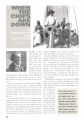
Show Stream to Gorge: Home on the The settlers who first turned large numbers of cows and sheep onto the range found that the lush native grasses were not infinite. Overgrazing dra-matically altered the landscape, causing flooding, shrinking wild animal populations, and destroying the food sources of Indian peoples who depended on grass seeds and large and small game. Here, eyewitnesses to the process describe the deterioration of the range. JOSEPH J. PORTER: c. 1935 statement to a Works Progress Administration writer about range conditions in southern Utah. SCALANTE was settled in 1875. Prior to E t hat time a few men had run a few head of cattle in this country. There was grass every-where so thick that one could throw his hat or a blanket down any place and it would never touch the ground. In about 1890 1 remember going out on the desert on a rabbit hunt, I was only a big kid at the time and was driving a team on a wagon. At the time there was a lot of dry grass around and I remember one of the fellows set a fire in it and it burned for several days and cov-ered practically the whole country. Along about this time several fellows from over around Fillmore and Kanosh brought a lot of cattle into the country and a lot of sheep came in from up around Sanpete. The number increased until in about 1900 there must have been between 15 and 20 thousand head of cattle in the country and perhaps 80,000 head of sheep. Beside all the wild horses and there must have been several thousand of them, anywhere you went whether it was up on the mountain or out on the desert you seen them in big bands. There was also a lot of deer and some antelope in the country.. . . I helped Griffins take their sheep out on GriffinTop [ on the Aquarius Plateau] about the first time sheep were ever taken out there, that was about 1890. I re-member the grass was so high that you could hardly see the sheep for it. Griffins Spring Draw was just a large willow patch from one end to the other. While we were herding sheep in that country we never did turn our horses loose, we just tied them with a long rope and they could get all they wanted to eat during the night. We always brought the sheep back to the same bed ground each night and they never had to go very far away during the day to get all they wanted to eat. We did the same down on the desert during the winter. G& built some small cabins and camped in them all winter and bedded their sheep on the same bed ground for three or four months at a time. Everyone handled their stock the same way until NETHELIA KING GRIFFIN: excerpt from a 1938 history that she wrote called " Life in Boulder!' IN ABOUT 1900 began a period of struggle be- tween cattlemen and sheepmen.. . for control of the range [ near Boulder and Escalante, Utah]. Every year the country became worse overstocked until, beginning in 1890s, there were several years of drought that naturally intensified the evil of over-grazing. Cattle died by hundreds.. . . By 1 905 the rich meadows on the mountain plateau had turned to dust beds. Sheep, bedded on the head-waters of the mountain streams and dying in the water dtches, so the feed started to get scarce, then they had to move around a little for feed, but they never did have to take them off the desert in those days to winter them. About three years after the sheep went up into North Creek the streams started to get muddy every time it rained. The first flood I remember seeing come off the mountain was about 1887 but we thought noth-ing of it. Before that time it could rain for days and the streams never got muddy. About that time I can remember there used to be a small bridge across the Escalante Creek down here in the field lane, it was perhaps twelve feet across it and today it is about 400 feet across and 20 feet deep-- all caused in the lifetime of one man. E VEN AT THE TIME the [ national] Forest was created the Mountain range was badly depleted and floods were common. At that time about 1 50,000 head of transient sheep were forced out of the country because the government would not issue a permit to them. Since that time the mountain or Forest range has come back considerable, but I don't believe it is over 50% as good now as it used to be. The Desert range has continued to go down until it will care for less than 10% of what it would formerly. befouled them that ranchers' families could hardly get a decent drink of water. Cattle bones bleached on the dry benches and around mudholes and " loco" patch-es, these poiso-nous weeds seem-ing to grow after other forage was dead and to attract starving animals with a false promise of food. F ORTUNATELY, with the advent of Theodore Roosevelt's administration came government intervention with the creation of the Forest Reserves. It was necessary, not only to protect the range but to save the watersheds. Shrubs were dead or dying and sheep had trampled the hillsides so hard that rain and melting snow ran off in torrents, caus-ing floods that ripped open great gulches in the val-leys, even on the ranches. The writer recalls a small stream through a neighbor's place that within seven years became a gorge fifty feet deep and a hundred feet wide. Government intervention came, though, not in response to request of stockmen, but over the protest of most of them. Perversely, they objected to the reg-ulation decreasing their herds and did not give the ranger a complete count if it could be avoided.. . . Photos on pp. 1 1- 13: Cowboys at camp; Jim Robinson, 2- Bar cowboy, c. 1890; cattle at a ford on the Virgin River. USHS. A memoir by Fbrence Baihy dryers- the baggage being merely partitioned off from the passenger end of our car. Florence A. Bailey, an aspiring 30- year- old nature writer ~ h p, la n of our trip was to enter the wasatch a fmm NewMsPenf the summer of 1893 in Utah* Fullof few miles southeast of Salt Lake city; climb the curiosity about the people, customs, climate, plants, and scenery to be found in this new place, she took up resi- cafion- Little Cottonwood- on a tram; cross the dence in on unnamed little commun~ ty+, ro~ a~~ y divide separating it from Big Cottonwood, on horse- Formington- north of Salt Lake City. She interacted freely back, coming down through Big Cott~ nwoodc afion with the people there, made careful notes, and seemed to by stage to Salt Lake. hove thoroughly enjoyed her adventure. As I was more interested in geology than botany, Penning her experiences in the genteel and prim style in th, short intervals between the discovery and dis-of the day, Florence wrote a delightful memoir, cussion of flowers along the way, I tried to My Summer in a Mormon Village, under the pseudonym of Florence A. Merriom. extract information about the geology of The following excerpt comes the mountains. Just before from the final chapter of the r we entered the caiion, the book and reflects Bailey's spe- Professor ~ ointed out the cia1 appreciation for the aes- famous earthquake fault, thetic and recreational values of there a drop of sixty feet, the Wasatch Mountains. It shows, as well, other viewpoints which extended two hun-toward the mountains in its dred miles along the base of descriptions of botanists, the range, and which, a geol-hunters, and miners. And it ogist had hinted, was only a reveals a sensitive visitor's con- prophecy of an earthquake cern for the fragile nature of this 1 that should swallow up Salt seemingly rugged topography. Lake City itself. a fthoujh no botanist, 0 n reaching Wasatch- I was eager for the the mountain village where trip. I had not lived the granite was quarried for under the shadow of the DAY IN THE MOUNTAINS the [ Salt Lake LDS] Tem- e Wasatch all summer without ple- we saw perched on a longing to get back into the U A CENTUIW AGO terrace above us a most mountains; and it would have remarkable- looking con-been a sore disappointment to have left theTerritory veyance. It proved to be our tram car- a hand car with only a picture of their face.. . . furnished with three wagon seats, each ~ rotectedby The trip had a delightful mountain flavor from the a ~ arasol- likeb lue and white striped awning. It was outset- we were to meet the Professor in the Rio drawn up the caiion by two horses, tandem. It came Grande Western station with tickets to the Wasatch. down by gravity- and a brake. " Ben," the rear horse, We went to Salt Lake a day~ befdrdhand in order to put down his head and strained steadily, but the !' catch the early morning train, and had been waiting leader's tugs were often slack, and our driver's ~ mpatientla~ t the sta' 6' on;" for some time when the exhortations and admonitions were our accompani-preoccupied Professo; came hurrying in, looking for ment along the way. " Walk up, Dick!" " Get out of C us through his spectacles. He w;+ hrmg with field this, Dick!" he shouted with increasing emphasis; glass, barometer, botany can and press,!,+ >.., after a snapping his long clothesline- like whip at the leader few abstracted remarks to us, went ~ l tt9:' w atch with a louder and sharper snap as practice gave dex-over his dryers- a stack of bmwn pads t+$.,, t~~~~ terity, his face growing tenser with exasperation. astonished eyes, suggested a Saratoga trunk: @ tth The awnings ~ rotected us so effectually that we logic characteristic of a naturalist, he had considq~& saw little along the way, except when we craned our C his coat took bulky to carry- though we wd& , necks to look at a suddenly opening view of the bound for the snowy mountain tops. After a person- ' grand walls of the caiion. Fortunately for our seren-a1 interview with the baggageman, the Professor jty there was usually little to see, the tram car brush-concluded to let him take charge of the precious ing through the green undergrowth of maple, elder, and cottonwood most of the way. Occasionally, in an interval between pointing out a rare ? more ways than one, the store echoed the former moraine, the Professor caught a - iil~ rieso f the mining camp. In following the post-cherries as we passed. " i g# Lqter to his office, from the group of old drunken I he tram had been Guilt to brin itting telling yarns in the front part of the from the Alta mines to the passed into the silent dimly lighted interior. Wasatch. We reached Alta in ti e back of the room was a bar filled with old ner. It was an interesting type of a deserte bottles under a sign of " Positively no Credit." camp. Opened in 1864, it was one of the olde the bar we followed through a dark closet- like richest silver mines in the Territory. When 1 m with a large table, laid, presumably, with gam-boasted three thousand inhabitants it was suddenly bg counters. This opened into the post office, swept by fire; and now held but nine families, having, where the postmaster showed us with ride where during the " silver trouble," but one open mine. powder had been put to blow up his safe. The su~ erintendent of 1 " the Grizzlyn and his assayer, who received us with great courtesy, were the only edu-cated men in the place; and in winter, the superinten-dent went down to his farni-ly, leaving the young assayer cut off from the world. " What do you do?" we asked. " Oh, I've plenty of books," I < he answered quietly; but when pressed acknowledged that it was lonely. He brought out a pair of Norwegian snow- shoes-and six inches wide- his I Photos, w. IS- I 7: Horse- pulled railroad in Little Cottonwood Canyon + Two women enjoying the scenery in Big Cottonwood Canyon + Sam McNutt and Billy Schaaf at Sam's cabin in Big Cottonwood Canyon + A gmup of recreation-winter walking boots- his only means of going abroad. Pointing to the precipitous mountain wall opposite, he astonished us by saying that he had rid-den down it on his skees. He could not fasten the snowshoes to his feet, it would not be safe. It was dangerous, but exciting work, he said simply. He had been up and down most of the mountains around Alta. The people had cut the trees from the steep sides * - of the caiion to use in the mines, leaving the town without protection, and a hundred men had been killed by snow slides. Six had been killed in the cel-lar of the assayer's house, he informed us calmly. e spent th afemon collecting flow-ers- that is, the Professor and my fi- iend collected, and 1 went along. In the evening we visited the post office- a small com-partment in a far corner of the camp store. The store having been stocked in the days of Alta's prosperity, its goods were not wearing out on the shelves. In We did not find it difficult to believe that " Alta had now where the snow had lain, belonged to the last been a hard place;" and we drew our own conclu-sions when we found a big revolver casually lying out on the table of the English family- to the care of whose good women my friend aid I had been con-signed. The next day, as we rode on up the trail, we looked back on the desolate town, moralizing sadly on the place the mining camp holds in our present civilization. As we climbed toward the divide, our trail often looked like a brown thread winding over the face of the mountain. a Lilt& morning we rode through a veritable garden of flowers. They were astonishing, although the season had turned, and the Professor had nightmares lest those he was in search of had already been touched by the frost. To my unbotanical eye, the ride was a feast of color. There were exquisite clusters of blue flax, tall groups of white columbines of surpassing purity and beauty, rich purple monkshoods, luxuriant clumps of mertensias, of such, delicate Frenchy pink and blue shading that my* frfeod dreamed of U,< t them after she got home; besides the glowing " painted cups,?' and great stretches of yellow flow-ers, like patches of sunshine on the mountain - page of the glacial history. Their basins, scooped out originally by the living glaciers, had only filled with water as the old glacier, pursued by the sun, with-drew of the caiion to its birth- place and there melt-ed away. In melting, it dropped its last burden, form-ing dyke- like terminal moraines, which dammed the outlet of the basin and made the little lakes. From the divide, we rode down the flowerin- g sides of the mountain to the lakes, when the Professor sent a man back with the horses: for we were now only a sides. he Profe~ otro ld us . which flowerBirked Y ,; r t** off the ascending4 life zones+ forc%~ , found even +"$ r$" c, "(. <, . Alpine plants, we' wefit so high. , W t +, ig~ rio~ rap~ ce , I had soon forgotten the fianies;:{ houg$ Tshall long remember a bouldei- with's line of blue flo2ers blos-soming out of a c. r) a. c k along its face. As we stood oh the, divide, where the Professor's barometer ; egGteitd an BlGtude of 10,250 feet and patches of sAow were Anmelted in August, we were short walk from " Brighton's," the stopping place at the head of Big Cottonwood Caiion, and we wanted to loiter at our pleasure along the way. Clouds seemed to be gathering, so we hurried on to a miner's cabin among the evergreens. To our cha-grin, when we got there the door was locked, the host absent, and we were obliged to sit down beside - the ashes of the camp- fire. silenced by the wonderful pictures in both directions I was getiiy hungry by that time, but I saw below us. The grandest view was behind us. We looked back upon the bold peaked V walls of Little clearly that no morsel would pass the lips of Cottonwood Caiion, and through the blue notch the botanists till their precious plants were all where Salt Lake valley lay in the distance. Loohng a pressing; so I looked about, enjoying the streams of forward, we exclaimed with delight at the peculiar Pure Water the cabin, and the and beauty of the picture, Below uca flavor of the balsams growing over it. Then I sat down thousand feet- among the evergreens at the foot of On a the and whetted our trail rested two beautiful Alpine lakes, mirroring loolung at the lunch bag.... the blue sky and whit6 clouds. Beyond them, was the we were in [ the] gambols Iof horizon of green undulating mountains. squirrcls], the owner of the cabin appeared- a big The Professor said de , little Alpine lakes burly Irishman with mild blue eyes and J. patient face. the birthplace of one of tbe:$ ain. branches sf @, e He took the door key from under a tin basin, and, great glacier that had hollowed o h t " B l g , t n . hospitably disregarding our having camped before his Cafion. Indeed, he assured us that the nCvk or glaci- front door, began asking about the fishng. I smiled to er- snow had risen a solid white hall high above the myself at his mistaking the Professor for a fisherman. divide on which we were standing. The lakes, resting When he opened his door I looked curiously into the cabin where we had hoped for shelter. Frying The miner, when we suggested that he might pans and other utensils were scattered over the floor, become lonely, answered, with assumed indifference, and a ragged old sheepskin hung over the edge of the that he had plenty of company; but when thanldng rude wooden frame that served for a bed- a dreary him for his hospitality, on leaving, the sad expression home to come back to, after a hard day's work. The settled back over his patient face, and he said grate-lonely miner sat down on an upturned box and took fully that he was glad to have any one come to see up a newspaper, politely leaving us to ourselves- in b, his front- door yard. When he found us watching his little friends, hgw ever, he came out. I asked him if they would qm+ e to him. Pointing to the mother, he said, " She she likes sugar;" and turning back into the & bin, he brought out a slice of bread thickly spkdd with molasses. Leaning down in the doorway he held it out, gently calling her to come for it. As soon as she heard his voice the little creature ran trotting up to her big friend, and stood by his hand licking off the syrup as confidingly as a kitten. It was a touching pic-ture, and reminded me of the prisoner cherishing the little flower that sprang up in his window. " Will she ever climb up on your lap?" I asked. " Oh, sometimes, when you're sitting on a chair, she'll come up, if she's right hungry," he said. When the Professor took a flower from his botany can and began making notes upon it, the miner's blue eyes lit up with interest. " Does every flower have a ? k~ w e walked down toward Brighton's, he passed us on his high trail across the mountain side goin& to his " claim," and at our last sight of him, he was loo+ down the black mouth of his tunnel- a lonely figure on the mountain. who had just been collecting rnin-w warm as he discussed the exag-ons of miners, telling us- in fig-ures- how fiB&% averaged by the prospector; and how the trained & ga \ yl@ se skill is greater than that of a carpenter or other tradesman, combines prospecting with his trade, so taking his hard- earned money and % lowing it all out ." We walked past the two beautiful little lakes- typ-ical Alpine lakes- with grassy points running out into the clear water, suggesting feeding deer; willows growing along the banks, and great granite boulders standing in the water. u T he s& ht of a dear homelike robin warmed our hearts as we passed, but white clouds were piling up over our heads, and we could only hurry by. When the trail led through a grove of fr, we met a party of summer hotel young men, calling for a gun- they saw grouse in the trees. I heard them recalling their recent achievements- they had killed a badger, a deer, and an eagle within a few days. It was a rude shock to me, and I thought bitterly that even these wild grand mountains would soon be " civilizedn by the pleasure- seekers who destroy all they can of the nature they come to enjoy; leaving the country lifeless and bare, after having had the refmed satisfaction of taking pleasure in giving pain, of taking life to evade the name, or do you m ethe m?'' he asked; adding some- tedium of an idle hour. I could on$ reflect thmkfi. 11- thmg about ' ' c l a s ~ g ' ' them, much to my surprise. ly that though the mountains might be made patent- The Professor, his turn, inquired about the medicine advertisers, and the deer that drank from miner's " claim." It was gold and silver, he said; but he the lakes at their feet and the eagles that soared over was onlyYworkingo ut his assessment."" It doesn't pay their heads might be killed to gratify man's lust of to get out silver, now," he explained quietly. Then, power, the cloudless blue sky above us was beyond referring to the " silver trouble," with a force that sur- their reach.. . . prised us, he exclaimed, " It takes a good deal to kill a Western man. It takes more than one thing to starve From My Ufe in a Mormon Village, by Florence A Merriarn ( New a Western man." York and Boston: Houghton, Mifflin and Company, 1894) |