| OCR Text |
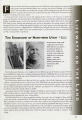
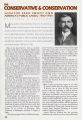
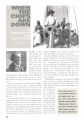
Show john Lytle Whipple was born April 7, 18 74, in St. George, where his parents had been called by the LDS church to settle. His father, Eli, owned " all the upper end of Pine Valley and had a large farm and a saw mill. ... We shipped lumber to Pioche, St. George, and other nearby towns. I helped as best I could, for my age." john started cowboying at a young age. In a memoir written around 1950, he tells a harrowing story of driving cows north from the Colorado River for Utah cattle baron Preston Nutter. Besides being a story of adventure and hardship, the account demonstrates how the wealthy increased their holdings by using human labor and the land to their advantage. Following this 1890 drive, Nutter took control of the Shivwits Plateau by claiming springs that had been used by smaller ranchers for years; he then fenced the springs of and put up No Trespassing signs. Here is an excerpt from john Whipple's memoir: and with our twenty- one it made fifty- six men without much supplies. After getting about one- half the steers 2,300) across [ the river], seven of us ed on the trail. The first night we foohlls and made camp, knowing coming up. The next day, we got up and started the cattle at the break of day- about 3: 00 a. m. We had a long, hard dugway to trail the cattle over the high ! g:, skh mountain. We were without any food or water all @ R day. The horses were tired so we rode a while and <@$:, s$>!: g!< then got off our horses and chased the cattle on foot sG3j to the top of the mountain. ".. i-: I; C. ?":.:: % We had been told there was a small spring where p# we could get a drink of water After getting to the $; 5$:$%$ top, the cattle were left with one man to hold while ig5j the others went to hunt the spring. I was the one to g;$ f &.$.*, WHEN I WAS 14 or 15, I went out to ride for cattle in Parashaunt [ now called the Shivwits Plateau, in north-west Arizona] for Antone [ Anthony W.] Ivins, and at the age of 16 I started to work for Preston Nutter. He bought 4,440 head of Stay with the steers then wired home for his man to fetch his out- order fit. When his outfit arrived in St. George they decid-ed to hire more men. They bred five of us St. George boys. I was the youngest. weed that is hollow like [ After a few days of riding and four or five days a straw. We were forced spent rounding up scattered horses] we found our- to put the bottle stop-selves very short of supplies. The big boss of the out-per in the crevice fit, Allan Montgomery, figured Mr. Nutter would be where there was a little pond of water, and waiting on the Colorado River at Gregg's Ferry with suck it out. The boys supplies so we went on. When we reached the Colorado River, Mr. Nutter was not there, because the hot weather delayed the drink. One boy grabbed the other and pulled him cattle trailing, and our supplies were practically away, and they had a free- for- all for a few minutes. gone. We had nodung left but dried peaches, and they were wormy. After we lived on these dried peaches about 6 days, our boss, Allan Montgomery, got on a saddle WHILET HIS WAS GOING ON the horse wrangler and horse and led a pack horse and went over the high ~ o o kca me up. They had had a hard time getting up Mountain Range to St. Thomas, Nevada, about 50 the mountain and had been forced to leave their out-miles, to get supplies. When he arrived there he fit and come up to the spring on horses. They had found no stores but managed to get two sacks of brought flour and coffee to fix supper for the boys at flour and some coffee from one of the ranchers. He the spring. When they found there was not enough could get no balung powder, sugar, or any other sup water to cook with, they went on to the Virgin River, plies. We were plenty glad to be able to have a good arriving there after midnight. After hey left, the cup of coffee and a flap jack when he returned. Ths boys came back and I went for a drink. It was getting we ate without any trimmings, only black coffee late and we still had had nothing to eat since 3: 00 made of river water. a. m. and only this little bit of water to drink. We pro- After [ we waited] two or three days more, Nutter ceeded to drive the cattle until it was too dark to see, and his outfit came in from the Arizona side with the but we managed to get into a deep canyon. cattle. They had about thirtyfive men in their outfit We unsaddled our horses and turned them loose to get water back to them. After . traveling perhaps a mile and a ,' half, we met the horse wrangler coming back on foot, bringing a coffee pot full of water, as he had no bucket. He knew we He was exhausted and very weak from having no food or rest for about 48 hours. He was unable to take the water any far-feed. One man On each end the herd] had back to those boys, who were dying 0 ~ ~ ~ up and herd the cattle while the others slept. We sang he and D~~~ l i d there and rested. , Q $$. : A >; or hollered most of the night to keep the cattle from * fter reaching the boys, I had a real scrap with getting too quiet. If no noise is made, the cattle lie them to give each a little water at a time. They prac-down to go to and then the least little noise tically went crazy, being so thirsty. I had to hold each cause a and tl. am~ le one by the hair of the head and force him to take just one in their path. one swallow at a time until they had enough and got AT THE BREAK OF DAY we went to wrangle our quieted down so I could leave them. I left the coffee horses, still very hungry and weary. We found our pot with them and advised them to lay in the shade horses; two had gotten do- during the night and until evening before trying to make it on to the river. were unable to get up, as they were very thn and I went back down to where Foremaster and the horse worn out. We fetched our other three horses into wrangler were waiting, and we started on toward the camp. As we had no cooking or dish washing to do, river, which was ten or twelve miles away;:+.~.+,;' cg+; y%.. v. F .- c. -:<.>>:.";**>" we weren't long in getting on our way. We also had THE COOK HAD LEFT the little flour and cof* eeyh; t he no bedding to up Or no ' lothe' to pack, as we had brought to cook for us on the ground, and he wore all we carried. We put the five saddles on the told us where to find it. There were no matches so three horses and turned them in with the cattle. This the cook and the wangler had been unable to malie made five of us men, or boys, herding Over 2,000 a fire and cook. They had been compelle head of steers over those rugged mountains by foot. without to eat. We continued down the canyon until about 10: 00, As there were no flint at which time the sun shone burfing hot> and we we were puzzled as to how we were ever were near choked and that we were going to make a fire to cook something to eat. But all forced to abandon the cattle and walk to the Virgin at once F~~~~~~~~~ h ad an idea. River to save our lives. After traveling some time cL~ t'ellll you what do; he have an old through the head and hills, three of the boys' tongues six shooter; we will take a piece of this old y i l t the became so swollen from thirst that they could go no cook has wrapped around ths flour and take some farther. We put them ( Hon, Biz, and Allen cotton out of it." He then took the slug out of the car- Montgomery, son of the boss) in the shade of some tridge and stuffed it full of cotton, leaving the pow-ledges, and Dave Foremaster and myself continued to der in. He wadded up the other old cotton and some the river. Before leaving, the boys bid us farewell and brush, and shot the gun into it. Two little sparks told us what to tell their folks, as they, and we, never showed up. I took one and Foremaster the other and Stream to Gorge: Home on the The settlers who first turned large numbers of cows and sheep onto the range found that the lush native grasses were not infinite. Overgrazing dra-matically altered the landscape, causing flooding, shrinking wild animal populations, and destroying the food sources of Indian peoples who depended on grass seeds and large and small game. Here, eyewitnesses to the process describe the deterioration of the range. JOSEPH J. PORTER: c. 1935 statement to a Works Progress Administration writer about range conditions in southern Utah. SCALANTE was settled in 1875. Prior to E t hat time a few men had run a few head of cattle in this country. There was grass every-where so thick that one could throw his hat or a blanket down any place and it would never touch the ground. In about 1890 1 remember going out on the desert on a rabbit hunt, I was only a big kid at the time and was driving a team on a wagon. At the time there was a lot of dry grass around and I remember one of the fellows set a fire in it and it burned for several days and cov-ered practically the whole country. Along about this time several fellows from over around Fillmore and Kanosh brought a lot of cattle into the country and a lot of sheep came in from up around Sanpete. The number increased until in about 1900 there must have been between 15 and 20 thousand head of cattle in the country and perhaps 80,000 head of sheep. Beside all the wild horses and there must have been several thousand of them, anywhere you went whether it was up on the mountain or out on the desert |