| OCR Text |
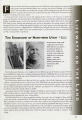
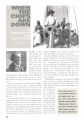
Show IFTEENYEARS after the Mormon settlers arrived in Utah, their livestock had so overgrazed native grasses and seeds that the Indians were starving, noted Jacob Hamblin, one of tho4 3ttleri The Great Basin was hardly lush to begin with, but indigenous peoples had survivd there for centuries. How did they live on the land? And why was the Euro- American way living so devastating to the native tribes? J Each group of Native Americans survived by adapting to the resources of its own area. Consider the 4 group now called the Northwestern Band of the Shoshone Nahon. Earlier, they called themselves kam; mitikka, " jackrabbit- eaters,'' and lived in northern Utah and southern Idaho. They lived in small fluid family groups, hunting and gathering scarce resources throughout the spring, summer, and During the winter, the small groups gathered together into larger camps in areas that provided c timber, and food sources to supplement the foodstuffs they had gathered and stored. Often they - tered near hot springs at Battle Creek near Franklin, Idaho, or at Promontory Point or Crystal s p r d in Utah, erecting brush or tipi homes. THE SHOSHONE OF NORTHERN Rachel Perdosh stands beside a typical tipi. Lucy Honovea, 1830- 1920, born and raised in the traditional lifeways, ex-perienced the changes that occurred as her people were displaced by Euro- American settlers. Next page: Sogwitch, oldest son of Shoshone chief Sagwitch, sur-vived the Bear River Massacre. The Northwestern Shoshones were neighbors to two different groups of Shoshone peoples. Thos the north fished the Snake River drainage and depended heavily on bulbs like bitterroot and camas. Shoshone in western Utah and eastern Nevada lived in a dryer place, relying on foods like pine grasses, and desert animals. The Northwestern Band moved between these two groups- after all, the Shoshones were all ci relatives- and used the resources of both areas. They fished Bear Lake and the Bear, Weber, and Sn rivers, using spears, gill nets, and basket traps. They snared or shot 1 and they snared small animals like wood rats, muskrats, and squiri fur off then roasted the animals whole or stuffed. waterfowl, grouse, - els. To cook these , coots, and ( :, they singe' Large game required other hunting techniques. Working as a group, hunters might drive deer brush corrals in narrow canyons. They also hunted mountain sheep, stalking or ambushng the beating on logs to simulate the rams' rutting battles. Men often joined forces to hunt pronghorn antelope. A person power directed the communal hunts. This shaman would visit the h who was thought . erd, sing to the an to have spii ~ imalss, leep them, and help drive them to a brush corral, where they could be shot. Large hunts such as this only held every five or ten years, however, as it took the antelope population that long to recover. Other animals used by the Shoshone includcd beaver, elk, porcupines, mountain lions ( rarely), cats, hares and rabbits, otters, badgers, marmots, and bears. The hunters often took care to avoid female animals, birds, and fish during times when the animals would be bearing or caring for young. Plants were also critical to survival. The Shoshone saylng that " When the land is sick, the people are ate such diverse plants as thistle stems, sagebrush sick." In the Shoshone view, wrote the fieldworker, seeds, the leaves and roots of arrowleaf balsamroot, the land. water., fish,, fishermm are all holvJ . buffalo berries, limber pine seeds, sego lilies, wild N THE PAST, there was no ownershp of rye seeds, Indian ricegrass, cattails, and much more. land among the Shoshonean people; all Of all the plant foods, pinyon nuts were the most Shoshones had a right to its resources and important. The band usually went to Grouse Creek, all had a stake in keeping it well. But the in northwestern Utah, to gather the nuts in the fall. erlu ol mis way of life, with its seasonal migrations After they harvested the green cones, they would and small- group cooperation, began when Mormon roast the cones to release the seeds. They would then settlers moved onto the traditional Northwestern parch the shells to make them brittle, crack them Shoshone lands. Also, emigrants hunting and grazing with a metate, and winnow the nuts with a fan tray. their livestock along the Oregon Trail decimated The parched nuts could be eaten whole or ground to food sources and polluted streams. make a warm or cold mush. To fill the gap, some Shoshones turned to begging, r HE PINYON HARVEST was a time of religious stealing food, or raiding livestock, acts that they saw ceremonies, and the as " collecting rent." Others people regarded the r became more violent, lulling pinyon- gathering Euro- Americans in retalia-areas as sacred. But the tion. But in the long run these Shoshone apparently ap- ., strategies could not sustain proached all of their relation- the band. The Anglos reached ships with the land spiritually. their own goal- to perma- Animals killed were often nently remove the Indians treated ritually, with their from settlement l a n d s f a r heads placed to the east or more efficiently. The Bear their organs set out in the River Massacre was one part brush or trees; the dead ani- of the l solution^' to the " Indian mals were addressed with spe- problem ." cia1 respect. Plants were har- Another was to move the vested with prayers and offer- band onto a 1,700- acre farm ings. When digging a root, for at Washakie, in northern instance, a Shoshone might Utah, in 1875. There, the peo-leave a small stone or bead in ple who had successfully hunt-the hole. ed and gathered for centuries According to anthropologists, Great Basin peoples were taught to build permanent houses and to farm. regarded animals and plants as powerful agents that They learned a different way to live on . the land, and could help or hurt the people. Certain plants- sage- although they held on to some aspects of their tradi-brush, for instance- were used ritually. It was cru- tional life, in essence they had to give up their own cially important to the Shoshone to maintain a har- and much of the worldview of their monious relationship between the natural and conquerors. human worlds. Prayers of petition and thanks, then, With the band relocated onto farms at Washakie, were part of everyday life. it was not very long before the traditional Shoshone lifeways on the land had disappeared forever. These attitudes still persist among many. In 1980 a fieldworker interviewing Western Shoshones for Kristen Rogers is the editor of Beehive History and associate an MX missile environmental impact study wrote editor of Utah Historical Quarterly. that the people had a high attachment to and rever- MXINative American Cultural and Socio- Economic Studies Draft, ence for the land. The interviewees described sacred September 30, 1980; Facilitators, Inc., Las Vegas, NV Julian H. Steward, Basin- Plateau Aboriginal Sociopolitical Groups ( 1938; sites On the land but them, fear- reprint, Salt Lake City: University of Utah Press, 1997). ing that the sites would be disturbed. They also Handbook of North American Indians, vol. I I, ed. by Warren L D'Azevedo ( Washington D. C.: Smithsonian Institution, 1978). spoke against the impacts of the MX missile system, Photos courtesy of the Northwestern Band of the Shoshone Nation. |