| OCR Text |
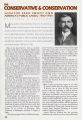
Show SENATOR REED SMOOT AND AMERICA'S PUBLIC LANDS, 1903- 1933 B Y T H O M A S G . A L E X A N D E R M any Utahns remember Reed Smoot for his service as a member of the Quorum of the Twelve Apostles in the Church of Jesus Christ of Latter- day Saints or for his thirty years as a United States Senator ( 1903- 33). They might remember him for his early battle to keep his senate seat against strong anti- Mormon opposition or for his role in drafting and passing the Smoot- Hawley Tariff Act of 1930. Many do not know, however, that as a member and chair of the Senate Committee on Public Lands and Surveys ( often called the public lands commit-tee) he played a key role in the passage of a number of laws and policies to protect our public lands. Smoot supported or sponsored measures that 1) strengthened the hand of the United States president and Forest Service director in protecting national forest lands; 2) established the National Park Service; 3) desi- g nated Zion and Bryce as national arks and Cedar Breaks as a national monument; and 4) required those who mined public lands or used river sites for the generation of electricity to pay royalties. For the most part, Smoot's constituents in Utah supported his efforts. By the early 1900s many people had become wor-ried about the growing loss of and damage to America's natural resources. During Reed Smoot's time in the U. S. Senate, at least four groups pro-posed different approaches to this problem. One group, best represented by John Muir and the Sierra Club, opposed most uses of public lands and resources that would cause their destruction or change. These might be called preservationists. Another group, who might be called progressive environmentalists, favored use of the resources by the government itself. Suspicious of both the states and private business, they felt that the government should run the mines and log the timber on the land it owned. Included in that group were Senators Robert M. La Follette of Wisconsin, Miles Poindexter of Washungton, and John F. Nugent of Idaho. A third group opposed almost all federal manage-ment of resources. They believed that anybody ought to be able to use public resources without permis-sion and without paying a fee or royalty. These included Senatorsweldon B. Heyburn of Idaho, John F. Shafroth of Colorado, Clarence D. Clark of Wyo-ming, and William H. King of Utah. A fourth group consisted of business- minded con-servationists who favored federal management but thought that mainly private business should extract resources from the public lands. These people also believed that the states ought to play a major role in the management of resources within their borders. This group included Reed Smoot, Francis E. Warren of Wyoming, Irvine E. Lenroot of Wisconsin, Key Pittman of Nevada, and Thomas J. Walsh of Montana. Gifford Pinchot, head of the U. S. Forest Service, and Theodore Roosevelt would likely fit into this group. he federal government began to set aside Tn ational forests after the passage of the Forest Reserve Act in 1891. In 1905 the Forest Service, under the leadership of Gifford Pinchot, began to manage them. Concerned about the destruction of mountain watersheds from overgraz-ing and damaging logging practices, Smoot and like-minded senators supported the efforts of the Forest Service to regulate grazing and logging. In opposi-tion, however, Weldon Heyburn and his supporters pushed through Congress a measure that prohibited the president from setting aside national forests in Oregon, Idaho, Montana, Wyoming, or Colorado without congressional approval. Smoot, however, believed that the president should have the authority to protect the public lands from abuse. He and his supporters insisted that the parks needed some central administration, his bills law allow the president to continue to designate failed. In 1916 Congressman William Kent of national forests in Utah, California, Washington, and California introduced his own Park Service bill in Nevada. the House of Representatives. Ths Kent bill did not In an effort to publicize the need for conservation, appropriate much money for Park Service adminis- President Theodore Roosevelt invited the nation's trative expenses, however, and it allowed for live-governors and conservation leaders to a conference stock grazing in the national ~ arks. in Washington, D. C., in December 1908. P resident Wilson had appointed Stephen T. Recognizing Smoot's solid support for the Forest Mather and Horace M. Albright to advise his Service, Roosevelt invited him to chair the administration on national park issues. In his Committee on Forest Reservations at the confer- position as ranhng minority member on the public ence. In Smoot7s keynote address to the committee lands committee, Smoot worked closely with he the need for the management Mather and Albright to reshape the Kent bill while of forest land and watersheds in order Protect he shepherded it through the Senate. Smoot intro-land, cities, and businesses from damage. duced amendments to provide larger appropria- In 1910, while William Howard Tdt served as tions, and he insisted on ge general permis-p resident, Smoot- by then chair of sion for livestock grazing in the the Senate public lands commit-tee- played a key role in drafting Backwhenthe phaarvkes - aalnthgoeurgehd sotmhies osfu rehliys mcouns- t the Pickett Act, whch authorized - mo\ Fement stituents. the federal government to classify C O ~ In his memoirs, Albright gives the public lands according to what it was in its infnncy, Smoot credit for his persistence and considered to be their best uses, shll in the passage of the bill. whether recreation, mining, graz- Wilson signed the National Park ing, forestry, or farming. After clas- U- s- S S m o o f a Service Act on August 2 5, 1 9 1 6, and sification, the government could at the inauguration of the service in either sell lands; allow miners to buy b l J S ~ ~ ~ i n d e d January 191 7 he invited Smoot to or lease them to remove minerals; apostle,& edto speak. or retain and manage them as A deadlock of competing inter-national forests, parks, or monu-protect many of the ests and problems connected with ments. World War I blocked additional en- After the election of Woodrow Mtial's pblic hnds vironmental legislation until 19 19. Wilson and a Democratic majority In the 191 8 elections, the Re-in the Senate in 19 12, Smoot lost hls publican party regained control of chairmanship and became instead Congress, and Smoot again became chair of the pub-the ranking Republican member of the ~ ublicla nds lic lands committee. committee. In this role he considered other ~ ublic all, Smoot wanted to finish the work begun land problems. He lined up with John and by Roosevelt, T&, and Wilson in setting aside other preservationists Oppose the Hetch~ national forests, monuments, and parks and in clas- Dam, which the Hetch Hetch~ in sifying lands under the Pickett Act. He particularly Yosemite National Park in order to generate elec- wanted to pass laws that would allow private busi-tricity and provide water for San Francisco. nesses to develop minerals on the public lands. Since had reasons for the dam. The the states had to provide services for the people who first was aesthetic, a value that he sincerely believed worked on the federal lands, he wanted the federal in. In a before the Senate, he defended government to return much of the royalty payments ~ h l l o s o ~ ohf ~ pr eservation. But the it collected from these businesses to the states. Smoot also was opposed to having governments ~ l~~~ with many others, Smoot thought pay-operate utility projects. Despite opposition, ments to the states a fair return for the services they Congress voted to build the dam. supplied. The constitution did not allow the states to Smoot began as early as 1912 to propose laws to tax federally owned lands, yet private property establish the National Park Service. Until 19 16, each owners paid taxes to support schools, build roads, of the country's national parks had its own manage- and pay for police, fire, and other services. In the ment, but no government agency provided overall West, the federal government owned much of the direction. Although Smoot argued that the national land; in Utah two- thirds of the land belonged to the 2 3 federal government. Since people who worked on those lands used state roads and sent their children to state- funded schools, Smoot thought the federal government ought to help pay for these services. e federal government had a number of choic-es about how to manage lands that contained r coal, oil, or phosphates. The government could sell land that contained these minerals, as it did lands that contained precious metals; it could lease mining rights to private businesses and collect royalties on the minerals; or it could retain the land and hire miners to work the mineral deposits. In general, Smoot opposed federal mining opera-tions and favored publicly regulated ~ rivate ownershm. On this issue he Unless they could agree to pay the states at least 37.5 percent of the royalty income, he said, he " would let the bill die." Sinnott agreed, and the two houses approved the bill. Wilson signed the Smoot- Sinnott Leasing Act on February 25, 1920. The act was extremely important because it affirmed certain principles that are still in place. Through this act, the federal government would continue to own and manage lands containing resources such as oil, coal, or phosphates. The gov-ernment would grant leases to private companies to prospect for these minerals, then it would charge a royalty for those minerals that the miners removed. Except for a small administrative fee, these royalties went to the states for I 1 was not inflexible, however, and even- Smoot supported the schools and roads and to the reclama-tually he came to support leasing. tion fund to pay for water projects in The bill Smoot introduced in th e1 - f reguof mthe W est. Senate in 19 19 treated the states quite In 1920 Congress also worked out a generously. He proposed that the fed- grazing, logging, and similar system of leases for hydroelec-era1 government return to the states tric power sites. Smoot did not play a 45 percent of the royalties business H~ central role in this legislation, but he paid for extracting minerals like coal, made sure that 37.5 percent of the phosphate, or oil. In addition, he want- m e d c- the income from the leases came back to ed the government to use another 45 the states. percent of that income to pay for irri- N&- 1 m ~ e r - BY 1921 the most significant years in gation projects in the West. The United Smoot's role as a conservationist had States would retain the remaining 10 and and passed. Unfortunately, however, be-percent to cover administrative costs. cause of his chairmanship of the public Various people proposed amend- natiOEiI parks. lands committee, he found himself ments and provisions for the bill. Some swimming in a whirlpool called the wanted the highest possible royalty and Teapot Dome scandal. lease charges; others wanted limits on The Teapot Dome affair had its ori-the total amount of land any one company could gins during the Taft and Wilson administrations. The lease; and some wanted to exclude all aliens from threat of war in Europe had led the presidents to fear leasing. Representatives of oil companies wanted the that a shortage of oil could hamper the effectiveness government to pay them for developments they had of the U. S. Navy. To protect the oil supply, these made on the public lands prior to the passage of the presidents designated three Naval Oil Reserves Pickett Act. fields: Elk Hills and Buena Vista Hills in California Congressman Nicholas J. Sinnott of Oregon intro- and Teapot Dome in Wyoming. duced a somewhat different leasing act into the Iflay 192 1, shortly after Warren Harding was On January 3 j 1920, after inaugurated as president, the Secretary of the Navy the two houses found that they could not arrive at a I proposed that he transfer management of the ~ o ~ On ~ ~ the o ~ ~ sPro-~ re serves to the Interior Department, which could visions of the two bills, they turned the negotiations more effectively prevent the loss of oil to private over to Smoot and Sinnott. The two held confer- companies that were drilling nearby. The government ences with representatives of oil companies, the had apparently lost a substantial amount of oil to out- Interior Department, and others to try to work out side drilling, and Harding approved the transfer. their differences. In April 1922 Interior Secretary Albert B. Fall By the end of January the two had reached com- granted leases at the California reserves to Edward promises on everything except one: They could not L. Doheny of the Pan American Oil Company and at agree whether or not to distribute part of the royal- the Teapot Dome reserve to Harry F. Sinclair of the ties to the states. Frustrated by Sinnott's refusal to Mammoth Oil Company. Fall negotiated the leases consider returning substantial money to the states in secret, and he approved the Teapot Dome lease for schools and roads, Smoot issued an ultimatum. without getting competitive bids. After learning of the leases, Senator John B. management of national forests, and for the " recla- Kendrick of Wyoming asked for a report on them, mation" of arid lands through irrigation. During this and Senator La Follette asked Fall for an explanation. time, he successfully secured legislation establishing Fall submitted his report to the public lands commit- Zion and Bryce National Parks and Cedar Breaks tee, and Smoot had it printed in the Congressional National Monument in southern Utah. He also sup- Record. Smoot actually took little interest in the ported legislation for the enlargement of Mount matter at first because he had turned h s attention to McKinley ( now Denali) National Park in Alaska and other issues, such as tariffs. Besides, he considered Hot Springs National Park in Arkansas and for the the issue to be merely a political one, with the preservation of sites on the Mormon Trail in Democrats trying to gain some advantage from a Nebraska. He helped create the presidential forest scandal. reserve in the Kaibab National Forest near the Grand But a number of people were concerned about the Canyon. And he promoted the exchange of privately secrecy surrounding the leasing, and they charged owned properties within national forests. that Fall had failed to follow proper A lthough Smoot would not be procedures foM'wwith considered an environmentalist Under pressure to investigate the today, he broke new ground in lease agreements, Smoot scheduled 7. . like his day. Because he both worked to set hearings for October 1923. During aside land for watersheds and parks this time, revelations of fraud in khnMui; and at the same time worked to allow Harding's Veterans Administration and resource development in other areas, Justice Department fueled the intensi- Sm00CWXk& he somewhat bridged the gap between ty of the Teapot Dome hearings. As the Pinchot's utilitarian brand of conser-hearings proceeded through Dec vation and Muir's aesthetic conserva-ember 1923, Smoot met privately with tion. Fall and Sinclair; they convinced him tObhCktfie Much of what Smoot did set the that nothing improper had taken place. stage for the management of America's Smoot later accused the two of lying to him. H e maam natural resources during the rest of the century. His work on the Pickett Act Fall eventually spent a term in prison for accepting a bribe, and provided for the classfication of feder-al lands, ensuring that some were pre- Sinclair was sentenced for tampering mk served for aesthetic reasons and that with a jury. Doheny went free. Smoot others were managed for resources came under sharp criticism for his sup- and economic gain. The National Park Port of the for an Service Act established the administrative unfortunate relationship he had with Doheny. Smoot nisms that are still in place to manage the national had paid the man to the parks He strongly supported the Forest Service in its debts of One of his sonsy who had ' peculated in the efforts to protect the land, trees, and watersheds in stock of one of Doheny's companies. the national forests. He helped establish a leasing sys- Increasingly concerned with Finance tem that is in place to manage public lands con- Committee matters, Smoot resigned his lands com- taining minerals like oil, coal, and phosphates. On mittee chairmanship during theTeapot hearings. But balance, he played a sipificant role in the ongoing he did spend time with environmental issues during effort to provide effective management of America, s the 1920s. For instance, when California's delegation public lands. introduced legislation into Congress to construct a dm at Boulder Canyon on the ~ ~ ibar- ~ Thoma~ s G. Alexa~ nder is a~ professor- of histo~ ry at Brig~ ham You~ ng ~ der, smoot opposed it. ~ h~~ dampHoover Dam- University and the author of numerous books on Utah and west-ern history. was to generate power and store water for sun-parched California farms. But Smoot thought the SelectBiblio~ ph~ Horace M Albrlght and Marlan Albr~ ght Schenck, Creabng the Nabonal federal government should not engage in the electric Park Service The Mlss~ ng Years ( Norman: Umversity of Oklahoma Press, power business' He feared that might 19?? omas G Alexander, " Senator Reed Smot and Westem h d Pohcy, lose their water rights to Californians. He changed 1905- 1920," Ar~ zonaa nd the West 13 ( ~ ~ t u - 19 71) 245 64 his position in 1928 after protect Thomas G Alexander, " Teapot Dome Revisited Reed Smoot and Con servanon m the 1920s," Utah H~ stoncaQl uarterly45 ( Fall 1977) 352 68 ed Utah's water rights. Reed Smoot, The Reed Smoot Diaries, Manusmpts Department, Harold He continued to work for the designation of new Lee Bngham Young Umverslt~ P, rove, Utah Reed Smoot, In the World The D~ arieso f Reed Smoot, ed by Harvard national parks and the expansion of others, for the s Heath ( Salt Lake City. Signature ~ ooks, 1 997) 2 5 |