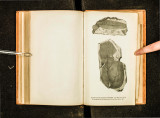
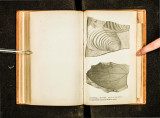
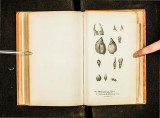
| OCR Text |
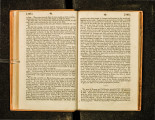
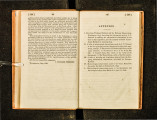
Show [ 23] 130 Mr H oi fm an ' pa rty.' they bad be. en al.m osht ' starvfi ng for the hl'a st t wo· d ays, an d w ere travelling raptd ly· , h m opes o f sod ont lr eac tng .1 80 me Indian hamlets where they tmg t procure oo. ; le.y s;o.ou h 1 h the first they had seen for a long while, and they reac eck a i ~us~~ou for th emselves, and fodder for their animals. then Iasd .ec or ho lived here told them that it would be wrong t(} sTeh 11e anny tlhaw.nsg ,w a s it wa~· Sunday. But they soon found other Indians who were not so scrupulous. . . , I . Wll en w e- l ·eached the Kansas . nver, lw e fodu nd .1t ful d of teed, which was so packecl together .that It stooc up e gewtse, an seeme to of fe 1. ::tn ·tm P e11 et rabl e barrter to our progre· ss. · dW e f hahll oe·d to the Indian ferry men who were on the oppostte s1 e o t e nv.er; the ·umpcd into a fiat boat and. started to reach us; but, finchng ·h y J II not get through the tee , they r et urned; we were, hov;- t ey GOU c · · • 'bl · i tt' · . · ever, determined to eros.· If It were. p o.sdst ef.' lane? ~~ mg mtho da flat boat whi ·h happened to be on this st e o t 1e n.vet, we .Pus e ff f . the shore· soon our boat became wedged In the Ice; we o 1 t hen omus hed it ba c'k far eno ugh to. acqU·i re t· mp etus t ~ rus h f orwar d ; by in~umerable r~petitions· of this manccuvre, we rorced .our way clear into the rap1d current of th.e stream; the long poles that we were using cou ld not touch the nver bottom. 13ut we fortunately had "sweeps" on board; :vith. them w e rowed our ?oat, and man aged to land on the opposttc stele. Our men now JUmped ash?re d "cordelled" our craft up the stream to the proper landwg ;face. Our successful passage over was entirely due to the.perseverance and good management of the wagonmaster., Mr. Smit.h. We encamped on the river bank, where there Is no .scarctty of all the varieties of tim her that the heart of man can destre. Marcl1- 1.-At the dawn of day we prepared our' frugal repast. We now felt at home, and as the sun rose there seemed. to be a cheering brightness in his rays which is not to be seen m "New Mexico," nor on the prairies. . There was a majesty in the lofty gro':es which no.w ~urrounded us and a music in the plash of the wdd duck as It ht upon the bo~om of the river; there was music even in the scream o~ the par~ oquette that swept over our heads; t~ere was a charm In everything for we now really felt that our tnals were at an end. At 'a rapid pace I started off for the fo~t: As. I passed through the bottom lands of the Kansas, the praine chickens · were constantly flying up with a loud whirring sound. At an early hour in the afternoon I reached fort Leavenworth, where I was most kindly received by Colon.el Wharton, the commander of this post. Very respectfully, your obedient servant, J. W. ABERT, ' Lieut. Co'rps Topographical Engineers· To Colonel J. J. ABERT, Chief Corps Top. En gin ee1·s. 131 [ 23] , Notes concerning t~e minerals .and fossils, collected by Lieutenant J. W . .!J.be:t, whde engaged .~n the geogr"aphical examination of New Mex~co, by J. W. Bad~y, professor of chemistry, mineralogy, and geology, at the Un~ted States Military .!J.cademy. Cretaceous fossils ~rom Poblazon, west of the Rocky mountain latitude 35~ 13', longitude 107° 02:, strata dipping west. ' The fossils from Poblazon ~onstst of gigantic hippurites, * cast from ~he c~lls o~ several ~pec1es of .'!mmonites, valves of inocerimus, tdentiCal w.Ith a spect~s figured m F:emont's report, plate IV., fig. 2,t casts .of sm all umvalves and bivalves too imperfect f determination; and teeth of f harks. or These fossils proy~ that the . s~rata from which they were taken; be.long to t.he cretacwus for~at10n . The existence of vast beds of this [ormation on the east ~Ide ~f the Rocky mountains, and extendmg from the Upper M1ss?un to Texas, is well known. The occurren.ce of the same formah~n o.n th.e ~estern side of the primary axis of the Rocky mountams IS quite Interesting. The dip t'>f .the rocks . ~t Poblazon is to the west, or fro 11 the Rocky mountains; and this proves that these mountains have been elevated since the deposit of the cretaceousbeds. It is, therefore probable that the cretaceous beds on both sides of the Rocky mountains were made by the same ocean. · · Bituminous coal, and coal fossils. F~om the Raton, east of the Rocky mountains, latitude 37° 15', longttude 1~4° 35', from t~e strata dipping east. The fossils accompanying the we1l characterized bituminous coal from the Raton, consists chiefly of larg·e ovoid leaves with very distinct branching veins, which cons.equently must ha~e b·elo~ ged t? decot~ledonous plants of comparatively modern origin. It ~~ an mterestmg fact that no ferns, or other of the common coal fossil~ were found. It is thus established beyond a doubt that the deposit of .coal at the ~aton is not the ·equivalent of lhe great coal formatwn of the U mted States, but is of a much more recent date, perhaps corresponding to the " Brora" coal. .The existence o.f coal on the eastern flank of the Rocky mountams has been noticed before, and some have supposed that it indicated the western outcrop of the great carboniferous formations of of th~ western States; this view, however, is not confirmed by the tdiO.enp.o stt at the Raton, which is decidedly a far more recent forma• na • l rTe~ttecsue 1 aat1~0e ntsh.e remarkable specimens composed of parallel plates cov·e red with hexago-lo: gft~~~~~~~ ?ecimens were found on tbe east side of the Rocky mountains, latitllde 39°, |