| OCR Text |
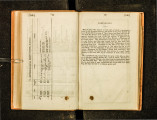
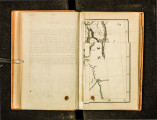
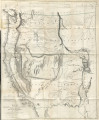
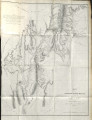
Show [ 148] 4 from the · ·wcr.ks . . of others, b'll.t l}Ot ~ntire1y, my own explorat~ons in that te~t:l'to~y havillg extended t&. nearly. tw·o thousand mtl~s. Th · rt ~hich exhibits California, and c.5pecially the Great Basin, thef' ~ferra .N f'vad,a, ~he l}'eaut\ful valley of Sacra men ~o and S~n J . uin is chj.t!fly , frbm roy o-,vu surveys ·or personal VIeW? and ~n oalq ' · g'1 · sue 'ven' a' ~ correct Where my own observations did 1 cases IS · d not extend, the best authorities have been followe .. The rofile view in the margin, on the north stde of the. map, exhibit; the elevations of the country from .the Sout~ Pass 1n the Rock mountains to the bay of San F:ancisco, passing the Utah, and the Great Salt lake, following the nver Hum.boldt through.the northPrn side of the Great Basin, crossing the Sierra Nevada Into the valley of the Sacramento, where the emigr.ant roa? n?w erosses that sierra forty miles north of Nuev~ .He~vetla. ThiS hne shows the resent travelling route to Cahforn.Ia. The profile on the soutK side of the map exhibits the. eleyahons or the c~u.ntry on a different line-the line of exploration In the last exped1hon-from th head of the Arkansas by the Utah and Salt .lake, and thro.ugh th: inttrior of the Great Basin, crossing the Sierra N evad.a Into the Sacramen~o va11ey at the head of the Rio. de los. JJ.mer~canos. These profile views are given merely for their outl~ne.s, to show the structure of the country between the Rocky m?unta1ns and the sea, and the rise and all occ~sio~ed by mountains and valleys. Full anu descrjptive profile VIeWS on a large scale are. :v~nted, mark\ng the geological structure of the country, and exhtbitln.g at their proper altitudes the different products of the vegetable klngdom. Some material is already colle~te~ ~or _such a purp?se, extending on uifferent lines from the MISSISSlppl to the Pacific, but not sufficient to ' complete the work. . ·. The Arabic figures on different parts of the map Indicate the .el-evation of places above the level of the s~a; a knowled_ge of wh1ch is essential to a just conception of the chmate and agncultural ca-pacities' of a country. . . The longitudes established on the hne of exploration of t~e. last expedition are ba_sed o~ . a series of_ astronomical obse:vat~ons, resting on four ma1n _posltl?~s, d ~term1n ed by 1 unar culminaho~s. The first of these main positions 1s at the mouth .of the Fonta~ne qui Bottit river on the Upper Arkansas; the second IS on the eastern shore of the Gr~at Salt lake, and two in the vall.ey _of the Sacrame~to,. at the wf'stern base of the SierraN evada. This ltne of astron om1?al observations thus carried across the continent, reaches the Pacific ocean on the, northern shore of the bay of Monterey. In my pub 1 ish e d ro a p, of the y ear 184 E> , the h n e of the western c 0 as t was 1 aid down according to Van co '1!1. v er . When t.h e n e w 1 Y established positions \\·ere placed on t~e map _now latd before the Senate, it was found that they earned the hne of the coast about fourteen miles west, and the valleys of . the Sac~·amento and San Joaquin about twenty miles east; maktng an 1ncrease of more than thirty mil.es in the b~ead~h o~ the country below the Sierra Nevada. Upon examination, It .was found th~t these positions agreed, nearly, with the observa~1ons of Captain .. ; 5 • [ 148] Bcechey, at Monterey. The corrections required by the new positions were then accordingly made; the basin of the Sacramento and s ·an Joaquin valleys was removed to the eastward, and the line of the coast projected farther west, conformably to my observations, retaining the configuration given to it by the surveys of Vancouver. The error in the position of the San Joaquin, Sacramento, and Wahlahmath valleys still ex.ists upon the 1nost authentic maps extant; and it appears that, upon the charts in general use, a greatly erroneous position is still given to the coast. By the return of the United States sloop-of-·war Portsmouth, Commander Montgomery, from the Pacific ocean, it is learned that two British ships of war are now engaged in making a new survey of the gulf anJ coast of California. It is also known that an American whale ship was recently lost on the coast of California in consequence of the errors in the charts no\v · in general use, 16- cating the coast and islands, from Monterey south, too far east.* The astronomical observations made by me across the continent, in this my third expedition, were calculated by Professor Hubbard, o~ the national observatory, (Washington city,) during the.present ~1nter; and a note from him on the subject of these observations 1s added as an appendix to this memoir. My attention having been recently called to this f.ubject, (the true position of the coast of California,) I find it worthy of remark that the position given to th.is coast on the charts of the old Span ish navigators agrees nearly w1th that which would be assigned to it by the observations of the most eminent naval surveyors of the present . day. The position adopted for Monterey and the adjacent coast, on the map now laid before the Senate, agrees nearly with that in which it had been placed by the observations of Malaspina,t in 1791. . In constructing this map it became nec~ssary to adopt the coast hne of the Pacific, as found in maps in general use, to give it completeness. It was no part of my design to make a ('.hart of the coast. Finding an error when I ca111e to lay down the Bay of Monterey, I altered my· map to s~it it. I knew nothing then of any err~rs in the coast. It is satisfactory no'v to find that my astronomical observations correspond 'vith those previously made by Beechey and Belcher, and very gratifying to be able to add some testitnonial to •.NAvAL.-The United States sloop-of-war Portsmouth, Commander John B.l\.fontgomery, arnved at Boston on Friday, from the Pac1fic ocea n, last from Valparaiso, February 23. Cemmander Montgomery states that the British frigate "Herald/ and the brig "Pandora,' ' are engaged in making a new survey of the gulf and coast of California. \ The w~ale ship "Hope," of Providence, was recently lost on the coast, in consequence of an error 111 the charts now in general use, which locate the coast and islands from Monterey to Cape St. Lucas from fifteen to forty miles too far to the eastward.-National Intel· ligence1·. . · tOf this skilful, intrepid, and unfortunate navigator, Humboldt (Essay on New Spain) says: "T~e peculiar merit of his expedition consists not only in the number of astronomical oh· servatwns , but principally in the judicious method which was employed to arrive at certain results. The longitude and lati~ude of four points on the coast (Cape San Lucas, l.Ylon· terey, Nootka, ll.nd Fort .Mulgrave) w'ere fixed in an absolute manner." |