| OCR Text |
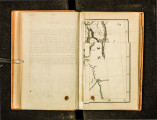
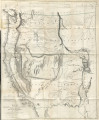
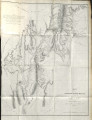
Show [ 23] 44 able ladders; a mode, I think, peculiar to. Pueblo Indi~ns. The idea may have originated from. the nece.ssity of d:fending t~em1 • -selves against their wil.ci enemt es, and IS now qmte exteustve y practised amongst the different banc!s of Pueblos. . These Indians have very fine fields of corn, and I noticed ~articularly their orchards of peach. and plu~ trees. · The Indtans cultivate almost all the fruit that IS grown m the country .. O?e may usually distinguish an Indian settlement, ?n approaching It, by the clump of trees; whilst the indolent Spaiush settlers seldom take the trouble to plant them. Just opposite "San Juan " is the mouth of the "Rio Chama," one of the western affluent~ of the "Rio del Norte." It flows from the northwest through a beautiful valley, and, like the other streams of the' country, has a narrow bottom, along which the people have settled. It is throuO'h this valley that the famous mule trail from Santa Fe to the "Pueblo de los Angel~s,'! in California, finds its way to the Cordilleras. Towards the head waters of the river, fine grass is found, and the country is well adapted to the raising of stock; but all attempts at settlement above the ·"Abiguiu" have failed from the d epredations of the Utah .an Na-vajo Indians. . Between Abiquiu and Chama, a small branch enters the mam ·stream, flowing from a group of springs, a't which a village is built, called "Ojo Caliente." The largest of these springs is 16 or 18 1 feet in diameter, and the water in the basin presents the ap_ pearance of boiling, in consequence of the continued escape ·of sulphurated hydrogen gas. Other small springs exist, and from all a highly ferruginous deposite is formed. These waters ha:e been recommended. by Doctor Nagle, of Santa Fe, in many chrome diseases, and ~lways with success. · Five miles from " San Juan," is the town of "Canada," a village .of 300 or 400 inhab itants, built on a slight roll of land, o~e mile from the river. At this point, the Santa Fe road leaves the river again, and,· after crossing an elevated tongue of land, enters the valley of the "Rio Tezuque." Several settlements of Spaniards and Indians are to be seen along the stream, the principal of which a:e "Cuyamanque," and "Tezuque," both Pueblos. From the VIllage of Tezuque, it is but five miles, over a cedar hill, to the town of Santa Fe." . Having, wit~ the aid o.f t~ese notes, laid before you all that was thought deservmg of notice m the northern portion of the department of New Me~ico, I shall again re~ume the daily journal of occurrence.s, sta.rhng from S~nta Fe, and visiting the numerous towns, which will be found laid down on the accompanying map. October 8.-W e now (i. e . .llbert and Peck) prepared for the r~gular tour through this departimento. At 1 o'clock my men ar· rived from the grazing grounds wi th the wagon and mules. I p_ro· cured_ the necessary provisions, although some of the commissary's suppltes w~re exhaustec!, but those I purehased. Colonel Doniphan was p~epanng to march into the country of the Navajoes, and the hattahon of Mormons was daily expected. All the money in Santa 45 [ 23 J· Fe was wanted to equip them; I had, therefore, to apply to Mr. Rich, the suttler, who furnished me with what funds I required. I also procured a few simple ~edicines _from our well known surgeon, Dr. Decamp, and thus furmshed, w1th a party of three men, did Lieutenant Peck and I start to make the survey of New Mexico. We marched this afternoon but six miles, and then encamped at "Agua Fria;" here we were obliged to purchase fodder and wood. On our road we noticed much of the "Scincio filifoliis," cedar ar-temisia, and several sp·ecies of cacti. ' · October 9.-As we were in want of meat, we were obliged to purchase of the man from whom we had obta:ned the fodder. He would not consent to receive less than $1 50 for a sheep· $1 is generally the price throughout Mexico. ' After a short march, we reached "Cieneg::t ," a very well watered place, as its name de~otes; the neigh.boring hills are full of springs, the waters of clear nvulets are rushwg across our path in all dir. ections. We noticed some large "gru1las," blue cranes, in the low grounds and several flo cks of wild geese. This valley is well settled· ever; minute we saw the pastores, driving their flocks of sheep anti goats· we saw, too, the invaluable shepherd dogs, assisting their masters: These dogs are remarkable for their sagacity, and are p erfectly skilled in the management of the fold. we had a very win ely day' and the dust flew about in great prof~ sion. _After a march of seventeen miles, we encamped on "Galisteo creek." The water is very brackish, and the bed of the stream white with saline efflorescences. The country around shows considerable disturbance; the rocks, which are of sandston e have a~ eas.terly dip of from 20° to 30°, and there are numerous volcanic dtkes mtersecting each other in various angles. . The Rio Galisteo empties in to the Del Norte a short d istance north of the Pueblo of Santo Domingo, and five miles to the south of' the embouchure of the Rio de Santa Fe. In many plac(·s th e wa- ters are abs?rbed by the sandy soil, over which they have to flow ;·: but water Is always to be found by following up the bed of th e. stream. · .October 10.-The rock arounc.l us consists of sandstone, underlaid by purple and white clays, and below these a dark ferruginous clay. T~e yucca angustafolia was abundant, and we noticed a new spectes of stramonium. The first part of our journey led us down the bed of the creek ~nd was very sandy; ere long we overtook some ox tea.ms· they had een out four days from Santa Fe, and their oxen had ha:l nothing ~0 eat; already t~ree yoke had fallen down from exhaustion and ad ,?e~n left on the road. After a journey of 17 miles, we cr~ssed t~e Rio Tuerto," and encamped near the Yillage of "San Ph' lll~ pe." At the time Pike visited thi~~: country, there was a wood~n ~ndge of eight arches thrown across the river at St. Phillippe but J.t has been · entirely swept away, and the people are now oblig~d to |