| OCR Text |
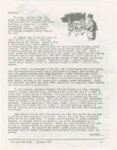
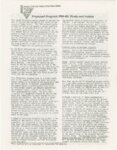
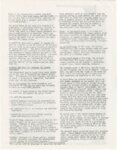
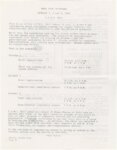
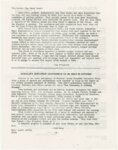
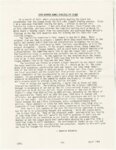
Show ••. SEWAGE TREATMENT IN SALT LAKE CITY LeRoy Hooton, Salt Lake City Public Utilitie s Director, ,amphasizes that it may be 10 years before even the first stage of a new plant is needed. To take into consideration new infonnation which might become available between now and then, he says, another study would have to be made to determine the best and lowest cost technology for a new plant. This would be in addition to the two year 201 faciliti es stuffy CH2M Hill has already conducted, which recommends a tricklin g filter method similar to that used in the present facility . In 1981, when the city commissioned the CH2M Hill study, the need for expansion of treatment faciliti es looked urgent. Measurements at the plant prompt showed that inflows were increasing very quickly and were already strainin g and-sometimes overrunning the plant's 45 mgd designed capacity. Official growth projections suggested..,that this-tre nd would worsen. Since that time, however, Public Utilitie s'offici als believe that infl.ow conditions have cnanged and that flows into the plant have dropped· from about 50 mgd in 1980 to about 42 mgd in 1983. Hooton attribut es this apparent reduction· partly to the general economic slowdown and warns that when ·economic growth gains momentum, .,"' ~.--: 11 growth in sewage produced. • • Hooton also attribut es a substantial part of the flow reductions to the city's· progr-:\m to seal pipes and otherwise cut down on inflow and infiltra tion from the s, .... ':'.'.i~m seHer system and from groundwater. Begun in 1975 when an estimated 44% of :-~ ~.t;,r er:tering the-sewage treatment plant was not sewage water at all,thi s program. ·t;~,; -·~:wanded in 1982 to eliminat e the remaining larger 11 holes .. in the system. 7eday Hooton estimates that the percentage of nonsewa·ge water going through the treatme nt plant is down 30% and is still s~rinkin g.:. ·ouring the past year, he reports , city crews have repaJred 98 broken sewer pipes and eliminat ed 29 sources of inflow. Also, the city replaced the Redwood Road trunkline which was collecti storm runoff into the sewage system. The trunkline replacement alone, Hooton ng· estimates, has cut inflows by nearly one mgd. However, he says, at some point these· and similar efforts will cease to be cost-eff ective. A signific ant amount of !t nonsewage water wil 1 always enter the system. Hooton ub:; ~,rv~s that the effects of a winter use assessm~nt fee introduced in ii~ :r ·:-: ·;er:.. 1 causing lower water usage, especia lly by large commerc ial users. Says Mvot"":1 r.· u I am convi need that this method of charging for sewer services 1980 are is the strongest incc~tive in forcing conservation, which in the long .will mitigate th·a need for se-.,frige treatment capacity." The 1983 doubling ofrunsewer rates may intensif y thfa trend to conserve on indoor water use. (The npay . for what concept, incid,m t.any, has been tracitio nany shunned by water managers, you and Salt Lake City is one of the few €ntities in the SL Valley to have.adopted it.) use" Sewer managers cannot measure how much wa.ter current ly flows and has been flowing through the treatment pl ant with total ·accuracy. By the 1ate 1970' s, the plant 1 s original flow meters were wearing out and were frequently out of service for repairs. Although the city installe d two new flow meters in late 1980, they are inaccurate and will be replaced in early 1984. The Salt Lake VOTER February 1984 -5- |